

If your morning does not feel real until the coffee kicks in, you are not alone. Many adults rely on caffeine to power through fatigue, afternoon crashes, and low motivation.
But if you constantly feel tired without caffeine, your body may be asking for something else entirely.
Natural energy is rarely about one magic fix. It is usually influenced by sleep quality, stress, movement, nutrition, and whether your body has the nutrients it needs to function efficiently.
Why You Feel Tired in the First Place
Fatigue often comes from several overlapping causes:
-
- Poor sleep quality
• Stress overload
• Blood sugar fluctuations
• Lack of movement
• Nutritional gaps
- Poor sleep quality
Caffeine can temporarily cover these problems, but it rarely solves them long term.
Addressing the underlying causes often creates more stable energy than simply adding more caffeine.
-
- Move Your Body, Even Briefly
Exercise may sound like the last thing you want when you feel tired, but movement increases circulation, oxygen delivery, and energy production.
Research suggests physical activity can reduce fatigue and improve overall energy levels.(1)
Even a short walk, stretching break, or ten minutes of movement throughout the day may help.
-
- Take Sleep More Seriously
Sleep is where recovery happens.
Hormones regulate. Muscles repair. Energy stores recover.
Most adults need seven to nine hours nightly.(2)
People struggling with poor sleep often notice that low energy becomes a daily cycle that feels difficult to escape.
Helpful habits include:
-
- Limiting caffeine later in the day
• Keeping your room cool and dark
• Maintaining consistent bedtimes
• Reducing alcohol near bedtime
- Limiting caffeine later in the day

-
- Do Not Underestimate Short Naps
Short naps between 10 and 30 minutes may support memory, focus, and alertness.(3)
Early afternoon often works best because this is when energy naturally dips.
-
- Pay Attention to What You Eat
Foods that rapidly increase blood sugar often lead to crashes later.
Steadier energy tends to come from:
-
- Protein-rich foods
• Healthy fats
• Fiber-rich carbohydrates
• Mineral-rich foods
- Protein-rich foods
Foods like oats, eggs, nuts, leafy greens, legumes, and seeds provide nutrients involved in energy production.

-
- Consider Nutritional Gaps That Affect Energy
Sleep gets most of the attention when discussing fatigue.
Nutrients deserve attention too.
Magnesium plays a role in hundreds of biochemical processes involved in:
-
- Energy production
• Muscle recovery
• Stress regulation
• Sleep quality
• Nervous system function
- Energy production
Low magnesium levels may contribute to fatigue, muscle tension, poor sleep quality, and increased stress response.
B vitamins also help convert food into usable energy.
As adults get older, nutrient absorption may become less efficient, making nutritional support more important for some people.
If you feel like you are doing everything right but still struggle with recovery, sleep quality, or low energy, additional support may sometimes help fill nutritional gaps.
-
- Manage Stress Before It Manages You
Stress affects almost every system involved in energy production.
Chronic stress may interfere with:
-
- Sleep quality
• Hormone balance
• Focus
• Recovery
• Mood
- Sleep quality
Meditation and mindfulness practices have shown benefits for mental well-being and stress management.(4)
Simple strategies include:
-
- Walking outdoors
• Limiting screen time before bed
• Taking breaks throughout the day
• Spending time in nature
- Walking outdoors

-
- Watch Your Alcohol Intake
Alcohol may make you sleepy initially but can interfere with restorative sleep later in the night.
That often means waking up feeling less rested even after enough hours in bed.
-
- Do Not Ignore the Mental Side of Energy
Mental fatigue still affects physical energy.
Constant stress, information overload, and overstimulation can drain energy reserves.
Small changes such as calmer mornings, reduced screen exposure, and slowing down occasionally may support more stable energy.
Putting It Together
Most fatigue is not caused by one thing.
Sleep quality, movement, nutrition, recovery, and stress all work together.
Improvement often comes from consistent small changes repeated over time.
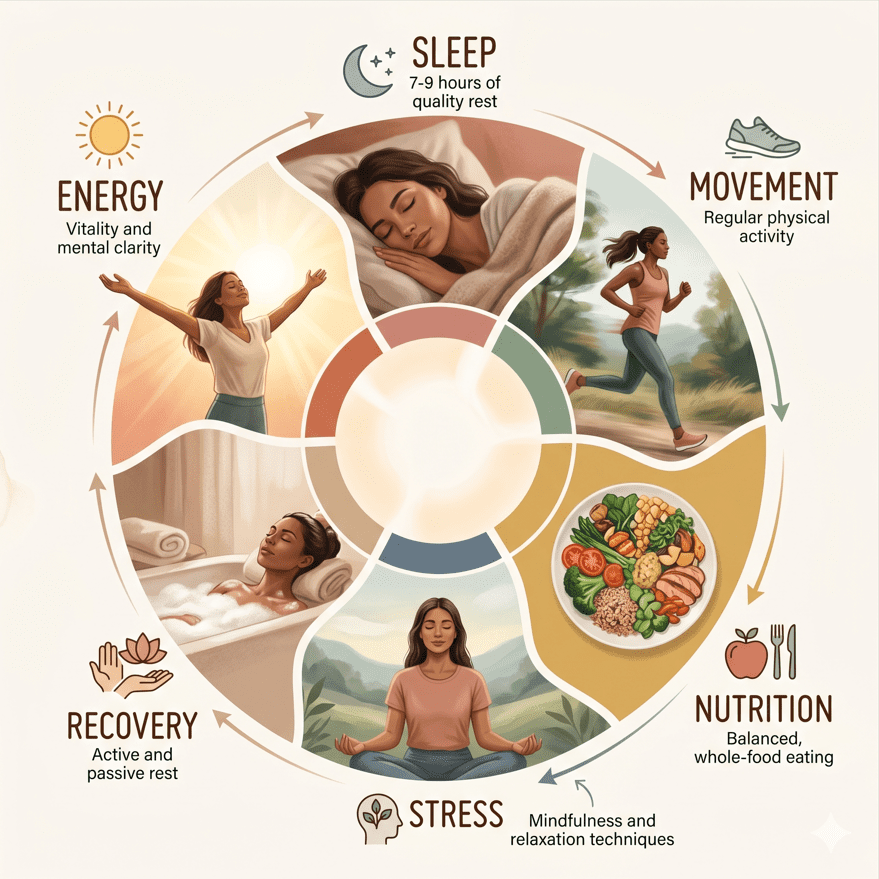
If you feel like you are already improving your habits but still struggle with energy, recovery, muscle tension, or sleep quality, exploring additional nutritional support may be worth considering.
Frequently Asked Questions
Why do I feel tired even when I sleep enough?
Sleep quality, stress, nutritional gaps, and recovery habits may all contribute.
What nutrients are most associated with energy production?
Magnesium, B vitamins, iron, protein intake, and overall dietary quality all play important roles.
How long does it take to improve energy naturally?
Some improvements happen within days while others may take several weeks.

Sources
[1] Puetz TW. Sports Medicine. 2006.
https://pubmed.ncbi.nlm.nih.gov/16937951/
[2] Sleep Foundation.
https://www.sleepfoundation.org/how-sleep-works/how-much-sleep-do-we-really-need
[3] Mednick SC et al. Nature Neuroscience. 2002.
https://pubmed.ncbi.nlm.nih.gov/12195420/
[4] Goyal M et al. JAMA Internal Medicine. 2014.
https://pubmed.ncbi.nlm.nih.gov/24395196/