

How much sugar would you guess you’ve consumed today?
A whole lot more than you probably think.
Sugar is one of the most popular food additives in the United States. You’ll find it in thousands of foods available to you and your family.
But as you’ll soon discover, it’s not just foods like ice cream, soda and candy bars that are loaded with sugar.
No, sugar now shows up in everything from “healthy” breakfast cereals to fat free salad dressing to applesauce and countless foods in-between.
And you’ll be shocked to learn why sugar has sneaked its way into most of our foods and how that impacts your health and the health of your loved ones.
In this article you’ll discover:
- More “good ol’ boy” Washington corruption that hurts the average American. Forget the bank bailouts, rigged elections and backroom deals. This fraud is hiding in plain sight and it’s harming your health in ways you don’t even realize.
- Worried about your liver health? Discover why as many as 1 in 4 people in the U.S. now suffer from non-alcoholic fatty liver disease. WARNING: This information caused a popular and well-respected doctor to receive written threats from a powerful lobbyist group.
- Struggling to lose weight? Obesity rates have skyrocketed in America since 1980. Consumption of added sugar has increased by 30% over the same time period. Is there a connection? Big Sugar says “NO”! We uncover the science that says otherwise.
- Slash your risk of heart disease. All it takes is making one simple change to your daily sugar intake.
- Is sugar as addictive as hard drugs? A now famous 2014 study from Neuroscience and Biobehavioral Reviews sheds light on a sinister sugar fact… and could help explain why it’s so tough to curb your cravings.
- The #1 source of added sugar in American diets and a simple way to avoid it.
- And much more…
If you’re serious about looking and feeling better than you’ve ever felt, then I urge you to read on.
Because the startling facts and frightening truths you’ll soon discover will forever change the way you look at the foods you eat. Best of all, this revealing information could completely transform your health.
It starts with an all-too-real account of Washington corruption that reads like something straight out of a James Paterson political thriller…
Want to restore balance to your body and escape the uncomfortable and dangerous consequences of eating too much sugar? Check out How to Detox From Sugar: The Ultimate Guide.

Sweet Little Lies
Sugar consumption has been linked to obesity, heart disease, liver disease, type 2 diabetes, certain types of cancer and a slew of other health problems.
And yet, sugar is the most popular food additive in America. How can something that poses such a serious risk to public health be allowed in nearly all of the foods we eat?
Because multi-billion dollar corporations and powerful lobbyist groups in Washington D.C. are working hard to ensure you never learn the truth about their toxic products.
Consider this quote:
According to a new report from the Center for Science and Democracy at the Union of Concerned Scientists, industry groups representing companies that sell sweeteners, like the Sugar Association and the Corn Refiners Association (for makers of high fructose corn syrup) have poured millions of dollars into countering science that indicates negative health consequences of eating their products.
That quote was not pulled from some conspiracy-theorist, sky-is-falling website buried in the darkest corners of the Internet.
It came from an article in the June 2014 issue of Newsweek.
The same article reports on an interaction in 2003 between the president of the Sugar Association (a lobbyist group that represents the sugar industry) and the director general of the World Health Organization (WHO).
At the time, the WHO had issued a report recommending people to receive no more than 10 percent of their calories from sugar because sugar “threatens the nutritional quality of diets.”
This is the same nutritional advice you probably heard from your grandmother growing up. Not exactly controversial stuff, right?
Well, the president of the Sugar Association sure didn’t think so.
In response to this sensible recommendation about sugar, the president of the Sugar Association wrote a letter to the director general of the WHO.
This letter suggested that the Sugar Association would pull strings within the U.S. Congress to deny federal funding to the WHO if they didn’t nix the report.
The threats and lobbying worked.
To quote again from the Newsweek article:
When WHO issued its global health strategy on diet and health the following year, there was no mention of the sugar study.
You’ll hear more cases of this sort of bullying and manipulation from special interest groups in Washington later in this article.
For now, keep in mind that Big Sugar is pumping millions of dollars into advertising and mis-information campaigns to keep you from reading the science you’re about to read right now.
6 Scary Sugar Facts
Before we continue, you may be wondering:
“How much sugar should you consume daily?”
According to the American Heart Association, women should consume no more than 6 teaspoons of added sugar daily; men no more than 9 teaspoons.
But get this:
Americans eat about 20 teaspoons of sugar per day. Far more than what the American Heart Association recommends. [1]
Understanding WHY so many of us are over-consuming sugar and HOW that overconsumption affects our health is what we’ll focus on for the rest of this article.
1. You’re Eating Sugar Even When You Think You’re Not
Because you’re reading this blog and our newsletters, I know you’re interested in your health.
You want to look good. You want to feel good, too. And a big part of looking and feeling your best begins with making smart food choices. What we refer to around here as “Think Natural First”.
You know you can’t pig out on Twinkies, chocolate bars and fast food without your health suffering as a result. You know you can’t slurp down a bowl of ice cream with Netflix after work every night and expect to lose weight.
All those obvious sugary snacks will pack pounds of fat on your body.
But what you might not know is just how many foods on the shelves at your local grocery store are secretly loaded with sugar. A few of these foods include:
- Whole Wheat Bread
- Yogurt
- Fat Free Salad Dressing
- Protein / Energy Bars
- Pretzels
- Beef Jerky
- Whole Grain Cereal
- Non-Dairy Milk
- Pasta Sauce
- Fruit Juice
Glance again at that list. How many of those foods would you tend to think of as healthy? Most of them, right? After all, they’re certainly marketed to you as healthy.
If you’ve been eating any of the “health” foods on that list and you’re still not able to lose weight or shed belly fat, hidden sugar may be the reason why.
Dr. Robert Lustig of the University of California, San Francisco says this:
“Of the approximately 600,000 food items available in America, 80% include added sugar.” [2]
Can you believe that? As much as 80% of the foods available to us are HIDING sugar under names like…
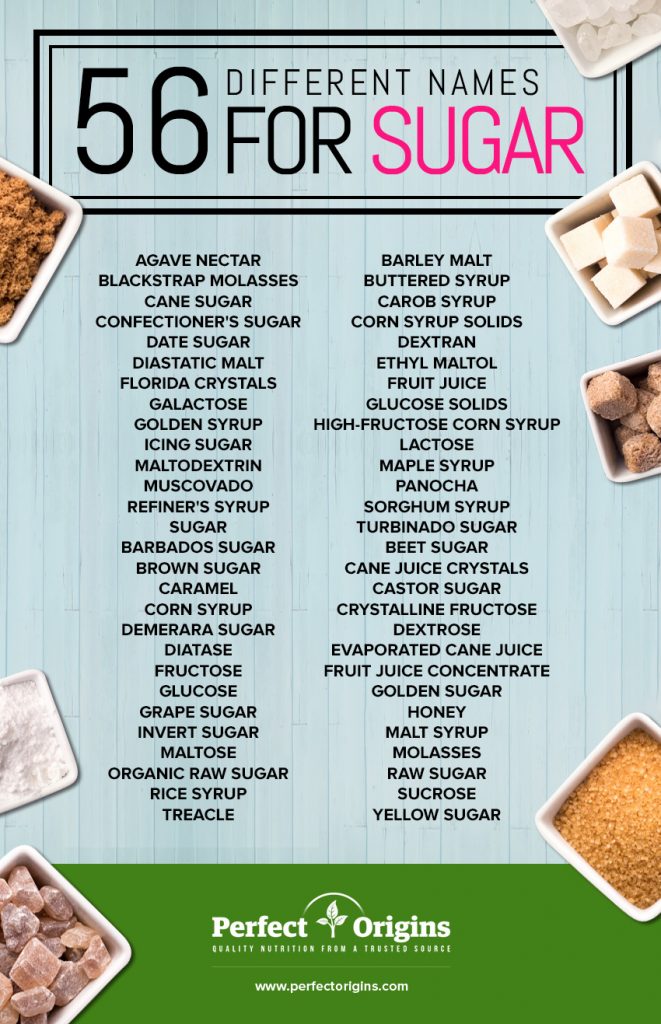
Want to know what’s especially devious?
Food manufacturers often list these alternative names for sugar as the eighth or ninth ingredient.
They do this to trick you into thinking there’s not a significant amount of added sweeteners in their dangerous “Franken-food” products.
It’s sneaky — and scary.
And added sugar is just the start…
2. Why You Should Worry About High Fructose Corn Syrup
Last year, a popular and well-respected doctor received a letter from the Corn Refiner’s Association, a powerful lobbyist group that represents the multi-billion dollar corn industry in Washington, D.C.
This letter put the doctor on “notice” and made it clear that the Corn Refiner’s Association was closely monitoring what this doctor said in print, on his blog, and on his radio program.
Sounds a bit like something out of George Orwell’s 1984, doesn’t it?
So what did this doctor do to draw the attention and threats of the Corn Refiner’s Association?
He spoke out about the health risks associated with consuming high fructose corn syrup.
What is high fructose corn syrup?
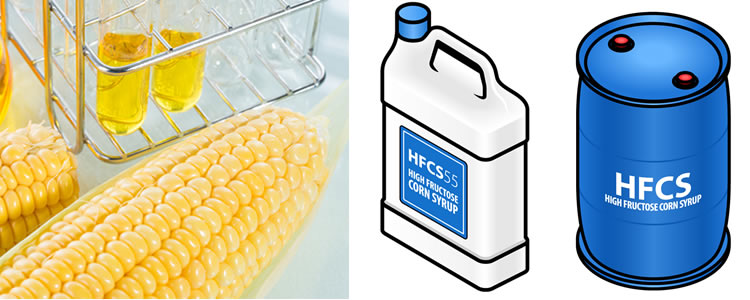
High fructose corn syrup (HFCS) is a liquid sweetener that’s chemically similar — but not identical to — regular cane sugar. It first showed up in foods and drinks in the U.S. in the 1970’s.
Since 1970, obesity rates in the United States have more than doubled. Diabetes cases have tripled. [3] [4]
You won’t find HFCS in nature. It’s made in laboratories. And because the U.S. government subsidizes corn production by paying growers, HFCS is cheap compared to sugar.
And it’s everywhere.
As with sugar, HFCS shows up on ingredients lists of tens of thousands of foods in America. Including:
- Capri-Sun Juice Drinks
- Starbucks’ Frappuccino
- Kellogg’s Raisin Bran
- Heinz Ketchup
- Miracle Whip
- Yoplait Yogurt
- Wishbone Salad Dressing
- Campbell’s Vegetable Soup
With so much HFCS being sneaked into our foods, it’s fair to ask:
What are the health concerns associated with high fructose corn syrup?
The Corn Refiner’s Association has invested millions (a portion of which is tax payer money) into slick Hollywood-style commercials and ad campaigns to “set us straight” on HFCS.
They’d have you believe that HFCS is perfectly safe.
Unfortunately, for the lobbyists and fat can industrial farmers making a killing off of the lucrative high fructose corn syrup industry, the science says otherwise.
Earlier I mentioned that HFCS is chemically similar but not identical to regular cane sugar.
With regular sugar you have two sugar molecules (fructose and glucose) tightly bound in equal proportion. With HFCS, you still have fructose and glucose, not in a 50-50 ratio as with regular sugar, but instead in a 45-55 ratio in an unbound form.
Because no chemical bond exists between the fructose and glucose in HFCS, no digestion is required and they’re quickly absorbed by your bloodstream.
One hundred percent of the fructose in HFCS is absorbed by your liver where it triggers a process called lipogenesis. [5]
This leads to the production of fats like triglycerides and cholesterol and helps to explain why as many as 80 million Americans now suffer from non-alcoholic fatty liver disease. [6]
Together, these two features of HFCS trigger metabolic disturbances that can lead to increased appetite, obesity, diabetes, heart disease, cancer and more. [7]
As the glucose in HFCS is absorbed it triggers massive spikes in insulin — which tells your body to store fat.
The powerful Corn Refiner’s Association would rather you stayed in the dark about the health risks associated with HFCS. And they’ve got the deep pockets and clout in Washington to keep us in the dark… unless we do something about it.
Continue reading to discover what you can do to regain control of your health from these greedy special interest groups and the toxic ingredients they foist on the American public.
But first, I’m afraid I have to share even more disturbing news…
3. Sugar Can Be As Addictive As Hard Drugs
You’ve felt it. I have too.
A craving for sweet, creamy chocolate ice cream, or a plate of Oreos and milk, or that last piece of birthday cake you SWORE you’d save till tomorrow…
A craving for sweets that starts as a whisper, grows to a yell and soon becomes a deafening bellow of NEED IT NOW desire that simply must be obeyed.
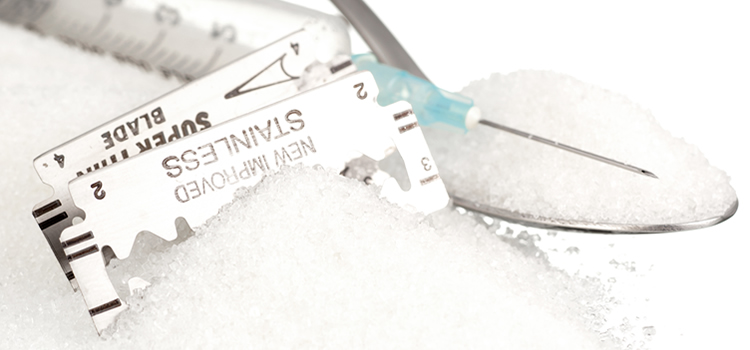
Is it just a sweet tooth… or something more sinister?
The answer will frighten you:
Brain scans have shown that regularly consuming sugar affects the brain in ways similar to hard drugs like cocaine.
A now famous study that first appeared in the journal Neuroscience and Biobehavioral Reviews found that sugar — which, remember, is added to 80% of the foods you eat and serve your family — meets the criteria for substance abuse and may be addictive to those who binge on it.
By affecting the chemistry of the limbic system, the part of the brain that govern’s emotional control, sugar exerts powerfully addictive qualities.
And because these changes take place on a chemical level, willpower goes right out the window.
When you’re under the influence of a sugar addiction, you can’t use willpower to control your cravings any more than you could stop feeling thirsty through strength of character. [9]
Does that mean everyone who consumes sugar will become an addict?
No, of course not. Just as most people can enjoy a glass of wine without becoming an alcoholic.
But here’s the kicker:
Unlike alcohol, most of us are consuming way too much sugar. And this over-consumption greatly increases the risk of sugar’s addictive properties taking root inside our brain.
What sugar does to the brain is truly frightening. But what it does to your liver might be even worse…
4. Sugar Is As Toxic To Your Liver As Alcohol
I enjoy a glass of red wine in moderation. But you’re not going to be surprised when I say that drinking excessive amounts of alcohol is bad for your health.
What might surprise you (it certainly surprised me as I was researching this report), is that when it comes to your health, guzzling Coke and Dr. Pepper could be as bad for your health as heavy drinking.
Consider these two facts:
- According to the Centers for Disease Control and Prevention, alcohol is responsible for roughly 88,000 deaths per year in America. [10]
- The Harvard School of Public Health reports that approximately 180,000 deaths worldwide occurred as a result of drinking sugary beverages. [11]
Every year, 25,000 adult Americans die because of health problems related to consuming sugary soda and sports drinks. [12]
Yet despite the risks, nearly half of all Americans drink soda every day. What’s more, among those who do sip these sugary drinks the average daily intake is 2.6 glasses! [13]
Do you think that’s because Big Sugar and their beneficiaries like Coke, PepsiCo, and other multi-billion dollar food and drink companies want you to see their toxic products as harmless, fun and enjoyable?
They can’t afford (literally) for you to learn the truth about their products. And they’ve got multi-million dollar ad campaigns designed to pull the wool over your eyes.
But consider this:
Alcohol contains ethanol, fermented fructose that gives beer, wine and liquor its intoxicating properties. When you feel a slight buzz after enjoying a cocktail or glass of wine, that’s ethanol at work.
Although fructose (either as added sugar, high fructose corn syrup, or one of dozens of other added sweeteners) does not exhibit the same acute toxic effects of ethanol, it does repeat all the chronic toxic effects on long-term health. [14]
In other words, binge drinking three cans of Coke won’t get you drunk like downing three shots of whisky might, but it’s every bit as hard on your health as heavy drinking.
This is because, as we discussed above, sugar (whether from ethanol in a beer or fructose in a soda) is absorbed by your liver, triggering lipogensis.
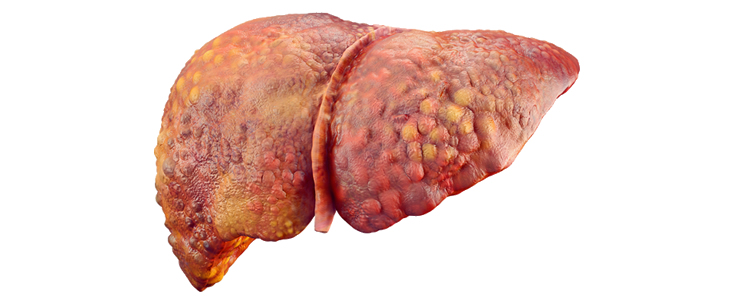
This metabolic process leads to the production of triglycerides and cholesterol which can overtax the liver and increase your risk of non-alcoholic fatty liver disease.
When you flush sugary drinks and restore your liver to the fat-burning organ it was designed to be, you look and feel like a new person, often much faster than you ever thought possible!
No wonder Dr. Lustig has described fructose as “alcohol without the buzz”.
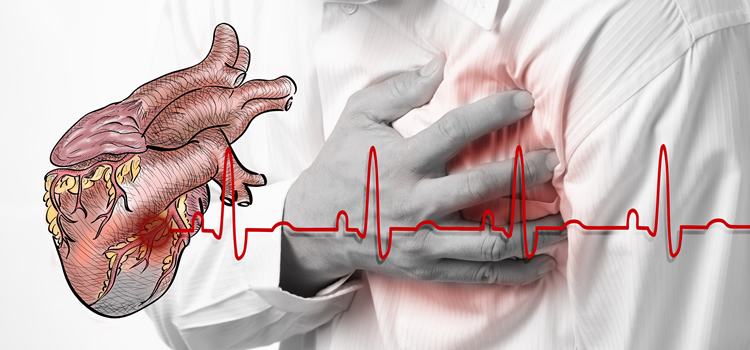
5. Sugar Increases Your Risk Of Death From Heart Disease
As you’ve seen, sugar is far from the sweet delight the filthy rich sugar industry promotes to you and your family.
At best, most folks worry about an increase in cavities or jeans that fit too tight when they eat sugar. But the health risks are worse than that. Far worse.
A sugar-soaked diet also increases your risk of dying from heart disease even if you’re not overweight. So claims a study published in the prestigious JAMA Internal Medicine. [15]
Over the course of the 15 year study, participants who received 25% or more of their daily calories from sugar were more than twice as likely to die from heart disease as those folks whose diets included less than 10% added sugar.
What this study ultimately concluded was that your risk of dying from heart disease rose in tandem with the amount of sugar you ate — regardless of age, sex, physical activity level, or body mass index.
In other words: The more sugar you eat, the more likely you are to die from heart disease.
What can you do to slash the amount of added sugar in your diet… and potentially add many healthy years to your life as a result?
The Harvard School of Public Health has called out sugar-sweetened sodas and sports drinks as “by far the biggest sources of added sugar in the American diet”. [16]
Simply switching from soda to unsweetened tea or (my personal favorite) water with a lemon wedge, could transform your health.
If you drink one or more sugary beverages a day, I urge you to switch to a healthier alternative and monitor your health over the next 30 days.
You’ll be amazed at how much better you feel and how much easier it is to shed pounds once you’ve kicked your soda habit to the curb!
6. Sugar Contributes To The Obesity Epidemic In America

Obesity in America is a common, serious, and costly problem. Consider these facts from the Centers for Disease Control and Prevention:
- More than one-third (78.6 million) of U.S. adults are obese.
- Obesity-related conditions include heart disease, stroke, type 2 diabetes and certain types of cancer, some of the leading causes of preventable death.
- The estimated annual medical cost of obesity in the U.S. was $147 billion in 2008; the medical costs for people who are obese were $1,429 higher than those of normal weight.
- In 2012, more than one third of children and adolescents were overweight or obese.
- The percentage of children aged 6 — 11 years in the United States who were obese increased from 7% in 1980 to nearly 18% in 2012. Similarly, the percentage of adolescents aged 12 — 19 years who were obese increased from 5% to nearly 21% over the same period. [17] [18]
Sugar consumption in America is on the rise. Consumption of added sugar has increased by more than 30% over the last three decades. [19]
And as our appetite for sugar increases, our waistlines expand.
Sugar adds empty calories with no nutritional value to a majority of the foods available to us. And as we consume more calories than we expend, we gain weight.
But sugar also contributes to the obesity epidemic raging across America because…
- Sugar can trigger insulin resistance that causes your body to store fat — especially around your midsection. [20]
- Sugar causes your body to become resistant to leptin (your “hunger hormone”) and this forces you to feel hungry all the time. [21]
In other words, sugar (fructose specifically) can turn your body into a fat-storing machine and cause your appetite to rage out of control.
That’s a one-two combination that leads to excessive weight gain and is fueling America’s obesity epidemic.
How To Keep Sugar From Souring Your Health

We’ve covered a lot of ground in this article. And if I had to boil the information we’ve looked at so far down into two points it would be these:
- Excessive sugar consumption will destroy your health and condemn you to a life of chronic illness, obesity and early death.
- Most of us have no idea we’re consuming too much sugar because multi-billion dollar corporations, lobbyist groups and other powerful entities have a clear agenda to lie to, mislead and deceive the American public about the true health risks associated with sugar.
Big Sugar executives and the Washington lobbyists who do their bidding don’t care a fig for your health and the health of your family.
If they did, how could Big Sugar in good conscience say “Sugar adds to the quality of children’s diets” when the evidence (and common sense) say that just isn’t so.
Sugar and high fructose corn syrup are good for you? Give me a break. The science says otherwise. But when the World Health Organization (WHO) wanted to bring research-supported evidence of the health risks posed by overconsumption of sugar, what did the bullies and lobbyist who work for Big Sugar do?
They threatened to have funding for the WHO suspended if the World Health Organization dared to make their warnings against sugar public! [22]
It’s a racket, plain and simple. One that makes the fat cats involved billions of dollars at the cost of your good health.
Washington is filled with crooks who couldn’t care less how their greed impacts your health and the health of your family. But that DOESN’T mean you have to take it.
Here’s a simple, easy-to-follow recommendation for regaining control of your health from Big Sugar and their cronies.
Perfect Origins’ Five Rules to Eat By:
- Don’t eat any food with five or more ingredients.
- Don’t eat any food with ingredients you can’t pronounce.
- Don’t eat foods that are advertised to you with commercials.
- Eat foods that can go bad.
- Whenever possible, eat foods that are organic, local and sustainable.
The easiest way to get started is by reading food labels at your local grocery store.
If a food item doesn’t meet the five criteria above, it goes back on the shelf. If it does, it goes in your cart.
You’ll be amazed at how much better you feel when you’re no longer a victim of the “sweet little lies” fed to you by Big Sugar.
As you switch over from their sneaky, sugar-soaked products to simple, whole, delicious foods you’ll find that you have more energy, a stronger immune system and weight loss (if that’s one of your goals) will become much, much easier.
And remember to start small:
Even substituting one sugary item per week for a healthier alternative (switching from soda to herbal tea, for example) will quickly add up.
Now It’s Your Turn
Does sugar deserve a place in your diet?
Sure… in moderation.
The problem, as you’ve now seen, is that most of us are consuming far too much sugar, often through no fault of our own, and all that added sugar is making us fatter and sicker than we deserve to be.
Discover the surprising reason many people experience fatigue, weight gain, and brain fog — and how supporting your liver may help improve your overall health. Watch the full presentation here.