
Most mornings, coffee is the first thing. Before the emails, before the to-do list, before anything really gets started. For a lot of people, it is simply a ritual. But it turns out that ritual may be doing more for your health than you realize.
Coffee has been one of the most studied beverages in nutritional science. And the research, on the whole, is surprisingly positive. Here is what the evidence says about the health benefits of coffee and why so many researchers continue to study its effects on the brain, liver, metabolism, and long-term health.
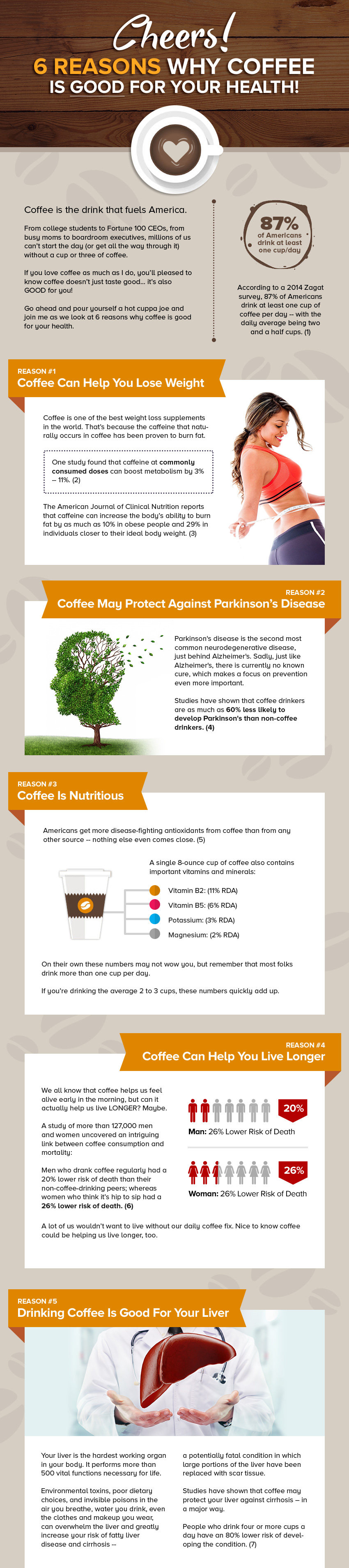
1. Coffee May Support a Healthy Metabolism
Caffeine is one of the few naturally occurring compounds that research suggests can genuinely influence how the body burns energy. Studies have found that caffeine may increase thermogenesis, which is the process by which the body generates heat and burns calories. (1)
This does not mean coffee is a weight-loss solution on its own. Results vary depending on a person’s body composition, activity level, and overall diet. But for many adults, a moderate amount of caffeine appears to give metabolism a modest, measurable nudge.
Research also suggests caffeine may temporarily increase fat oxidation under certain conditions, particularly during physical activity, although the effect varies considerably between individuals. (1)
2. Coffee Is One of the Largest Sources of Antioxidants in the American Diet
Coffee is not just a morning pick-me-up. It is also rich in naturally occurring plant compounds called polyphenols, including chlorogenic acids, which contribute to its antioxidant activity. (2)
Antioxidants help protect cells from oxidative stress, which has been linked to aging and many chronic health conditions. Coffee is one of the largest sources of dietary antioxidants in the American diet, largely because it is consumed so frequently. (2)
In addition to antioxidants, coffee contains small amounts of several nutrients, including B vitamins, potassium, and magnesium. While coffee should not be relied upon as a major nutrient source, those nutrients can contribute to overall dietary intake.

3. Coffee May Help Protect Against Parkinson’s Disease
Parkinson’s disease is the second most common neurodegenerative disorder, and there is currently no cure. That makes prevention research especially important.
Multiple studies have found that regular coffee drinkers may have a significantly lower risk of developing Parkinson’s disease compared to non-coffee drinkers. (3) Researchers believe caffeine may help influence dopamine-related pathways in the brain that play a role in movement and neurological function. (3)
The exact relationship is still being studied, and coffee is not a treatment or guarantee against Parkinson’s disease. However, the consistency of findings across decades of research has made coffee and Parkinson’s disease one of the most interesting areas of neurological research.

If you are thinking about other ways to support your brain and overall wellness, it may be worth exploring what additional support options are available.
4. Coffee May Support Longevity
Researchers have spent years examining whether coffee drinkers tend to live longer than non-coffee drinkers. The results have been surprisingly consistent.
Large observational studies have found that regular coffee drinkers tend to have a lower risk of premature death compared with non-coffee drinkers. (4) Researchers have observed associations with lower risks of several major causes of death, including cardiovascular disease and certain chronic illnesses.
These studies do not prove that coffee directly causes longer life. Many lifestyle factors can influence health outcomes. Still, the relationship has appeared repeatedly across multiple populations and research groups, making it one of the more compelling findings in nutrition science.
5. Coffee May Help Protect Your Liver
Your liver performs hundreds of essential functions every day. It helps process nutrients, filter waste products, regulate metabolism, and support overall health.
Research suggests that regular coffee consumption may be one of the more beneficial dietary habits for liver health. Studies have found that coffee drinkers tend to have lower rates of chronic liver disease, liver fibrosis, cirrhosis, and liver cancer. (5)
A large UK Biobank study that followed nearly 500,000 adults found lower rates of chronic liver disease and liver-related complications among coffee drinkers, including those who consumed only one cup per day. (5)
When researchers discuss coffee and liver health, they often point to the remarkable consistency of findings across multiple studies. (5) While coffee should never replace healthy lifestyle habits, the evidence supporting coffee and liver health is among the strongest in nutritional research.

If learning about coffee and liver health has made you think more about supporting your liver overall, it may be worth exploring additional ways to help maintain healthy liver function.
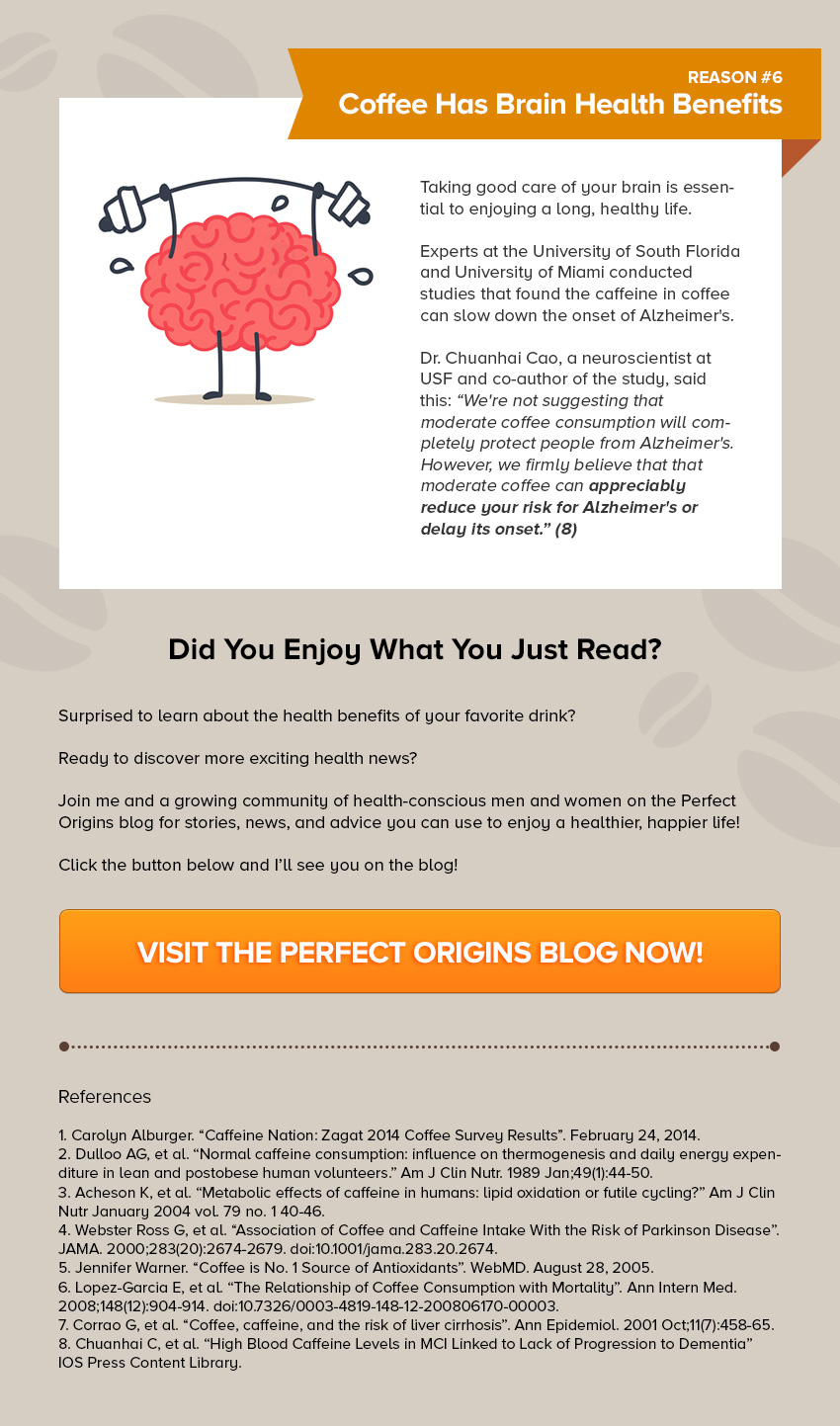
6. Coffee May Support Brain Health and Reduce Alzheimer’s Risk
The growing research on coffee and brain health has become one of the most promising areas in nutritional neuroscience. (6)
Multiple lines of evidence suggest that regular, moderate coffee consumption may help support long-term cognitive health and may be associated with a lower risk of cognitive decline. (6)
A systematic review published in 2024 found that higher caffeine intake was consistently associated with a reduced risk of cognitive decline and Alzheimer’s disease progression across multiple studies. (6)
Researchers believe one possible mechanism involves caffeine’s interaction with adenosine receptors in the brain, which may influence processes associated with cognitive decline and Alzheimer’s disease development. (7)
A meta-analysis of prospective studies also found that higher coffee consumption was associated with a lower risk of developing Alzheimer’s disease. (6)
Coffee is not a guarantee against memory loss or dementia. However, the growing body of research suggests that moderate coffee consumption may play a supportive role in maintaining cognitive health as we age.
A Few Things Worth Keeping in Mind
Coffee is not right for everyone. Individuals who are pregnant, highly sensitive to caffeine, or managing certain medical conditions may need to limit their intake based on their healthcare provider’s recommendations.
It is also important to remember that more is not necessarily better. Most research showing positive outcomes generally involves moderate consumption, often around two to four cups per day.
Decaf coffee may offer some benefits as well, particularly for liver and metabolic health, because many of coffee’s beneficial compounds are not dependent on caffeine.
If you already enjoy coffee, current research offers reassuring evidence that it may contribute positively to your overall health. If you do not drink coffee, however, there is no reason to start solely for health benefits. Individual needs, preferences, and health conditions always matter.
If you are interested in supporting your brain health beyond what your daily habits already offer, it may be worth exploring options designed to complement a healthy routine.
Sources
- Dulloo AG, Geissler CA, Horton T, Collins A, Miller DS. Normal caffeine consumption: influence on thermogenesis and daily energy expenditure in lean and postobese human volunteers. Am J Clin Nutr. 1989 Jan;49(1):44-50. https://pubmed.ncbi.nlm.nih.gov/2912010/
- Makiso MU, et al. Bioactive compounds in coffee and their role in lowering the risk of major public health consequences: A review. Food Sci Nutr. 2024. https://pmc.ncbi.nlm.nih.gov/articles/PMC10867520/
- Ross GW, Abbott RD, Petrovitch H, et al. Association of coffee and caffeine intake with the risk of Parkinson disease. PMC. https://pmc.ncbi.nlm.nih.gov/articles/PMC3516314/4
- Lopez-Garcia E, van Dam RM, Li TY, Rodriguez-Artalejo F, Hu FB. The Relationship of Coffee Consumption with Mortality. Ann Intern Med. 2008;148(12):904-914. https://www.acpjournals.org/doi/10.7326/0003-4819-148-12-200806170-00003
- Kennedy OJ, et al. All coffee types decrease the risk of adverse clinical outcomes in chronic liver disease: a UK Biobank study. BMC Public Health. 2021. https://pmc.ncbi.nlm.nih.gov/articles/PMC8365979/
- Dighriri IM, et al. Association Between Caffeine Intake and Alzheimer’s Disease Progression: A Systematic Review. 2024. https://www.ncbi.nlm.nih.gov/pmc/articles/PMC12009456/
- Cunha RA, et al. Caffeine for Prevention of Alzheimer’s Disease: Is the A2A Adenosine Receptor Its Target? 2023. https://pmc.ncbi.nlm.nih.gov/articles/PMC10296091/