
Grapefruit juice has spent decades bouncing between being called a miracle weight loss drink, a detox ingredient, and an old-school breakfast staple. Most of those conversations leave out an important detail: grapefruit is not magic, but it is interesting.
Researchers have spent years studying compounds found naturally in grapefruit because of their potential roles in metabolism, antioxidant activity, appetite regulation, cardiovascular health, and liver function. Some findings are promising. Others are still developing. Like most foods, the truth lands somewhere between hype and dismissal.
This article looks at what grapefruit juice may actually do inside the body, where the science is stronger, where it is weaker, and how a simple grapefruit and olive oil tonic fits into the bigger picture of metabolic health.
What Makes Grapefruit Juice Worth Paying Attention To
Most people think of grapefruit as simply a low-calorie fruit. Nutritionally, there is more happening beneath the surface.
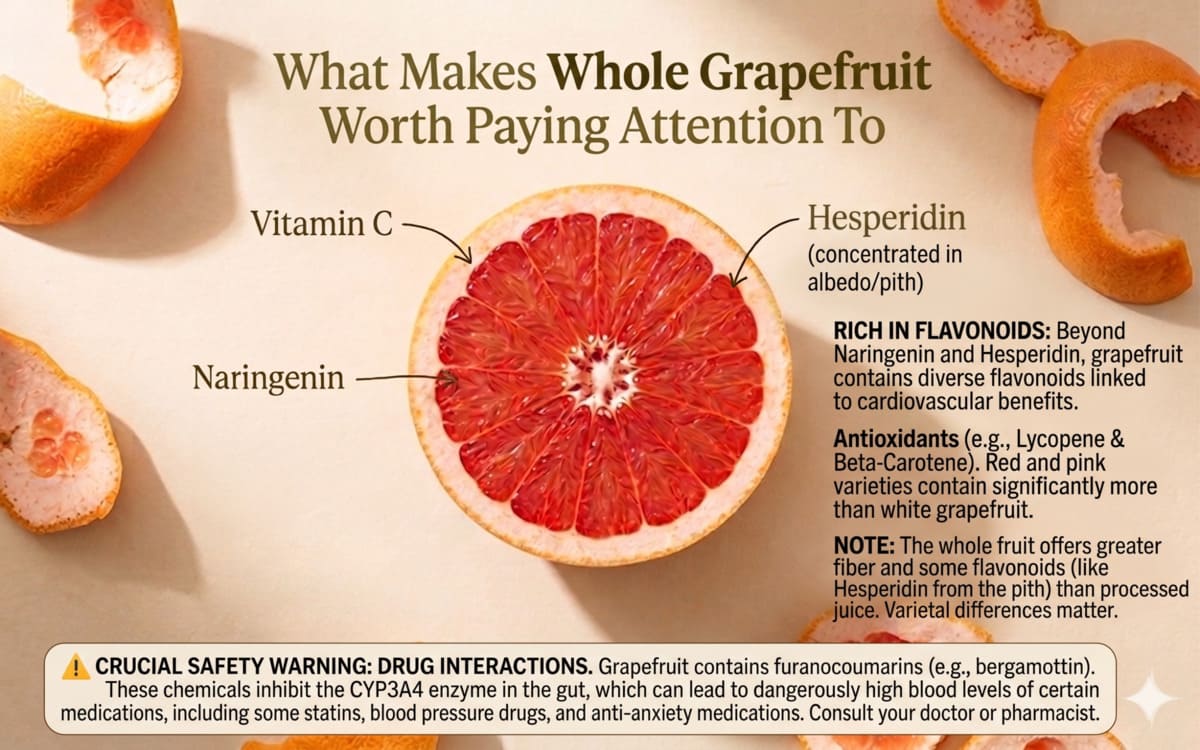
Grapefruit contains vitamin C, potassium, antioxidants, and several plant compounds including naringenin and hesperidin that researchers continue studying for their metabolic and cardiovascular effects. These compounds do not transform health overnight, but they may contribute to broader health patterns when consumed consistently as part of an overall healthy diet.
Many nutrition conversations focus on single nutrients or isolated compounds, but foods rarely work that way. Grapefruit is a combination of hydration, micronutrients, plant compounds, and eating habits. When people consistently include more fruits and whole foods in their routines, those patterns often create benefits that extend beyond one ingredient.
Vitamin C and Immune Support
Grapefruit juice provides a substantial amount of vitamin C, which plays important roles in immune function, collagen formation, antioxidant protection, and wound healing.(1)
Vitamin C often gets marketed as an instant immune booster, but research tells a more measured story. Consistently getting enough vitamin C appears more important than taking large amounts occasionally. Adequate intake may help support normal immune function and may modestly shorten the duration of common illnesses in some people.
It is also worth remembering that immune health depends on more than one nutrient. Sleep quality, stress management, physical activity, protein intake, and overall diet quality all play important roles.
Naringenin and Metabolic Health
One reason researchers remain interested in grapefruit is because of naringenin, a naturally occurring flavonoid found in citrus fruits.
Laboratory and animal studies suggest naringenin may influence pathways involved in insulin signaling, glucose regulation, inflammation, and fat metabolism.(2)
This does not automatically mean grapefruit juice creates dramatic weight loss in humans.
Metabolism is influenced by dozens of factors including muscle mass, hormones, age, sleep quality, stress levels, medication use, and food intake patterns. While researchers continue exploring how citrus compounds influence these pathways, grapefruit works best viewed as one small piece of a much larger picture.
People looking for sustainable weight management often see greater results focusing on consistency rather than searching for one metabolism-boosting ingredient.
Liver Function and Oxidative Stress
Your liver performs hundreds of functions every day.
It helps process nutrients, supports cholesterol production, regulates aspects of blood sugar balance, metabolizes medications, produces bile, and processes metabolic waste products.
Researchers have studied grapefruit compounds such as hesperidin and naringenin because of their antioxidant properties and their possible role in supporting healthy liver function.(3)
This research is still developing, especially in humans. Still, maintaining liver health matters because many metabolic processes rely heavily on normal liver function.
Supporting liver health usually looks less dramatic than social media suggests. It often means reducing excess alcohol intake, improving sleep, maintaining a healthy weight, eating fiber-rich foods, and staying physically active over long periods of time.
Cholesterol and Waist Circumference
Several studies have explored whether grapefruit consumption influences cholesterol levels and body composition.(4)
Some findings show modest improvements in cholesterol markers and waist measurements when grapefruit was included regularly with meals.
That distinction matters.
Researchers are studying grapefruit as part of broader dietary patterns, not as a standalone solution.
People who consistently eat fruit often engage in other health-supportive habits too, which makes nutrition research complicated. This is why individual foods rarely deserve all the credit or blame.
Appetite and Eating Patterns
Many people report feeling fuller when they include grapefruit with meals.
That may be related to fluid intake, food volume, meal timing habits, acidity, or eating behavior patterns rather than dramatic appetite suppression.(5)
No fruit turns hunger off completely.
What foods can do is support routines that make healthy eating easier to maintain.
Something as simple as eating intentionally before meals, slowing down, or building more structured eating patterns may influence appetite more than people realize.
The Grapefruit and Olive Oil Tonic

This is where online wellness advice often becomes exaggerated.
A mixture of grapefruit juice and olive oil is not a liver cleanse.
It does not flush toxins.
It does not melt belly fat.
What it does offer is a simple routine built around two widely available ingredients.
Olive oil provides monounsaturated fats that stimulate digestive processes and bile release, which helps the body digest fats normally.(6)
Grapefruit contributes antioxidants and plant compounds researchers continue studying for their role in metabolic and liver health.
Together, they create a low-effort habit that may fit into a broader wellness routine.
Research consistently suggests visceral fat responds best to overall improvements in nutrition quality, movement, sleep, and long-term consistency rather than any single food or drink.(7)
That may sound less exciting than dramatic claims online, but it is much closer to reality.
Learn More About Liver Support
Some people find healthy routines easier to maintain when they combine good nutrition habits with additional support designed to fit into everyday life.
How To Make It
Ingredients:
- 8 oz unsweetened grapefruit juice
- 2 tablespoons extra virgin olive oil
Directions:
- Combine ingredients in a glass or shaker bottle
- Mix thoroughly for 10 to 15 seconds
- Drink before a meal if tolerated
Choose grapefruit juice without added sugars whenever possible. Fresh squeezed juice also works well.
If the flavor feels strong at first, starting with smaller amounts may make it easier to tolerate and easier to stick with consistently.
Medication Warning: Read This Before Using Grapefruit Regularly

Grapefruit deserves more caution than many wellness foods.
Compounds found naturally in grapefruit can interfere with enzymes responsible for metabolizing certain medications.(8)
That interaction can sometimes increase medication levels in the bloodstream and potentially create unwanted effects.
Talk with your healthcare provider before regularly consuming grapefruit if you take:
- Certain statins
- Blood pressure medications
- Some heart medications
- Some anti-anxiety medications
- Immunosuppressant medications
- Certain allergy medications
This does not mean grapefruit is unsafe.
It means grapefruit interactions are important enough to take seriously.
What Most People Overlook About Weight and Liver Health
A lot of conversations about weight focus entirely on calories or carbohydrates while ignoring the systems helping manage energy balance behind the scenes.
The liver plays important roles in processing nutrients, managing cholesterol, supporting blood sugar regulation, producing bile, and helping metabolize fats.
When sleep suffers, movement decreases, stress remains elevated, or food quality drops, these systems often become less efficient.
Supporting liver health is usually less dramatic than people expect.
It often looks like:
- Better sleep habits
- More movement throughout the day
- Higher quality food choices
- Better hydration
- Less alcohol
- Long-term consistency
Grapefruit juice may fit into that picture.
It is unlikely to create the picture by itself.
The Bottom Line
No food or drink melts fat.
No juice detoxifies the body overnight.
No two-ingredient tonic overrides poor sleep, chronic stress, or inconsistent habits.
What grapefruit juice does offer is a combination of nutrients and plant compounds that researchers continue studying for metabolic health, cardiovascular health, and liver support.
That does not make it miraculous.
It does make it worth understanding.
If supporting metabolism, liver health, and long-term wellness is one of your goals, exploring additional daily support options may be worth considering.
Learn More About Liver Support
Sources
[1] Hemilä H, Chalker E. Vitamin C for preventing and treating the common cold. Cochrane Database Syst Rev. 2013.
https://pubmed.ncbi.nlm.nih.gov/23440782/
[2] Mulvihill EE, et al. Naringenin prevents obesity, metabolic syndrome, and disease states associated with metabolic syndrome.
https://pubmed.ncbi.nlm.nih.gov/19394791/
[3] Ekhlasi G, et al. Effects of fruit-derived antioxidants on liver health.
https://pubmed.ncbi.nlm.nih.gov/27904552/
[4] Gorinstein S, et al. Red grapefruit positively influences serum triglyceride levels.
https://pubmed.ncbi.nlm.nih.gov/16968878/
[5] Hara H, et al. Factors affecting digestive hormone responses.
https://pubmed.ncbi.nlm.nih.gov/1293017/
[6] Little TJ, Russo A, Meyer JH, et al. Free fatty acids have more potent effects on gastric emptying, gut hormones, and appetite than triacylglycerides.
https://pubmed.ncbi.nlm.nih.gov/17344489/
[7] Jensen MD. Role of body fat distribution and metabolic complications of obesity.
https://pubmed.ncbi.nlm.nih.gov/18987276/
[8] Bailey DG, et al. Grapefruit medication interactions: forbidden fruit or avoidable consequences?
https://pubmed.ncbi.nlm.nih.gov/23147095/