
You ate. Hours passed. Maybe a full day. And nothing happened. You feel full, uncomfortable, maybe a little bloated, and you’re wondering why your body just won’t cooperate.
If you’ve been Googling “why can’t I poop,” you’re in good company. Constipation is one of the most common digestive complaints in the country, and millions of people deal with it quietly because it’s not exactly dinner table conversation.
But it matters. A lot more than most people realize.
Here’s what’s actually going on and what you can do to get relief.
Why Constipation Is So Common (And Getting Worse)
Dealing with this right now? We’ve found a natural digestive supplement worth sharing that may help support regularity while you work on longer-term changes. Take a look at Total Bowel Release.
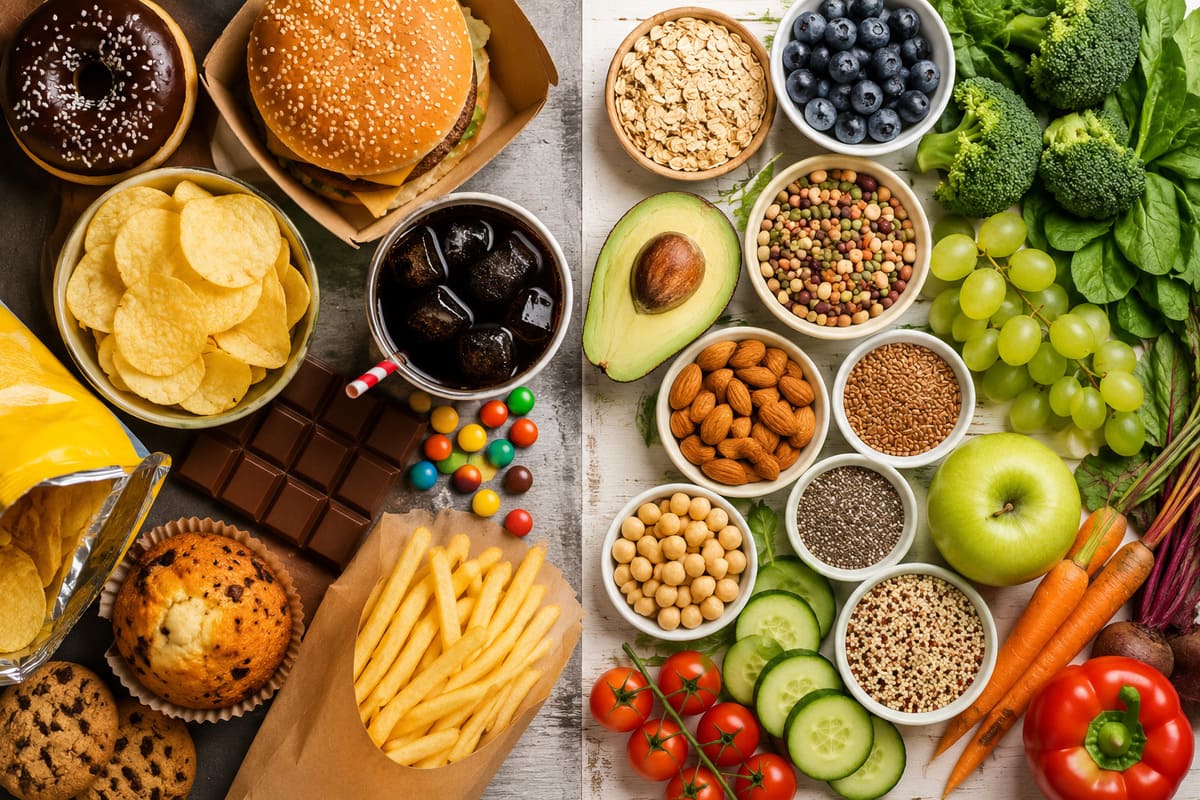
The average American gets nearly 58% of their daily calories from ultra-processed foods, according to a 2016 study published in BMJ Open. That’s packaged snacks, fast food, sugary drinks, and convenience meals. Foods designed to taste good but almost completely stripped of fiber.
And fiber is the thing your gut needs most to keep moving.
When you eat fiber-rich foods like vegetables, fruits, whole grains, and legumes, your digestive system has something to work with. Your colon forms healthy stool and moves it through on a predictable schedule.
When you eat mostly processed food? Things slow down. Waste sits in your colon longer. The colon keeps absorbing water from it, making stool harder and more difficult to pass. That’s constipation in a nutshell.
This isn’t about willpower or doing something wrong. It’s physiology, and it’s fixable.
Your Gut Bacteria Your gut is home to trillions of bacteria that play a direct role in digestion and regularity. They thrive on fiber. They struggle with processed food and added sugar. When your gut bacteria are out of balance, it shows up as bloating, irregularity, and that uncomfortable ‘stuck’ feeling.
What’s Actually Happening When Poop Gets Stuck
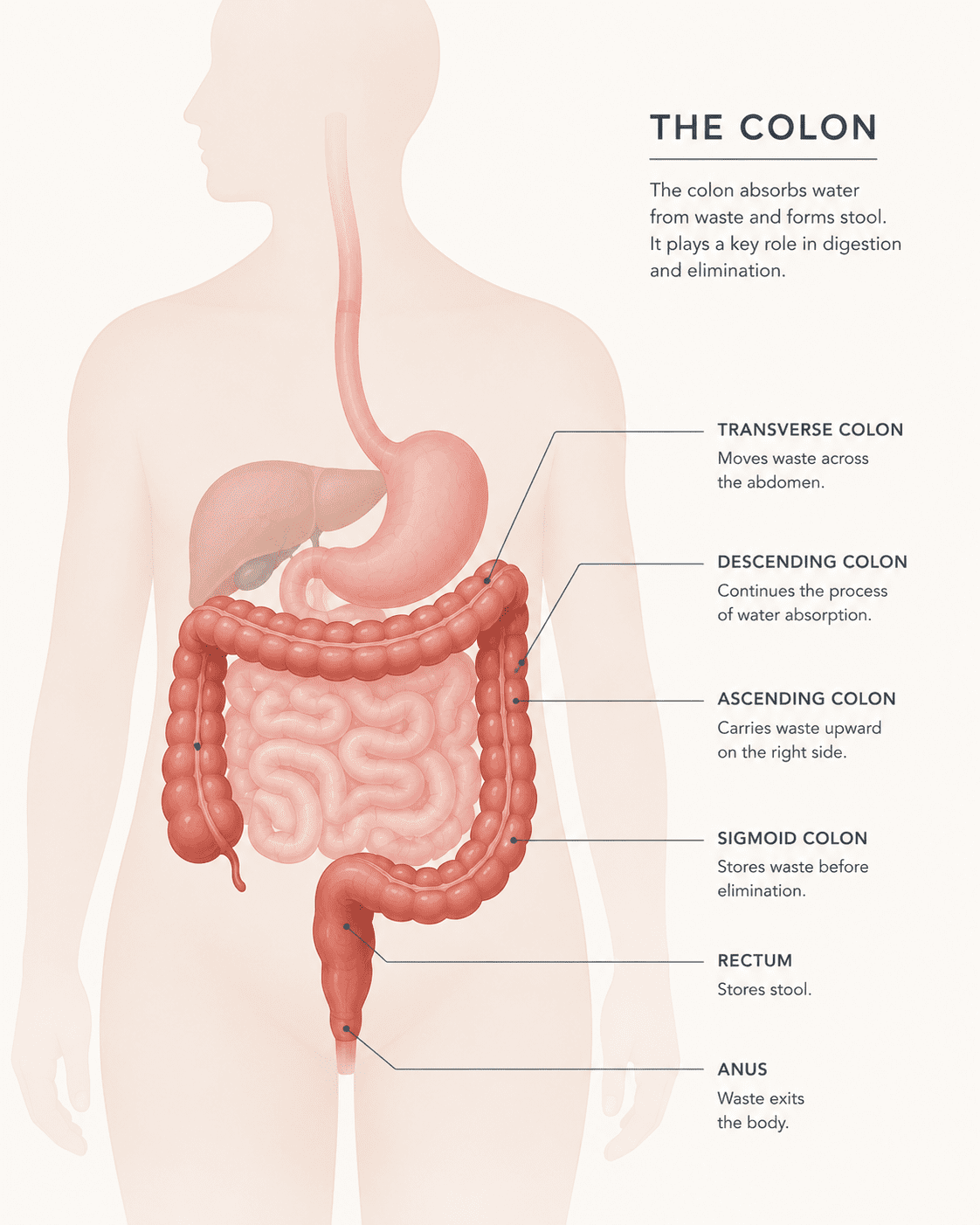
Your digestive tract is more complex than most people give it credit for. Here’s a plain-English look at what’s going on inside.
The Small Intestine
About 20 feet long and roughly an inch in diameter, this is where your body absorbs most of its nutrients. Food moves through here within 2 to 6 hours after you eat.
The Large Intestine (Colon)
This is where constipation actually happens. The colon is about 5 feet long and its job is to absorb water from waste and prepare it for elimination. Normally, stool moves through within 10 to 59 hours. When digestion is sluggish, it can sit much longer. The longer stool sits, the more water gets pulled out of it, making it progressively harder to pass.
Signs Your Gut Is Struggling Beyond Just Constipation
Constipation is often the most obvious sign, but it’s rarely the only one. According to Harvard Medical School, poor digestive health can also show up as:
• Bloating or gas after meals
• Heartburn or acid reflux
• Fatigue that doesn’t improve with sleep
• Skin issues like acne or dullness
• Mood changes, irritability, or brain fog
• Trouble losing weight despite eating well
• Getting sick more often than usual
The National Institutes of Health estimates 70 million Americans experience some form of digestive disorder.
4 Things That Improve When Your Gut Is Healthy Getting your digestion back on track doesn’t just relieve constipation.
It can change how you feel across the board.
1. Better Nutrient Absorption Everything you eat passes through your intestines before your body can use it. When things move slowly or your gut is inflamed, you absorb less, even from healthy food. A well-functioning gut means you actually get the vitamins and minerals you’re eating.
2. Easier Weight Management Gut bacteria play a real role in metabolism. Research shows that the balance of your microbiome may affect how your body processes calories, stores fat, and regulates appetite. If you’ve been eating well and still not seeing results, gut health may be a missing piece.
3. Stronger Immune Function Around 70 to 80% of your immune cells live in or around your digestive tract. When your gut is healthy, those cells function better. A chronically sluggish gut may explain why digestive issues and frequent illness so often go hand in hand.
4. Better Mood and Energy About 90% of your body’s serotonin, the neurotransmitter that regulates mood, calm, and sleep, is produced in the gut. Many people who improve their digestion report feeling noticeably more energetic and emotionally steady, not just more regular.
How to Get Relief: Natural Constipation Remedies That Work
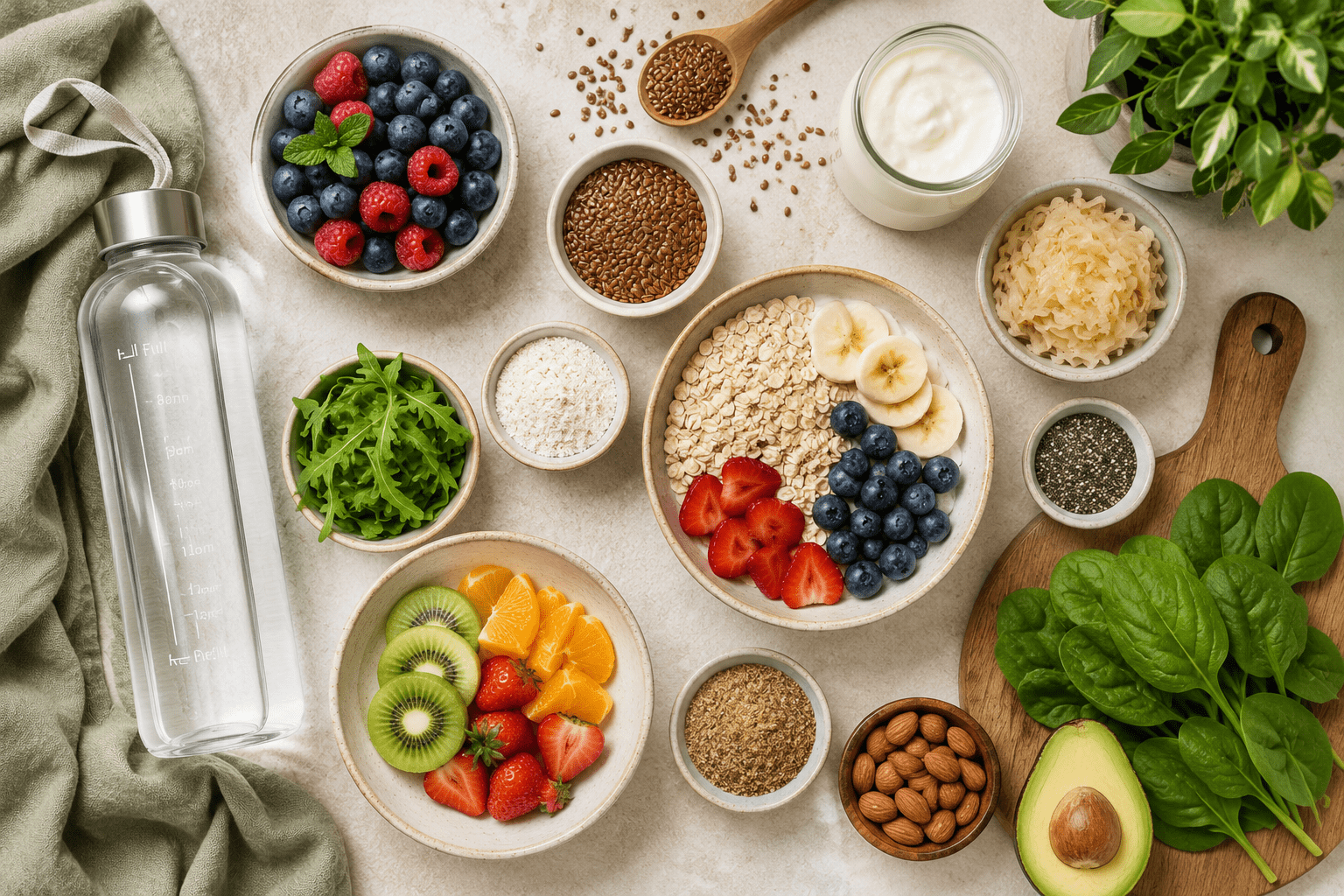
The good news is that your gut responds quickly to the right changes. Here’s what actually moves the needle.
- Increase fiber, gradually. Aim for 25 to 35 grams per day from real food sources. Most Americans get about half that. Add it slowly over a week or two to avoid temporary gas or bloating as your gut adjusts.
- Drink significantly more water. This is the most overlooked fix. Your colon needs water to keep stool soft and moving. If you’re constipated, dehydration is very likely part of the problem. Start with an extra 2 to 3 glasses per day and build from there.
- Move your body after meals. Physical activity stimulates the muscles of your digestive tract. Even a 15 to 20 minute walk after eating can make a meaningful difference in how quickly things move.
- Cut back on processed food. You don’t have to be perfect. Swapping even a few processed meals per week for higher-fiber alternatives adds up fast.
- Consider a quality digestive supplement. For many people, diet and lifestyle changes alone aren’t enough to break the cycle, especially if constipation has been ongoing. A well-formulated supplement with prebiotics, probiotics, and digestive enzymes may help support gut bacteria balance, soften stool naturally, and promote more regular digestion. We’ve found one we feel good recommending. You’ll find it at the bottom of this page.
Constipation, bloating, and sluggish digestion are common, but they’re not something you just have to accept. Your gut is designed to work well. Sometimes it just needs the right support to get back on track.
Frequently Asked Questions
Why can’t I poop even when I feel the urge?
This usually comes down to one of a few things: stool that’s too hard or dry from dehydration or low fiber, sluggish bowel contractions, or gut bacteria imbalances that slow transit time.
How long is too long to go without pooping?
Most people have bowel movements anywhere from three times a day to three times a week, and both can be normal.
What’s the fastest natural constipation relief?
Drinking a large glass of warm water first thing in the morning, followed by light movement like a short walk, is one of the most effective quick fixes.
Q: Can gut bacteria cause constipation?
Yes, this is a well-researched connection. An imbalanced gut microbiome can slow intestinal motility and reduce the production of short-chain fatty acids that help keep your colon moving. Probiotics and prebiotic fiber are often effective at supporting this.
Q: What foods help relieve constipation naturally?
Foods high in soluble fiber, including oats, flaxseed, apples, pears, beans, and sweet potatoes, are among the most effective. Probiotic-rich foods like plain yogurt, kefir, and fermented vegetables also support regularity. Staying well hydrated is just as important as what you eat.
You Don’t Have to Keep Living With This Constipation, bloating, and sluggish digestion are common, but they’re not something you just have to accept. Your gut is designed to work well. Sometimes it just needs the right support to get back on track. We’ve looked at a lot of products over the years. We only share the ones we genuinely believe in, and right now, for digestive support and constipation relief, this is what we’re recommending. Take a Look at Total Bowel Release Watch the full video here. No hype. No hard sell. Just something we think may help and think you’re worth knowing about.