
You probably coasted through your teenage years and early twenties without thinking twice about wrinkles or thinning hair. You looked radiant, energized, and healthy.
However, by the time you hit 30, you probably started to notice subtle signs of aging. Maybe the creases between your eyebrows became more visible or your hair lost its effortless volume and luster.
Now you know the truth: your hair and skin are not impervious to the natural process of aging. The changes you have been observing are actually a result of decreased collagen production in your body.
Don’t worry, it’s not hopeless. You can take control of your aging process with a simple collagen supplement. Nourishing your skin and hair with extra collagen is proven to counteract the aging process and reduce problems like wrinkles, skin laxity, and hair loss.
Collagen Supports Your Hair and Skin
Collagen is the most abundant protein in your body. The tough amino acid structures of collagen make up about 30% of all proteins within the body.
Collagen does everything from keeping your skin healthy to protecting your organs and lending structure to your joints. Its many essential duties in the body make collagen a building block necessary for life itself.
At least 16 types of collagen exist in the human body. Of those 16, types I and III collagen are specifically responsible for keeping the hair and skin strong, taut, and youthful.
How Does Collagen Work?
Connective tissue cells are responsible for secreting collagen. As collagen is produced, it forms a thick fibrous network of cells in the dermis, which is the middle layer of your skin. This network of collagen keeps hair and skin structures strong and protects them from toxins and pathogenic substances.
You can think of collagen in the middle layer of your skin as a mattress. Your epidermis- the surface skin that you see- is the bedsheet. As long as collagen production remains consistent, the “mattress” is always full and strong to support a taut “bedsheet”.
Since hair follicles are also located in the dermis, a healthy abundance of collagen also helps to optimize the hair growth process. This is why research shows a relationship between the amount of collagen in your skin and your hair thickness and moisture.
Overall, you have collagen to thank for the following skin and hair qualities:
- Smooth skin without wrinkles
- Elastic skin that “bounces back” into place
- Thick, strong hair
- Shiny, hydrated hair
Unfortunately, collagen production declines as you get older and causes many unwanted changes to the hair and skin.
How Does Age Affect Collagen?
Think about collagen once again as the “mattress” under your skin. Collagen production naturally declines about 1% each year after you turn 30, which causes that mattress to slowly deflate.
As a result, your top layer of skin- the “bedsheet”- loses its main source of support and starts to exhibit signs of aging:
- Wrinkles and creases
- Saggy areas
- Cellulite
- Stretch marks
Your hair is impacted by decreased collagen production as well. Without enough collagen, hair follicles struggle to regulate hair growth or effectively moisturize and nurture the skin that does grow. This leads to additional signs of aging:
- Hair thinning
- Hair loss
- Thin, brittle hair
- Dry, damaged hair
In addition to the natural causes of collagen reduction, certain lifestyle choices may deplete your collagen levels even further.
High sugar consumption, smoking, and unprotected sun exposure are the three most significant external causes of skin damage and collagen depletion as you age.
This sounds depressing, but you actually can take control of your collagen loss and counteract the effects of aging. An oral collagen supplement can be used to restore collagen in your body and minimize unwanted signs of skin and hair damage.
The Best Benefits of Collagen Supplements
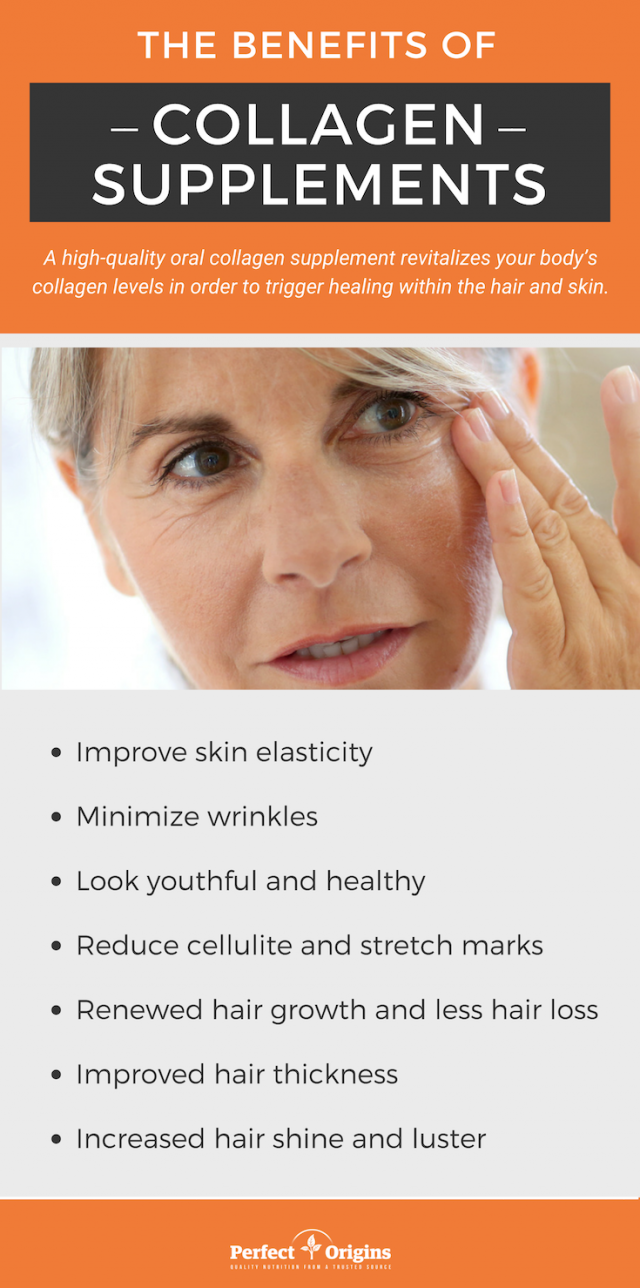
A high-quality oral collagen supplement revitalizes your body’s collagen levels in order to trigger healing within the hair and skin.
By taking a collagen supplement for your skin, you will nourish the dermis with the proteins needed to improve elasticity, minimize wrinkles, and help you look youthful and healthy.
These improvements aren’t just temporary; supplementing with collagen also activates skin cells to renew and repair normally so that signs of aging and damage heal instead of lingering on your skin.
Collagen’s ability to improve skin elasticity can even help reduce cellulite and stretch marks! Thick, taut skin is not as vulnerable to dimpling and stretching.
Of course, the benefits of collagen supplements don’t stop with the skin. Your hair can also reclaim its youthful radiance and thickness with the help of a collagen supplement.
Not only can collagen protect your hair strands and follicles from harmful free radicals, but it also supports an active and consistent hair growth cycle.
As a result, you may experience these hair improvements when you start taking a collagen supplement:
- Renewed hair growth and less hair loss
- Improved hair thickness
- Increased hair shine and luster
There’s no denying the benefits of this natural anti-aging supplement, but remember that not all collagen is created equal! Only a pure and high-quality collagen will deliver the results you want to see.
Why Isn’t All Collagen Created Equal?
Not all collagen supplements sitting on the shelf are formulated with the quality that your body needs — and deserves.
Some collagen products are clumpy, while others are made from animals that are fed antibiotics, steroids, and hormones. That’s definitely not what you want in your body, especially since those remnants can circulate and disrupt your own hormone function.
Look carefully at the ingredients list before you purchase your collagen supplement to ensure you invest in a product that will enrich your health and effectively combat signs of aging.
What Ingredients Are Used In The Best Collagen Supplements For Skin and Hair?
The best collagen supplement for your skin and hair contain clean sources of collagen from natural food sources.
The best collagen supplements for skin and hair should also include probiotics like bifidobacterium longum, lactobacillus acidophilus, and lactobacillus casei.
These probiotics support a healthy immune system, protect your skin and hair from toxins, and reduce inflammation. As a result, probiotics strengthen the ability of your collagen supplement to revitalize your vibrancy.
Finally, look for a collagen supplement that includes hydrolyzed ingredients. Hydrolyzed formulas are broken down into even smaller substances to improve absorption in the digestive system. The more collagen your body absorbs, the more dramatic your results will be.
The Best Collagen Supplements For Skin and Hair
Between your body’s natural aging process and the added effects of sun damage and lifestyle habits, your collagen levels will continue to diminish unless you take a collagen supplement to reverse this biological process.
Along with a healthy diet and lifestyle, a collagen supplement will help you achieve tighter skin, thicker hair, and a renewed sense of youth.