
Americans today are expected to live longer than ever before, according to a recent government report that places average life expectancy for the U.S. population at 78.8 years.
If you’re reading this, then chances are you’ll have more time than any previous generation in history to spend with friends, family, and in the pursuit of your personal definition of happiness.
But it’s not all good news.
While we may be living longer than our grandparents and great-grandparents did, we also tend to be sicker than our ancestors.
A baby born in America today will live longer than ever — but she also has a 1-in-3 chance of developing diabetes by her 34th birthday if current trends continue. (1)
Today, more than two thirds (68.8 percent) of American adults are considered overweight or obese — a record high number. (2)
Every 66 seconds someone in the United States develops Alzheimer’s disease; by 2050 someone in America will develop the disease every 33 seconds. (3)
And the list goes on.
The quality of our health is not keeping up with our extended lifespans, and that can lead to decades of disease, disability, and dependence.
Fortunately, there are simple changes you can make today, no matter your age, to improve your health now and for years to come.
One of the most important of these changes involves addressing the root cause driving much of modern illness: chronic inflammation.
Chronic Inflammation: The Root Of All Illness
Many diseases that rob us of the health and quality of life we deserve — including type 2 diabetes, obesity, Alzheimer’s and dementia, cancer, and heart disease — have been linked to chronic inflammation.

Inflammation is your immune system’s way of protecting you against foreign invaders — including microbes, pollen, and environmental toxins.
Short-term (acute) inflammation that targets legitimate threats — an invading bacteria, for example — is our body’s first line of defense against sickness and disease. Without acute inflammation we’d die.
But when inflammation continues 24/7 — what we refer to as “chronic inflammation” — your health suffers. In addition to increasing your risk for a host of modern maladies, chronic inflammation can produce the following symptoms:
- Stiff, sore joints
- Low- to no-energy
- Brain fog or “senior moments”
- Rapid, uncontrollable weight gain
If any of those symptoms sound familiar, I have good news:
One of the most powerful ways to manage chronic inflammation can be found as close as your local grocery store.
Dr. Frank Hu, professor of nutrition and epidemiology at the Harvard School of Public Health says, Many experimental studies have shown that components of foods or beverages may have anti-inflammatory effects.” (4)
Eat the right types of foods, and you may be able to reduce your risk of illness and regain control of your health. Feast on pro-inflammatory foods, however, and you’ll be stoking the fires of chronic inflammation.
Try to limit or, better yet, eliminate these foods:
- Refined carbohydrates like white bread, chips, and pastries
- Fast food meals — if it’s served to you in a bag, don’t eat it
- Soda and other sugar-soaked drinks
- Processed meat like hot dogs and sausages

These unhealthy foods can contribute to chronic inflammation and drive weight gain, itself a risk factor for inflammation.
But just as there are foods that harm, so to are there foods that heal.
=======================================================================================
Related Content: Chronic Inflammation: What It Is And How To Stop It
=======================================================================================
Below are a variety of delicious foods — conveniently grouped into ten categories — that can help you naturally reduce chronic inflammation and lower your risk for inflammation-related diseases.
10 Foods That Fight Inflammation
1. Vegetables

How much: You can — and should! — eat as many vegetables as possible; with 4 – 5 daily servings as a bare minimum (one serving amounts to 2 cups salad greens, or ½ cup veggies raw, cooked, or juiced).
Top Choices: Raw veggies like carrots, celery, radishes, and salad greens along with lightly cooked dark leafy greens (kale, spinach, Swiss chard, bok choy) and cruciferous vegetables (broccoli, cauliflower, cabbage, and Brussels sprouts).
Why it helps: Fresh, organic vegetables are a wonderful source of flavonoids and carotenoids, nutrients with antioxidant and anti-inflammatory properties. Eat as many raw veggies and you’d like (the more the better!) and eat organic whenever possible.
2. Fruits
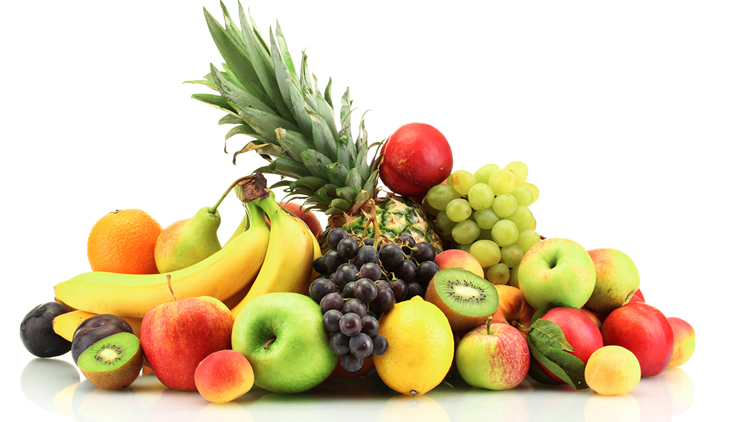
How much: Aim for 2 — 3 servings per day (one serving amounts to 1 medium size piece of fruit, ½ cup chopped fruit, ¼ cup dried fruit).
Top Choices: Tropical fruit like pineapple or mango is fine for a treat, but their high sugar content needs to be considered (especially if you’re worried about your weight). Apples, cherries, peaches, pears, red grapes, pink grapefruits, oranges, nectarines, raspberries, blueberries, blackberries, and strawberries can be eaten daily.
Why it helps: Just like vegetables, fruits are loaded with antioxidant and anti-inflammatory flavonoids and carotenoids. Eat a wide range of colors and buy organic fruits whenever possible.
3. Beans & Legumes

How much: 1 – 2 servings per day (one serving amounts to ½ cup cooked beans or legumes).
Top Choices: Black, adzuki, and Anasazi beans, as well as chickpeas, black-eyed peas, and lentils. Eat them soaked and well-cooked or pureed into hummus or bean spreads.
Why it helps: Beans, beans, that wonderful fruit! Beans are a great source of magnesium, potassium, folic acid, and soluble fiber. They’re a low-glycemic-load food so they’ll fill you up without making you fat.
4. Pasta (al dente)
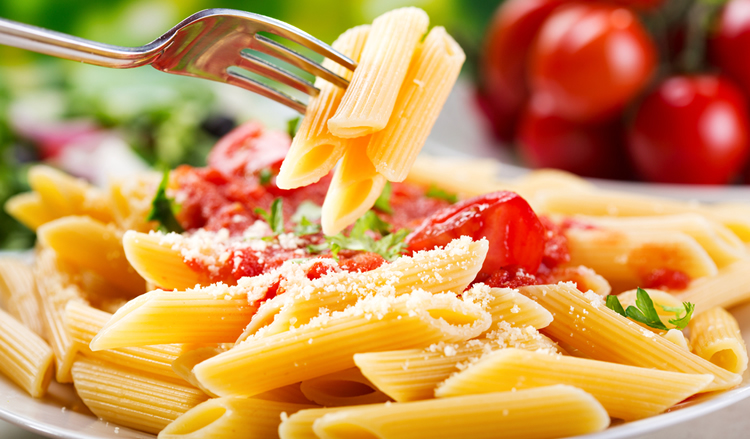
How much: 1 – 2 servings per week (one serving amounts to about ½ cup cooked pasta).
Top Choices: Organic pasta, rice noodles, part whole wheat and buckwheat noodles (like Japanese soba or udon), and bean thread noodles.
Why it helps: Pasta cooked al dente (where it’s slightly firm to the bite) has a lower-glycemic-load than fully cooked pasta. Lower-glycemic-load carbohydrates should make up the lion’s share of your carbohydrate intake to help minimize spikes in blood sugar levels.
5. Whole & Cracked Grains

How much: 2 – 3 servings per day (one serving amounts to about ½ cup cooked grains).
Top Choices: Great choices include brown rice, basmati rice, wild rice, barley, quinoa, and steel-cut oats.
Why it helps: It takes longer for your body to digest whole grains which reduces spikes in blood sugar levels that can trigger inflammation. Note: “whole grains” refers to grains that are intact or in a few large pieces, NOT whole wheat bread or other foods that use flour as a primary ingredient.
6 Healthy Fats

How much: Aim for 5 – 7 daily servings (one serving amounts to 1 teaspoon of oil, 2 walnuts, 1 tablespoon of flaxseed, 1 ounce of avocado).
Top Choices: For cooking, extra virgin olive oil and expeller-pressed organic canola oil are your best choices. Nuts (especially walnuts), avocados, and freshly ground hemp and flaxseed are also good sources of healthy fats. Omega-3 essential fatty acids, which are among the most-powerful anti-inflammatory nutrients, can be found in salmon, halibut, mackerel and other fish, as well as omega-3 enriched milk and eggs.
Why it helps: Healthy fats are those rich in either monounsaturated fats or omega-3 essential fatty acids. These nutrients have powerful anti-inflammatory properties and help to balance inflammation causing nutrients in the body.
7. Fish & Seafood

How much: The American Heart Association recommends eating fish (especially fatty fish) at least twice per week.
Top Choices: Wild-caught Alaskan salmon, herring, halibut, mackerel, and sardines.
Why it helps: Fish is the best dietary source of EPA and DHA omega-3 fatty acids, which are powerfully anti-inflammatory and essential for brain, joint, cellular, and overall good health. If you don’t eat fish regularly, take a daily fish oil supplement that provides both EPA and DHA omega-3s.
8. Bone Broth
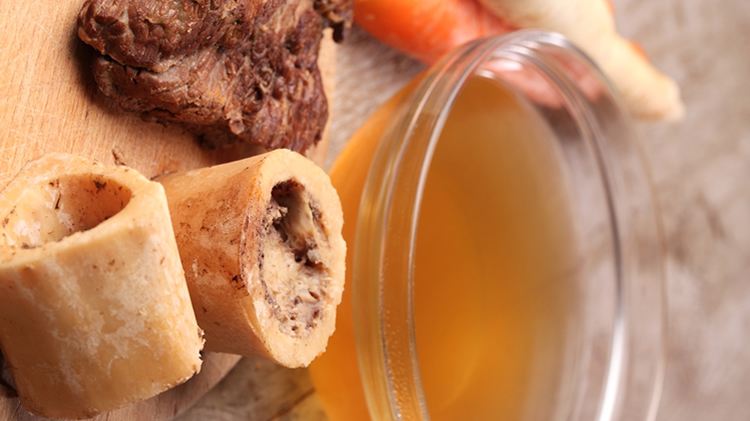
How much: 2 – 3 servings per week (one serving amounts to 1 cup of bone broth).
Top Choices: You can make your own broth by boiling bones in a soup pot or buy it pre-made from the grocery store. Either way, make sure the bones or broth comes from free-range animals (cows are the most popular) that weren’t treated with growth hormones or antibiotics.
Why it helps: Bone broth contains collagen as well as the amino acids proline and glycine that can help heal damage to your gut lining caused by inflammation. Bone broth is also said to be good for joint health, as well as skin and hair health.
9. Tea

How much: Sip on 2 – 4 cups per day.
Top Choices: White, green, oolong teas
Why it helps: Tea is a wonderful source of catechin, antioxidant compounds that have been shown to reduce inflammation. For best results, purchase a high-quality tea and invest a few minutes into learning the proper way to brew a good cup of tea.
10. Herbs & Spices

How much: As much as you want!
Top Choices: Turmeric, ginger and garlic (fresh and dried), basil, cinnamon, rosemary, and thyme.
Why it helps: Spice up your meals and cool down chronic inflammation with these healthy herbs and spices. Turmeric is one of the best anti-inflammatories around, and the other herbs and spices on this list have strong anti-inflammatory properties.
Cool Chronic Inflammation
For A Long, Healthy Life
We’re living longer than ever before. Don’t let chronic inflammation cause you to hobble through your middle and golden years.
Eat more of these anti-inflammatory foods and you, too, could reduce your risk of diabetes, heart disease, obesity, arthritis, and other diseases associated with aging.
By now, you’ve probably noticed that fighting inflammation isn’t about one single food, but a pattern of choices over time. Still, that’s often where things get tricky. Knowing what to eat is one thing… actually doing it consistently is something else entirely.
Because of that, some people begin looking beyond just adding more foods to their plate and start exploring other ways to support what they’re already trying to do. Not as a replacement, but as a complement. If you’re curious how that approach works or what it might look like in practice, it may be worth taking a closer look at one of those options.