
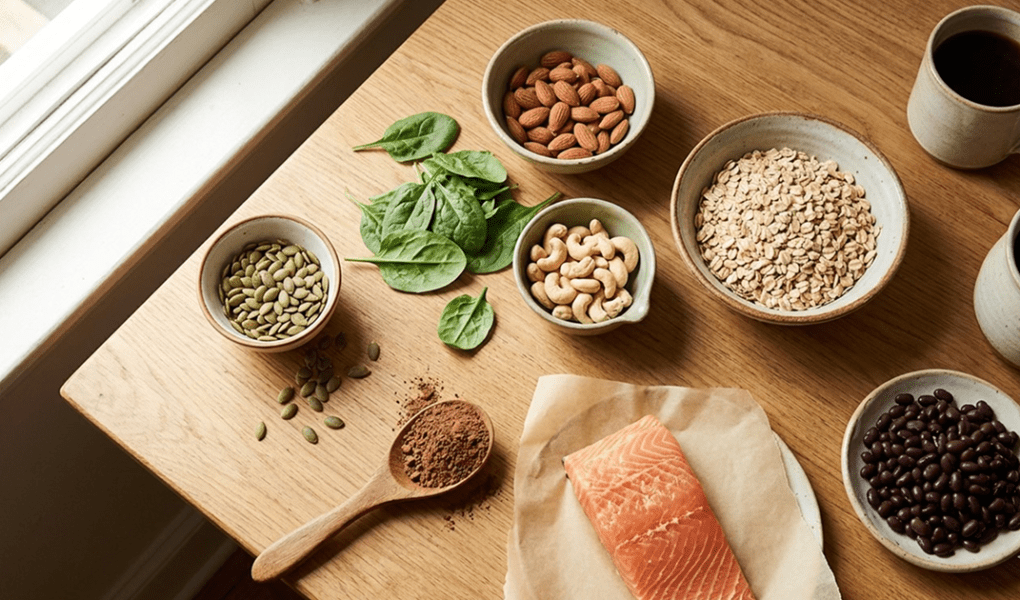
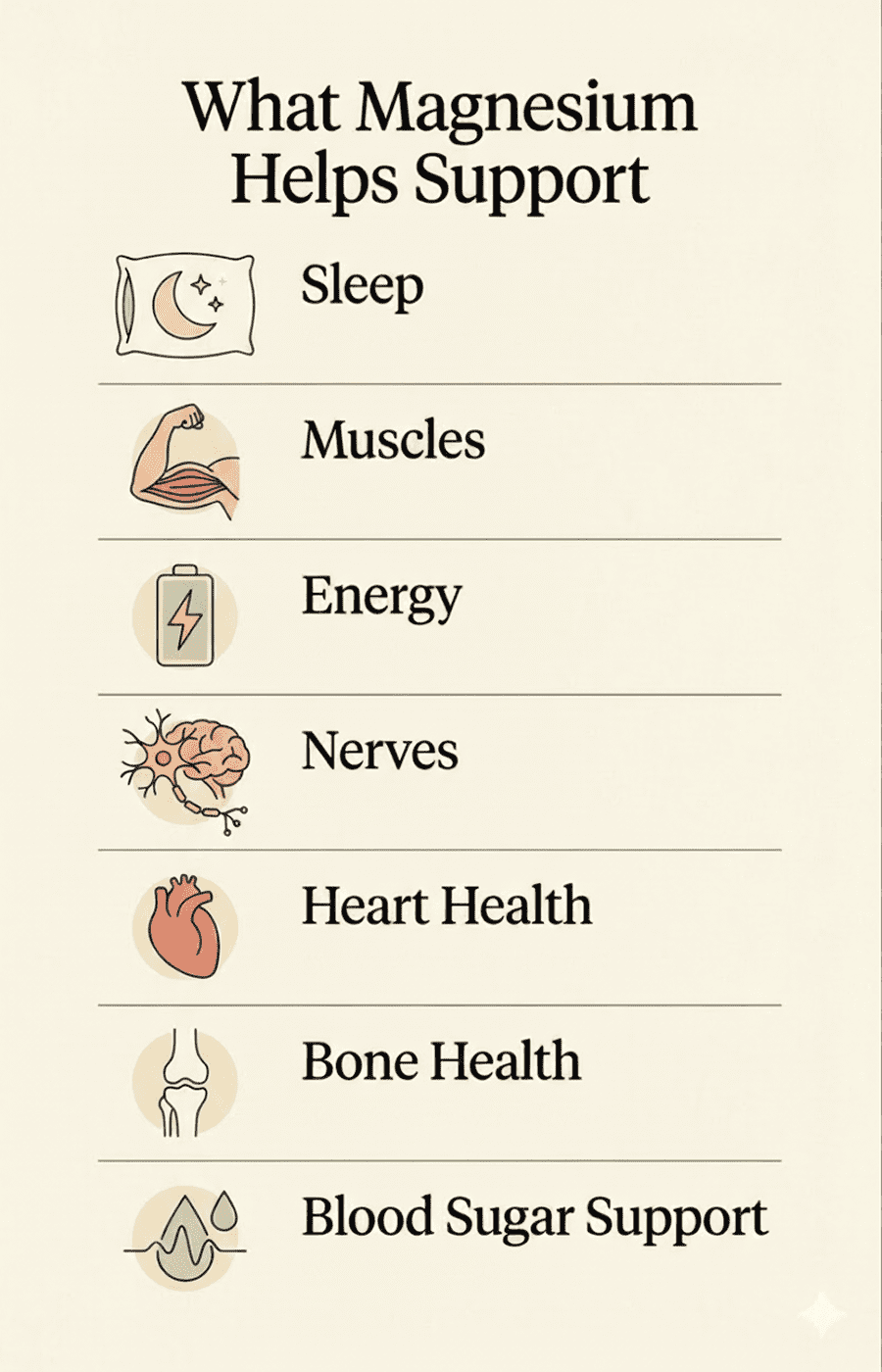
Magnesium is not usually the nutrient people think about first, but it quietly supports hundreds of important functions throughout the body every day. Your muscles use magnesium to contract and relax, your nerves depend on it for signaling, and your body needs it for energy production, blood sugar control, bone health, and heart rhythm.(1)
Despite how important magnesium is, many Americans consume less than recommended amounts through food.(1) The encouraging part is that increasing magnesium intake usually does not require expensive specialty foods or a complete nutrition overhaul. Many magnesium-rich foods are affordable, easy to find, and simple to work into meals you already eat.
Why Magnesium Matters
Magnesium acts as a cofactor in more than 300 enzyme systems in the body.[1] In practical terms, this means it helps your body perform hundreds of behind-the-scenes jobs that keep important systems running normally.
Low magnesium intake does not always cause obvious symptoms immediately. Some people notice fatigue, headaches, muscle cramps, poor sleep, or simply feeling run down. These symptoms can happen for many reasons, but nutrition is one factor worth paying attention to.(2)
Blood testing also has limitations because most magnesium is stored in bones and tissues rather than circulating in blood, meaning standard blood levels may not always reflect total body magnesium stores.(2)
How Much Magnesium Do You Need?
Adult women generally need around 310 to 320 mg daily while adult men usually need around 400 to 420 mg depending on age.(1)
Those numbers can seem intimidating at first, but very few people reach their goal from one food. A more realistic approach is spreading magnesium intake throughout the day using foods you already enjoy.
Where To Find Magnesium In Everyday Foods
The easiest way to increase magnesium intake is usually not focusing on one perfect food. It is building meals around several foods that naturally contain it.
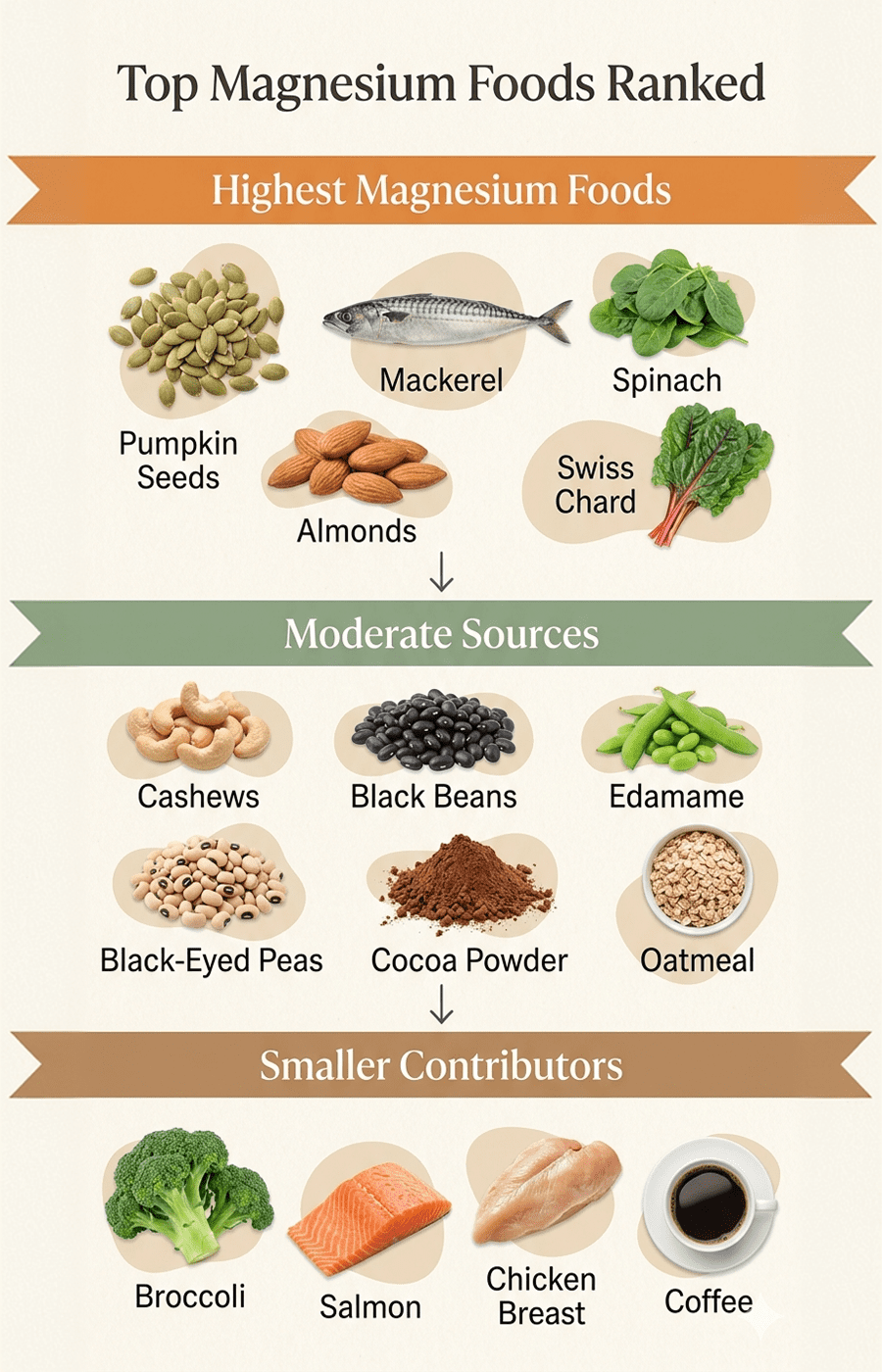
Leafy greens are one of the easiest places to start. Cooked spinach and Swiss chard each provide around 75 to 78 mg of magnesium per half cup cooked, while broccoli contributes smaller amounts that still add up over time.(3) These vegetables work well because they fit naturally into soups, eggs, pasta dishes, casseroles, and side dishes without forcing major meal changes.
Nuts and seeds deliver some of the highest magnesium amounts in smaller servings. Pumpkin seeds stand out with roughly 150 to 170 mg per ounce, making them one of the richest food sources available.(3) Almonds and cashews both provide roughly 73 to 75 mg per ounce, while unsweetened cocoa powder contributes around 50 mg in only two tablespoons.
Beans and plant proteins create another easy opportunity. Black beans, black-eyed peas, edamame, and tofu all contribute magnesium while also providing protein, fiber, or both. These foods work well in soups, salads, bowls, and side dishes without requiring complicated recipes.
Fish and common everyday foods contribute too. Mackerel provides around 80 mg per serving and salmon contributes smaller amounts while offering other nutritional benefits. Even foods people already consume regularly, like oatmeal and coffee, contribute small amounts that help build total intake across the day.
The goal is not finding one perfect magnesium food. It is eating a wider variety of magnesium-containing foods more consistently.
Simple Ways To Increase Magnesium Intake
Most people do not need a dramatic nutrition reset.
Small habits often work best:
- Add pumpkin seeds to yogurt, salads, or oatmeal
- Replace chips with almonds or cashews a few days each week
- Add spinach to eggs, soups, or casseroles
- Use beans more often in meals
- Choose oatmeal more regularly at breakfast
These changes may seem small, but repeated habits often create bigger results than short bursts of perfection.
If you already eat a balanced diet and still think magnesium intake may be low, discussing symptoms or concerns with your healthcare provider may help.
What About Magnesium Absorption?
Getting magnesium into your diet is important, but absorption matters too.
Naturally occurring compounds called phytates, found in grains and legumes, may reduce absorption somewhat, although cooking, soaking, and eating a varied diet may help minimize this effect.(4)
Very large supplemental doses of calcium and magnesium may compete for absorption, although this generally matters more with supplements than food.(5)
Bottom Line
Magnesium supports systems your body depends on every day, yet many people still consume less than recommended amounts.
You do not need perfect eating habits or expensive foods. Building meals around a wider variety of magnesium-rich foods often creates meaningful improvements over time.
If food changes alone do not feel like enough, you may want to learn about additional ways people support healthy magnesium intake.
Some people choose extra nutritional support when they want help filling common nutrient gaps.
Sources
[1] NIH Office of Dietary Supplements
https://ods.od.nih.gov/factsheets/Magnesium-HealthProfessional/
[2] de Baaij JHF et al. Magnesium in Man: Implications for Health and Disease
https://pubmed.ncbi.nlm.nih.gov/25540137/
[3] USDA FoodData Central
https://fdc.nal.usda.gov/
[4] Schlemmer U et al. Phytate in Foods and Significance for Humans
https://pubmed.ncbi.nlm.nih.gov/19774556/
[5] Vormann J. Magnesium: Nutrition and Metabolism
https://pubmed.ncbi.nlm.nih.gov/12537987/