
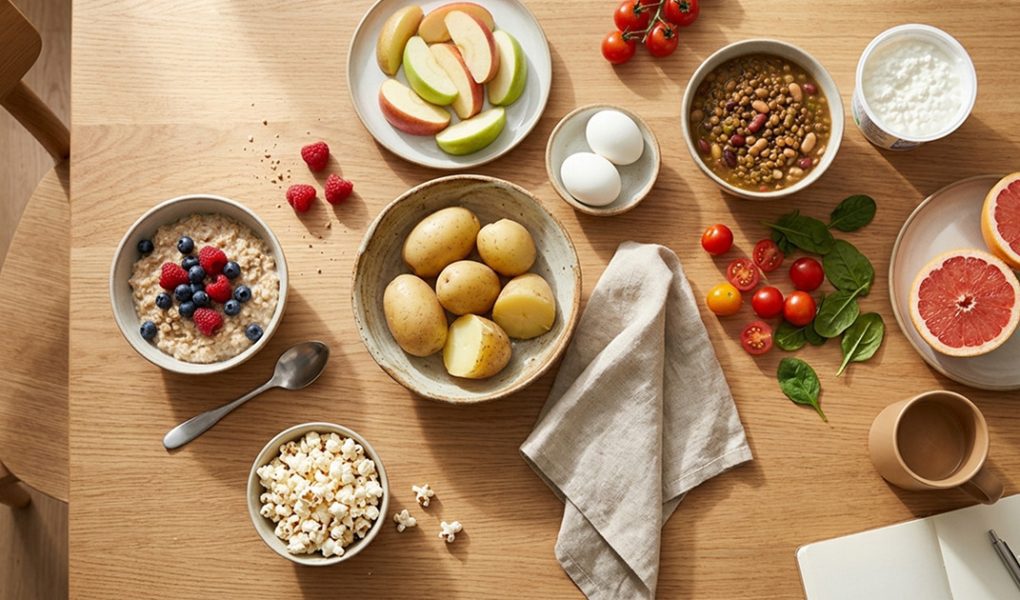
If you’ve ever tried to lose weight by eating less, you already know how that usually goes. You cut portions, stay motivated for a few days, and then suddenly hunger seems to take over.
The problem often is not willpower. It is food choice.
Some foods naturally help you stay satisfied longer. Others leave you looking for another snack an hour later. The difference has less to do with calories alone and more to do with how foods interact with hunger hormones, digestion, and fullness signals.
Learning which foods naturally help control hunger can make healthy eating feel far more manageable.
What Makes Some Foods More Filling Than Others?
Not all calories affect hunger the same way. A 200 calorie bag of pretzels and a 200 calorie bowl of lentil soup may contain similar calories, but they affect fullness very differently.
Researchers developed what is known as the satiety index to measure how well foods reduce hunger compared to their calorie content.(1) Boiled potatoes ranked surprisingly high, while processed foods such as croissants ranked much lower.
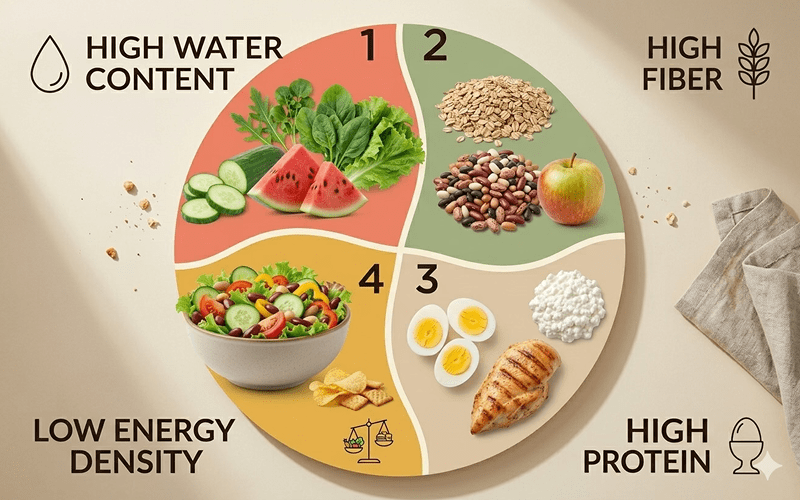
Foods that keep people full tend to share four characteristics:
- High water content
- High fiber content
- High protein content
- Low energy density
Many of the best foods combine several of these traits at once.
Highly processed foods tend to do the opposite. They pack a lot of calories into small portions without providing lasting fullness.
The Four Qualities That Make Food Filling
High Water Content
Foods rich in water take up more space in your stomach without adding many calories. Foods like cucumbers, tomatoes, watermelon, broth-based soups, and leafy greens naturally create volume, which can increase fullness.
High Fiber
Fiber slows digestion and helps food move more steadily through the digestive system. Soluble fiber forms a gel-like substance in the gut that slows nutrient absorption and may reduce hunger between meals.(2)
High Protein
Protein is often considered the most satisfying macronutrient because it influences hunger hormones and slows digestion.(3) Meals higher in protein often help reduce snacking later in the day.
Low Energy Density
Energy density refers to calories per gram of food. Low energy dense foods allow you to eat larger portions while consuming fewer calories overall.
10 Foods That Fill You Up Without Making You Gain Weight
1. Boiled Potatoes
Boiled potatoes rank at the top of the satiety index.(1) Although potatoes often get labeled unfairly as unhealthy carbohydrates, plain potatoes are naturally filling.
Part of this may be related to resistant starch, particularly when potatoes are cooled after cooking. Resistant starch behaves similarly to fiber and may help support fullness and digestion.
Preparation matters. French fries and potato chips do not provide the same benefits.
2. Oatmeal
Oatmeal is one of the better breakfast options for staying full longer. Oats contain beta-glucan, a soluble fiber that slows digestion and helps steady blood sugar levels.(2)
Adding berries, nuts, seeds, or protein-rich toppings can make oatmeal even more satisfying.
3. Eggs
Eggs provide complete protein, meaning they contain all nine essential amino acids.
Studies consistently show that higher protein breakfasts can reduce hunger later in the day compared to breakfasts heavy in refined carbohydrates.(3)
For many people, eggs simply keep hunger away longer than cereal or pastries.
4. Apples
Whole apples combine fiber, water, and chewing effort into one convenient snack.
Apples contain pectin, a soluble fiber associated with slower digestion and increased fullness. Whole apples also require more chewing, which may contribute to satiety signals.
Whole fruit is generally more satisfying than juice because the fiber remains intact.(4)
5. Grapefruit
Grapefruit contains a large amount of water and relatively few calories.
Some studies suggest eating grapefruit before meals may support weight management because it increases fullness. One study found participants eating grapefruit before meals lost more weight over 12 weeks, although researchers note more research is still needed.(5)
People taking certain medications should check with their doctor since grapefruit interacts with many prescriptions.
6. Cottage Cheese
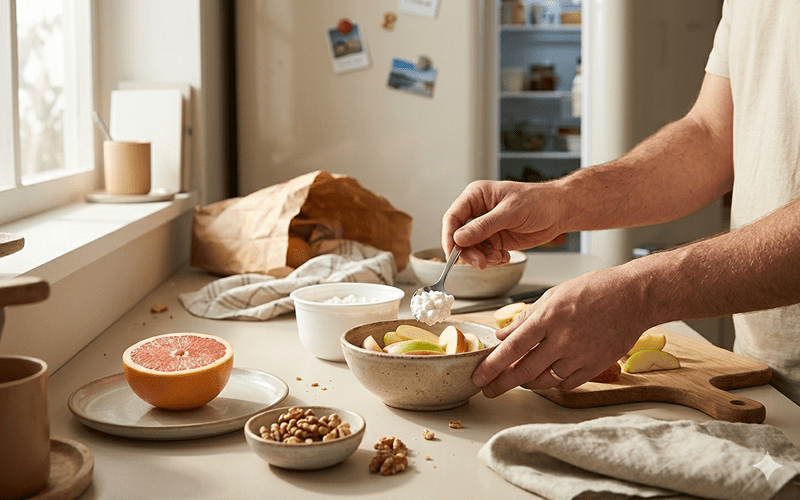
Cottage cheese offers a strong combination of protein with relatively few calories.
Many people find it helps keep them satisfied between meals because protein slows digestion and promotes fullness.
Pairing cottage cheese with fruit or nuts can create an even more satisfying snack.
7. Legumes
Beans, lentils, and peas provide both protein and fiber.
Because legumes digest slowly, many people experience fewer hunger swings after eating them compared to meals based mostly on refined carbohydrates.
Legumes also provide resistant starch and nutrients associated with metabolic health.
If you are not used to eating beans regularly, increasing portions slowly may be easier on digestion.
8. Popcorn
Air-popped popcorn is one of the more filling snack foods for its calorie content.
Because popcorn provides volume and fiber, it can satisfy hunger better than many packaged snack foods.
Portion size still matters though. Butter, oils, caramel coatings, and heavy seasonings can quickly change the nutritional profile.
9. Vegetables
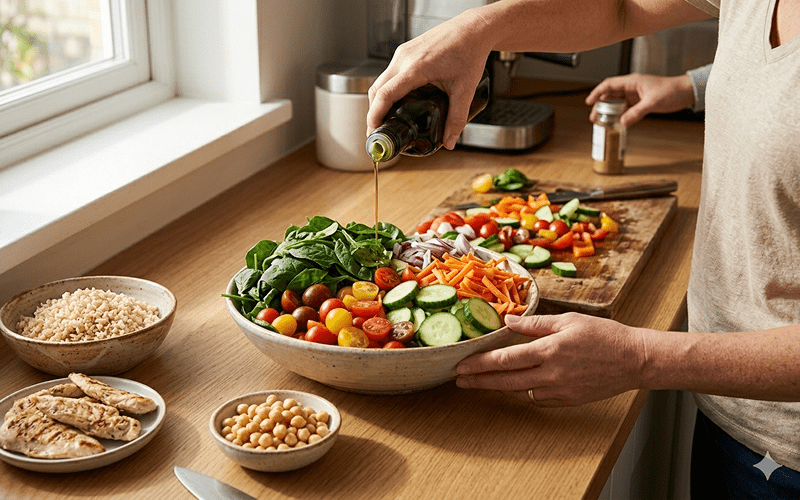
Vegetables are generally difficult to overeat from a calorie perspective because they are high in water and fiber while remaining relatively low in calories.
Studies suggest eating vegetables or salad before meals may reduce overall calorie intake during the meal.(4)
Using simple dressings such as olive oil and vinegar often works better than highly processed bottled dressings.
10. Lean Meats
Chicken breast, lean beef, turkey, and lean pork provide protein that supports fullness.
Research suggests higher protein meals may help reduce calorie intake later in the day.(3)
Combining lean protein with vegetables, beans, or whole grains often creates meals that stay satisfying longer.
Learn More About Liver Support
Sometimes healthy eating feels easier with extra support. If you want help staying full and keeping cravings under control, you can learn more here.
What This Actually Looks Like in Practice
Most people do not struggle because they lack discipline.
They struggle because highly processed foods are designed to be easy to overeat.
Making small changes often works better than dramatic changes.
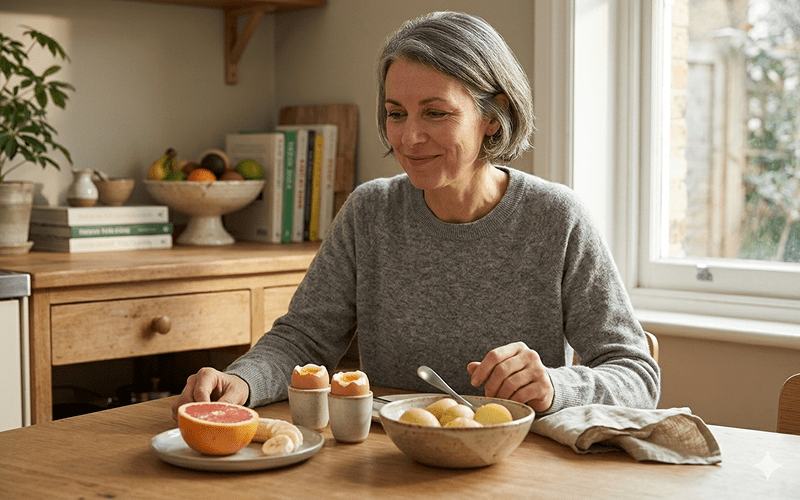
Swapping cereal for eggs, adding beans to lunch, or replacing chips with apples may seem small, but these changes can improve fullness and reduce hunger over time.
Healthy eating becomes easier when you stop fighting hunger constantly.
The Bottom Line
Feeling full and eating well do not have to compete with each other.
Many foods that naturally support fullness, including potatoes, eggs, legumes, oats, fruits, and vegetables, also provide valuable nutrition.
Instead of focusing only on calories, ask a better question:
Will this food actually keep me satisfied?
That shift alone can make healthy eating feel more sustainable.
Learn More About Liver Support
Eating filling foods is a great place to start. If you want extra help with hunger, energy, or staying on track, you can explore more support options here.
Sources
[1] Holt SH, et al. A Satiety Index of Common Foods. European Journal of Clinical Nutrition.
https://pubmed.ncbi.nlm.nih.gov/7498104/
[2] Harvard T.H. Chan School of Public Health. Fiber.
https://www.hsph.harvard.edu/nutritionsource/carbohydrates/fiber/
[3] Leidy HJ, et al. The Role of Protein in Weight Loss and Maintenance.
https://pubmed.ncbi.nlm.nih.gov/25926512/
[4] Rolls BJ, et al. Salad and Satiety.
https://pubmed.ncbi.nlm.nih.gov/15354159/
[5] Fujioka K, et al. The Effects of Grapefruit on Weight and Insulin Resistance.
https://pubmed.ncbi.nlm.nih.gov/16579728/