
Most diets fail not because people lack willpower. They fail because they ask too much.
Counting calories every day. Cooking separate meals. Skipping celebrations. Starting over every Monday.
Long-term weight loss maintenance is difficult, and many people regain at least some weight after traditional dieting approaches. Researchers increasingly believe sustainability may matter more than intensity.
That has led scientists to explore approaches that may fit more naturally into real life rather than requiring constant restriction.
One approach gaining attention is called short-burst dieting. Instead of dieting every day, this method focuses on reducing calories for just five days each month.
What Is Short-Burst Dieting?
Short-burst dieting is a structured eating approach where you follow a lower-calorie, plant-forward eating pattern for five consecutive days each month.
Many fasting-mimicking approaches use calorie ranges around 700 to 1,100 calories per day depending on the day and the individual.
Five structured days, followed by the rest of the month eating more normally.
It differs from intermittent fasting, which focuses on eating windows, and it differs from extended fasting, which can feel difficult or unrealistic for many people.
Short-burst dieting sits somewhere in the middle. Structured enough to create change. Flexible enough to fit real life.
The concept was studied extensively by Dr. Valter Longo and researchers at the University of Southern California, who explored whether periodic calorie restriction could mimic certain biological effects associated with fasting without requiring complete food restriction. (1)
The Science Behind Why It Works
When calorie intake drops significantly for several days, the body begins adapting to lower energy availability.
Researchers believe periods of calorie restriction may activate cellular repair and recycling processes that help the body adapt during times of lower energy intake. Scientists continue studying exactly how these mechanisms work in humans and how much they contribute to long-term health outcomes. (1)
When normal eating resumes, researchers believe repair and rebuilding processes may become more active, although these mechanisms are still being studied.

Some research suggests that several days of calorie restriction may improve insulin sensitivity in certain people, helping the body regulate blood sugar more efficiently. (2)
Improved insulin sensitivity matters because insulin resistance is associated with greater difficulty managing body weight, especially around the midsection.
As insulin sensitivity improves, the body may become more efficient at processing glucose and using stored energy sources during calorie restriction.
In a calorie deficit, the body generally becomes more reliant on stored energy sources, including body fat, although responses vary from person to person.
Lower-calorie periods may also help some people break through periods where progress feels stalled, though individual results differ.
What the Research Actually Showed
Studies examining fasting-mimicking approaches found participants lost an average of several percentage points of body weight over multiple cycles, although results varied considerably. Some participants also experienced improvements in metabolic markers. (1)
That matters because many traditional calorie restriction diets can lead to both fat loss and muscle loss. Preserving lean muscle while reducing body fat is generally considered a better long-term outcome.
Researchers also observed changes in markers related to metabolic health, including fasting glucose and blood pressure in certain study populations. (1)(3)
Importantly, these outcomes came from five structured days per month rather than continuous restriction.
Supporting healthy metabolism can feel easier when healthy routines and consistency work together.
Is Short-Burst Dieting Right for You?
This approach is not appropriate for everyone.
Researchers studying fasting-mimicking diets generally recommend caution for people with eating disorder histories, individuals managing diabetes medications, women who are pregnant or breastfeeding, and anyone with significant chronic health conditions. (1)
For many people, the biggest appeal is practicality.
Five days feels manageable in a way that indefinite restriction often does not.
The structure can also make planning easier. Going out to dinner next weekend? Adjust your five days around it. Traveling? Shift your schedule. Flexibility is one reason many people find this approach easier to maintain.

What to Eat During Your Five Days
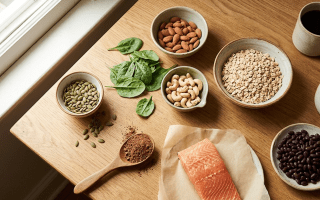
The goal during your five-day period is a plant-forward, lower-calorie eating pattern with enough variety to make meals satisfying.
This approach is calorie restricted, but it is designed around structured meals rather than complete fasting.
The goal is intentional eating rather than severe deprivation.
A target around 1,000 calories per day is commonly used, although needs vary.
Here is one full-day framework.
Breakfast Options (Approximately 250 Calories)
Veggie Frittata
Whisk 2 eggs in a small oven-safe dish. Add 1 cup chopped broccoli and 5 quartered cherry tomatoes. Sprinkle with 2 tablespoons shredded cheddar. Bake at 375 degrees for about 15 minutes.
Pineapple Green Smoothie
Blend 1/2 cup pineapple, 1/4 cup celery, 1/4 cup pineapple juice, spinach, vegan protein powder, and ice.
Blueberry Oatmeal
Cook oats with water. Add blueberries and coconut milk. Top with walnuts.
Lunch Options (Approximately 250 Calories)
Red Lentil Veggie Soup
Cook onions and peppers. Add garlic, lentils, tomatoes, spices, and broth.
Simple Tomato Soup
Combine tomatoes, onions, garlic, corn, thyme, and water. Simmer until softened.
Apple Almond Salad
Mixed greens with apple, cucumber, olive oil, vinegar, and almonds.
Dinner Options (Approximately 250 Calories)

Stuffed Bell Peppers
Brown rice, chicken breast, spinach, and onions stuffed into peppers and baked.
Spaghetti Squash Carbonara
Spaghetti squash mixed with small portions of bacon, Parmesan, egg, and broth.
Eggplant Lasagna
Layer eggplant slices with spinach cheese mixture and marinara sauce.
Snacks and Desserts (100 to 150 Calories)
Dark Chocolate Berries
Chocolate Tofu Mousse
Spinach Hummus with Vegetables
Choose one breakfast, one lunch, one dinner, and two snacks daily.
The goal is not perfection. The goal is enough structure to make the five-day period manageable while still giving yourself flexibility.
Some people find that having extra support while building healthier habits makes the process feel more manageable.
A Few Practical Tips Before You Start
Pick your five days in advance.
Prep ingredients early.
Stay hydrated.
Avoid perfectionism.
Talk with your healthcare provider before making major dietary changes.
Some people notice mild fatigue during the first couple of days before adjusting.

The Bigger Picture
Short-burst dieting appeals to many people because it has a clear beginning and end point.
Researchers continue studying how fasting-mimicking approaches influence metabolism, insulin sensitivity, and cellular processes, but early findings suggest these mechanisms may contribute to the outcomes people experience. (1)(3)(4)
At the same time, five lower-calorie days will not offset consistently poor eating habits during the rest of the month.
The approach appears to work best when the remaining days still include balanced meals, movement, sleep, and sustainable habits.
Weight is only one part of health.
Energy, digestion, sleep quality, hunger regulation, and overall well-being matter too.
If you have been looking for a weight management approach that does not require turning your life upside down, short-burst dieting may be worth understanding further.
The structure is realistic. The time commitment is manageable. The research remains promising.
Starting with realistic expectations and a clear plan is usually the strongest foundation.
Small changes often work better when you have support along the way.
Sources
[1] Brandhorst S, et al. “A Periodic Diet that Mimics Fasting Promotes Multi-System Regeneration, Enhanced Cognitive Performance, and Healthspan.” Cell Metabolism, 2015.
https://pubmed.ncbi.nlm.nih.gov/26094889/
[2] Longo VD, Mattson MP. “Fasting: Molecular Mechanisms and Clinical Applications.” Cell Metabolism, 2014.
https://pubmed.ncbi.nlm.nih.gov/24440038/
[3] NIH National Institute on Aging. “Calorie Restriction and Fasting Diets: What Do We Know?”
https://www.nia.nih.gov/news/calorie-restriction-and-fasting-diets-what-do-we-know
[4] Harvie M, Howell A. “Potential Benefits and Harms of Intermittent Energy Restriction and Intermittent Fasting.”
https://pubmed.ncbi.nlm.nih.gov/28106818/