

Magnesium does not usually get the spotlight like vitamin C, vitamin D, or calcium. But inside the body, this mineral is quietly involved in hundreds of important processes.
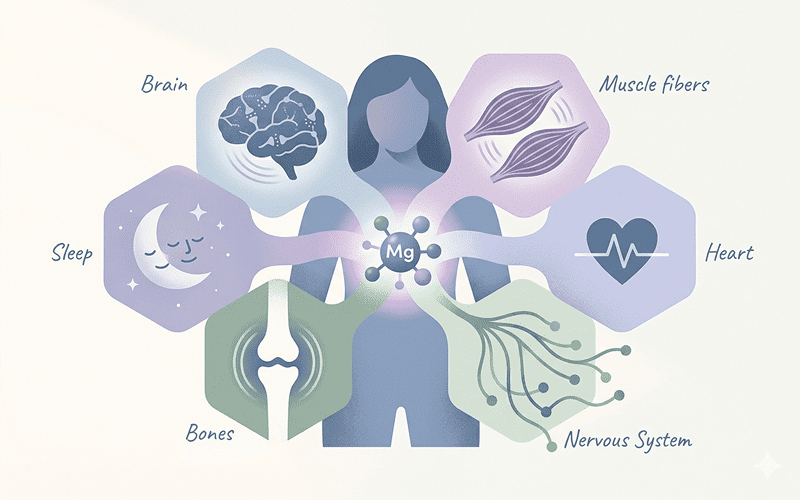
It helps support muscle and nerve function, blood sugar control, blood pressure regulation, protein production, bone health, and energy production. According to the National Institutes of Health, magnesium is a cofactor in more than 300 enzyme systems throughout the body. (1)
That means when magnesium intake falls short, the effects may not show up in just one place.
Many people assume a magnesium shortage would be obvious. Often, it is not. It may show up gradually as poor sleep, muscle tightness, low energy, headaches, mood changes, or sluggish digestion.
And the surprising part is this: many adults may not be getting enough magnesium from food alone. Research has suggested that suboptimal magnesium intake is common in the United States. (2)
That does not mean everyone needs to take a supplement. But it does mean magnesium is worth understanding, especially if you are trying to support sleep, energy, heart health, digestion, or overall wellness.
Here are 10 potential benefits of magnesium supplementation and what the research suggests.

Why Many Adults May Run Low on Magnesium
Magnesium is found naturally in foods such as pumpkin seeds, almonds, cashews, spinach, black beans, avocado, whole grains, and certain fish. (1)
Many people simply do not eat enough magnesium-rich foods consistently. Processed foods may also contribute to lower intake because refining often removes minerals.
There is also evidence that nutrient levels in some foods have changed over time due to farming practices and soil conditions. (3)
Stress, digestive issues, alcohol intake, poor sleep, and some medications may also affect magnesium status. (1)
This is why two people eating similarly may still have very different magnesium needs.
1. Magnesium May Support Better Sleep
Sleep is one of the most common reasons people become interested in magnesium.
Magnesium helps regulate nervous system activity and supports pathways involved in relaxation. Clinical research has found improvements in sleep quality measures in certain populations after supplementation. (4)
Magnesium usually does not work like flipping a switch. Think of it more like supporting the systems that help sleep happen naturally.
If you struggle with restless nights, frequent waking, or difficulty winding down, magnesium intake may be worth reviewing.
Many people also find it helpful to explore additional evening support strategies when improving sleep habits feels harder than it should.
2. Magnesium May Help Support a Calmer Mood
Magnesium plays a role in nervous system regulation, which is why researchers continue studying its relationship with mood.
Lower magnesium status has been associated with anxiety and depressive symptoms. (5)
This does not replace professional care. But magnesium may be one nutritional factor worth considering.
Sometimes supporting stress resilience means looking beyond a single nutrient and building routines that support recovery from multiple angles.
3. Magnesium Helps Support Steadier Energy
Magnesium is directly involved in ATP production, which helps create usable cellular energy. (1)
This is one reason low magnesium status may contribute to feeling run down.
Magnesium is not a stimulant. Most people notice steadier energy rather than dramatic changes.
If energy feels inconsistent despite good habits, some people choose to explore additional nutritional support alongside sleep, hydration, and movement.
4. Magnesium May Help With Muscle Function and Tension
Magnesium supports normal muscle contraction and relaxation. (1)
That matters for daily movement, exercise recovery, and muscle comfort.
Some people also investigate magnesium when dealing with occasional muscle cramps or tightness.
5. Magnesium May Support Healthy Blood Pressure
Magnesium plays a role in blood pressure regulation. Research suggests supplementation may modestly lower blood pressure in some adults. (6)
This should not replace medical care.
Building better long-term habits often works best when multiple small supports work together rather than relying on one change.
6. Magnesium May Help Support a Healthy Inflammatory Response
Magnesium deficiency has been associated with increased inflammatory activity. (7)
Adequate magnesium intake may help support a healthier inflammatory response.
This is one reason magnesium is often discussed alongside heart health, metabolic wellness, and healthy aging.
7. Magnesium May Help With Migraine Support
Research suggests magnesium may be helpful for migraine prevention in some individuals. (8)(9)
Migraines are complex, but magnesium status may be one factor worth evaluating.
8. Magnesium May Support Exercise Performance and Recovery
Exercise increases magnesium demands.
Research has explored magnesium’s role in energy metabolism, muscle function, and recovery. (10)
For active adults, magnesium may support the systems that recovery depends on.
9. Magnesium May Help Ease Some PMS Symptoms
Research suggests magnesium supplementation may support PMS symptom management in some women. (11)
Symptoms such as mood changes, water retention, and discomfort have been studied.
10. Magnesium Supports Digestion and Occasional Constipation Relief
Magnesium supports smooth muscle activity throughout the digestive tract. (1)
Some forms may also affect bowel regularity more than others.
For people dealing with sluggish digestion, magnesium may be worth considering alongside fiber, movement, hydration, and food choices.
Some readers also look for additional digestive support options when diet changes alone are not moving things along.

11. Magnesium Helps Support Bone Health
Magnesium helps regulate calcium metabolism and supports vitamin D activity. (1)
Low magnesium status has also been associated with bone changes and osteoporosis risk. (2)
Bone health is not one nutrient. It is a combination of minerals, movement, protein, and consistency.
What Type of Magnesium Is Best?
Different forms behave differently.
Magnesium glycinate is commonly chosen for gentleness.
Magnesium citrate may support bowel regularity.
Magnesium oxide is common but may absorb less efficiently.
The best option depends on goals, medications, digestion, and personal response.
When Is the Best Time to Take Magnesium?
Many people take magnesium in the evening.
Timing matters less than consistency.
Taking it with food may reduce digestive discomfort.
A Simple Way to Think About Magnesium
Magnesium works more like improving the foundation of a house than flipping a switch.
If you are low, improving magnesium intake may support sleep, mood, digestion, muscle function, energy, and long-term wellness.
If you have already improved food quality, hydration, movement, and sleep habits but still feel like something is missing, exploring additional support options may be a reasonable next step.
Food should usually come first, but for people who struggle to meet their needs consistently, some choose additional nutritional support.

Frequently Asked Questions
What form of magnesium is easiest on the stomach?
Magnesium glycinate is often considered one of the gentler forms and is commonly chosen by people who are sensitive to digestive side effects. Magnesium citrate is also well absorbed, but it may have more of a loosening effect on the bowels. (1)
Can magnesium help with sleep?
Magnesium may help support sleep by playing a role in nervous system regulation and relaxation. Some clinical research has found improvements in insomnia measures after magnesium supplementation, especially in older adults. (4) It is not a sedative, but it may support the body’s natural ability to wind down.

Sources
[1] National Institutes of Health. Magnesium Fact Sheet for Health Professionals.
https://ods.od.nih.gov/factsheets/Magnesium-HealthProfessional/
[2] Rosanoff A, Weaver CM, Rude RK. Suboptimal magnesium status in the United States. Nutrition Reviews. 2012.
https://pubmed.ncbi.nlm.nih.gov/22364157/
[3] Davis DR. Declining Fruit and Vegetable Nutrient Composition: What Is the Evidence? HortScience. 2009.
https://journals.ashs.org/view/journals/hortsci/44/1/article-p15.xml
[4] Abbasi B, et al. The Effect of Magnesium Supplementation on Primary Insomnia in Elderly. Journal of Research in Medical Sciences. 2012.
https://pubmed.ncbi.nlm.nih.gov/23853635/
[5] Tarleton EK, et al. Role of Magnesium Supplementation in the Treatment of Depression: A Randomized Clinical Trial. PLOS ONE. 2017.
https://pubmed.ncbi.nlm.nih.gov/28654669/
[6] Zhang X, et al. Effects of Magnesium Supplementation on Blood Pressure. Hypertension. 2016.
https://pubmed.ncbi.nlm.nih.gov/27402922/
[7] Mazur A, et al. Magnesium and the Inflammatory Response. Archives of Biochemistry and Biophysics. 2007.
https://pubmed.ncbi.nlm.nih.gov/16712775/
[8] von Luckner A, Riederer F. Magnesium in Migraine Prophylaxis: Is There an Evidence-Based Rationale? Headache. 2018.
https://pubmed.ncbi.nlm.nih.gov/29131326/
[9] Yablon LA, Mauskop A. Magnesium in Headache. NCBI Bookshelf.
https://www.ncbi.nlm.nih.gov/books/NBK507271/
[10] Volpe SL. Magnesium in Disease Prevention and Overall Health. Advances in Nutrition. 2013.
https://pubmed.ncbi.nlm.nih.gov/23674807/
[11] Parazzini F, et al. Magnesium in the Gynecological Practice: A Literature Review. Magnesium Research. 2017.
https://pubmed.ncbi.nlm.nih.gov/28392498/
[12] Castiglioni S, et al. Magnesium and Osteoporosis: Current State of Knowledge and Future Research Directions. Nutrients. 2013.
https://pmc.ncbi.nlm.nih.gov/articles/PMC3775240/