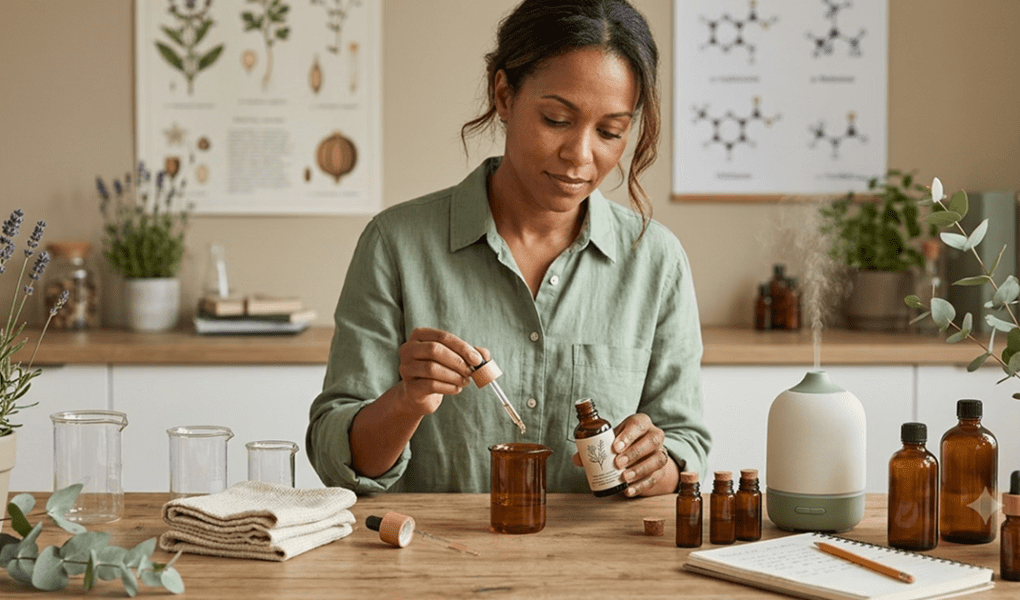
Essential oils have been part of wellness practices for thousands of years. Historical records show their use in ancient Egypt, traditional Chinese practices, and Ayurvedic traditions. Today, people commonly use them for relaxation, home fragrance, sleep routines, and creating calming environments.
That popularity has also created confusion.
Walk through any wellness aisle and you will find small bottles promising everything from better sleep to life-changing health improvements. Some claims have evidence behind them. Others stretch far beyond what research supports.
This guide focuses on what essential oils actually do, how to use them safely, and where they realistically fit into everyday life.
What Essential Oils Actually Are
Essential oils are concentrated plant extracts made from flowers, bark, roots, leaves, seeds, and peels. These oils contain aromatic compounds that give plants their scent and many of their natural characteristics.
The word “essential” does not mean necessary for health. It refers to the plant’s characteristic essence or aroma.
Essential oils are highly concentrated. Producing even a small bottle often requires large amounts of plant material, which is one reason they should be used carefully and in small amounts.(1)
How Essential Oils Are Made
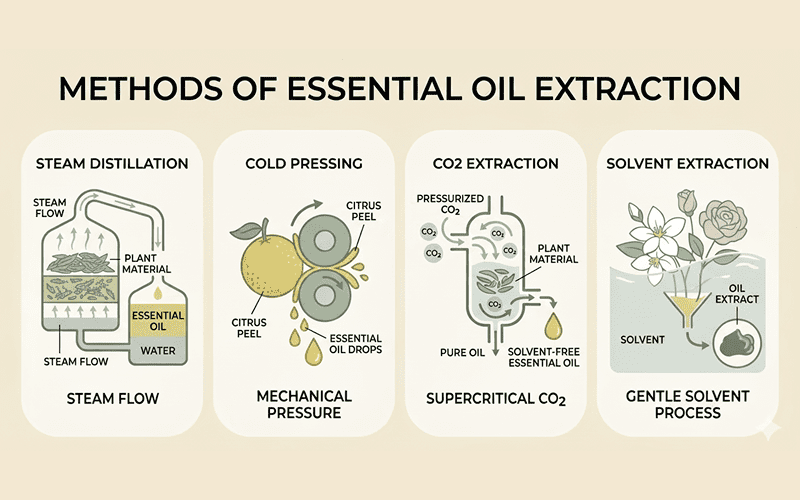
Extraction methods affect an essential oil’s quality, aroma, and sometimes its safety profile. The most common method is steam distillation, where steam passes through plant material and captures aromatic compounds that are later cooled and collected. Citrus oils are often produced through cold pressing, a process that mechanically presses the peel without heat to help preserve its natural aroma. Some delicate plants are extracted using pressurized carbon dioxide, known as CO2 extraction, while fragile flowers such as jasmine may require solvent extraction to capture their scent. Understanding how oils are produced can help you make more informed purchasing decisions. When shopping for essential oils, look for products that list the botanical name on the label, come in dark glass bottles, provide third-party testing when available, and clearly explain where and how the oil was sourced.
Three Common Ways To Use Essential Oils
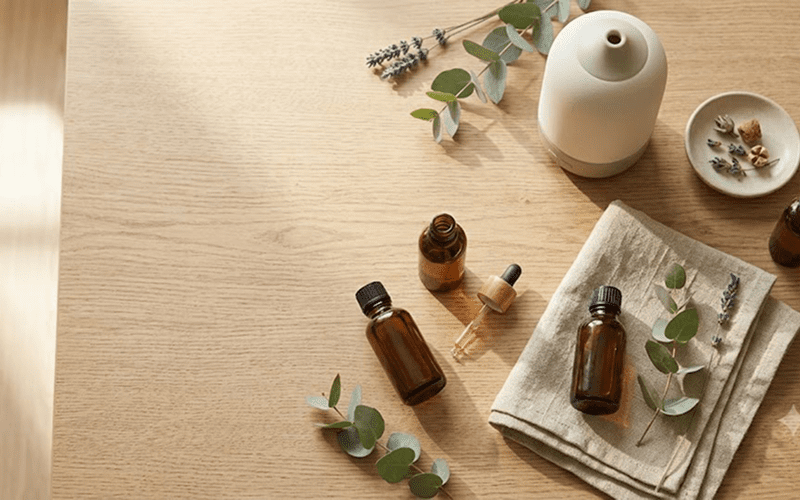
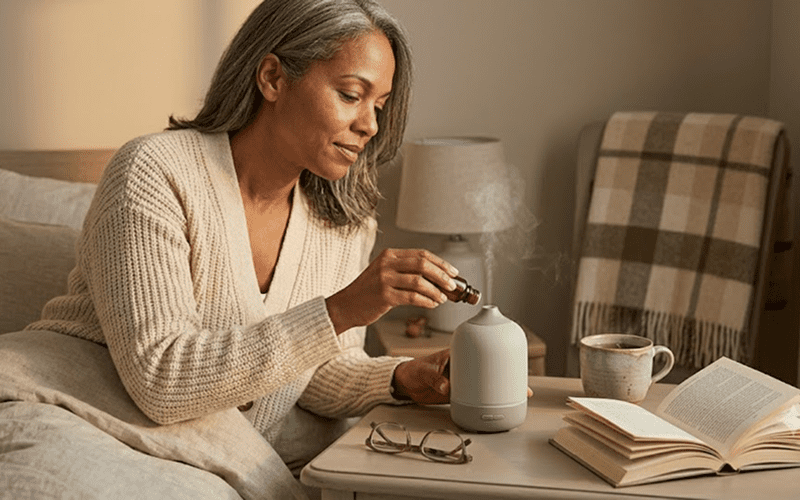
People use essential oils in several different ways, but aromatic use remains the most popular. When you inhale essential oil aromas, scent molecules interact with the olfactory system, which has close connections to areas of the brain involved in memory, emotion, and mood. This connection is one reason certain scents can feel calming, energizing, or familiar. Research suggests that some oils, particularly lavender, may help support relaxation and sleep quality in certain individuals.(2) Common ways to enjoy aromatic use include diffusers, inhaling directly from the bottle, or placing a few drops on a cotton ball or cloth. Because essential oils are highly concentrated, it is important to use caution around pets, young children, and people with respiratory sensitivities.
Another common method is topical use, which involves applying diluted essential oils to the skin. Most essential oils should not be applied directly to the skin without first being mixed with a carrier oil. Popular carrier oils include jojoba oil, fractionated coconut oil, and sweet almond oil. For most adults, a typical dilution is about 2 to 3 drops of essential oil per teaspoon of carrier oil.(1) Before using an oil more broadly, it is wise to perform a patch test on a small area of skin to check for irritation or sensitivity.
Some people also choose to use essential oils internally, but this approach requires significantly more caution. Because essential oils are highly concentrated, they may irritate tissues, interact with medications, or be inappropriate for certain individuals depending on the specific oil being used. For beginners, aromatic and topical use are generally considered the safest and most practical ways to incorporate essential oils into a wellness routine.(3)
Essential Oils Worth Knowing
There are hundreds of essential oils on the market, but a handful show up repeatedly in beginner kits, aromatherapy blends, and wellness routines. Think of them as common starting points rather than miracle solutions. If you are new to essential oils, it often makes more sense to start with one or two oils that match a specific goal, such as relaxation, focus, or home fragrance, rather than buying a large collection all at once.
For Relaxation and Evening Routines
Roman chamomile is frequently used in nighttime routines because many people find its scent calming and gentle.
Frankincense is often included in meditation, relaxation, and wellness blends for its earthy aroma and grounding atmosphere.
For Focus and a Fresh Environment
Peppermint is popular for its cooling sensation and refreshing scent, and many people use it in focus blends.
Eucalyptus is commonly diffused for a clean, fresh aroma and is often included in breathing-comfort blends.
Rosemary appears in many focus and concentration blends. People with seizure disorders, certain neurological conditions, pregnancy concerns, or other health conditions should speak with a healthcare professional before using rosemary oil.(1)
For Home Fragrance and Everyday Use
Wild orange has a bright citrus scent that works well in diffusion blends and room-refreshing mixtures.
Lemongrass is popular in home fragrance products and some skincare formulations.
For Skincare and Cleaning Products
Tea tree is widely used in skincare and household cleaning products. Laboratory research has demonstrated antimicrobial activity, although that does not mean it treats infections in humans.(4)
Oils That Require Extra Caution
Oregano oil is extremely concentrated and is usually used at very low dilutions. Because it can be irritating to skin and mucous membranes, beginners should approach it cautiously. Human evidence for direct immune benefits remains limited. When exploring essential oils, remember that stronger is not necessarily better. Using small amounts, proper dilution, and realistic expectations can help you enjoy the aromatic benefits of essential oils while minimizing the risk of irritation or unwanted side effects.
How To Store Essential Oils
Storage matters.
- Keep bottles tightly closed
- Store away from sunlight
- Use dark glass bottles
- Keep away from children
Citrus oils generally expire faster than heavier oils and resins.(1)
Essential Oil Safety Tips
Most problems associated with essential oils happen because people use too much, use them incorrectly, or assume that “natural” automatically means safe. While essential oils can be enjoyable and useful when used properly, they are highly concentrated plant extracts and deserve the same respect you would give any wellness product.
Some essential oils, particularly certain citrus oils, can increase the skin’s sensitivity to sunlight. This effect, known as phototoxicity, may increase the risk of irritation or sunburn after topical application. If you apply a phototoxic oil to your skin, avoid direct sun exposure and tanning beds for the recommended period afterward.(1)
Certain oils are sometimes referred to as “hot oils” because they can cause skin irritation if not properly diluted. Oregano, cinnamon, clove, and cassia are common examples. These oils should be used carefully and typically require greater dilution than many other essential oils.
Pregnant or breastfeeding women should always review safety information before using essential oils, as some oils may not be appropriate during certain stages of pregnancy. Parents should also use extra caution with children, since young children are more sensitive to essential oils and often require much greater dilution rates than adults.
If you have a medical condition, take prescription medications, have asthma or respiratory sensitivities, or are under the care of a healthcare professional, it is wise to discuss regular essential oil use with your provider before getting started.
When in doubt, use less rather than more. Starting with small amounts, proper dilution, and careful observation can help reduce the risk of irritation while allowing you to find what works best for you.
What Research Actually Shows
Research on essential oils continues to grow, but the overall picture remains mixed. Some oils have been studied more extensively than others, and the strength of the evidence varies depending on the specific use.
Lavender has some of the strongest research behind it and may help support relaxation and sleep quality in certain individuals.(2) Tea tree oil has demonstrated antimicrobial activity in laboratory studies and is commonly included in skincare and household products.(4) Other oils, such as peppermint, are frequently used for focus, alertness, and comfort, although more high-quality human research is needed to better understand their potential benefits.
While these findings are encouraging, most studies are relatively small, and essential oils should be viewed as supportive wellness tools rather than treatments for medical conditions. In fact, some hospitals, cancer centers, and palliative care programs incorporate aromatherapy as a complementary comfort measure to help create a more calming environment for patients.(3)
For most people, the greatest value of essential oils comes from their ability to enhance everyday wellness routines, whether that means creating a relaxing bedtime atmosphere, making a home feel more inviting, or adding a pleasant sensory experience to moments of self-care.
A Simple Foot Massage Blend For Sleep
Ingredients:
- 2 teaspoons carrier oil
- 3 drops lavender oil
- 3 drops Roman chamomile oil
- 2 drops sandalwood oil
Mix together.
Massage onto feet before bed.
Many people prefer using diluted oils on the feet because the skin there tends to be less sensitive and may reduce irritation risk.
A Quick Word About Quality
Terms like “therapeutic grade” are marketing language.
Instead, look for:
- Botanical names
- Third-party testing
- Company transparency
- Dark glass packaging
- Reasonable pricing
Very cheap oils often raise more questions about quality.
Final Thoughts
Essential oils are not magic and they are not replacements for medical care.
Used thoughtfully, they can become part of calming routines, sleep habits, or wellness practices many people enjoy.
Start simple.
Use small amounts.
Learn what works for you.
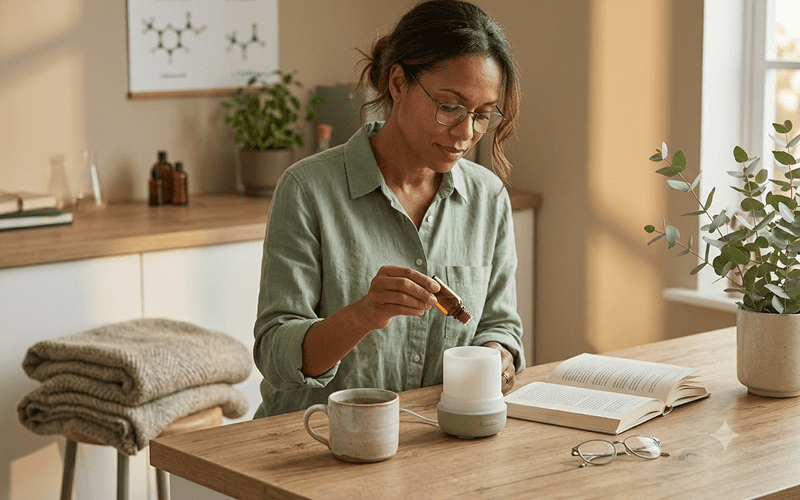
Ready to explore aromatherapy at home? Starting with a beginner-friendly diffuser can make the process feel easier and less overwhelming.
Sources
[1] Tisserand R, Young R. Essential Oil Safety: A Guide for Health Care Professionals. 2nd Edition. Elsevier.
[2] Donelli D, Antonelli M, Bellinazzi C, et al. Effects of lavender on anxiety: A systematic review and meta-analysis. Phytomedicine. 2019.
https://pubmed.ncbi.nlm.nih.gov/31655395/
[3] National Center for Complementary and Integrative Health. Aromatherapy Overview.
https://www.nccih.nih.gov/health/aromatherapy
[4] Carson CF, Hammer KA, Riley TV. Melaleuca alternifolia (Tea Tree) oil: A review of antimicrobial and medicinal properties. Clinical Microbiology Reviews. 2006.
https://pubmed.ncbi.nlm.nih.gov/16418522/
[5] Mayo Clinic. Aromatherapy: Do essential oils really work?
https://www.mayoclinic.org/healthy-lifestyle/consumer-health/in-depth/aromatherapy/art-20047399