
According to Dr. Jerry Aikawa of the University of Colorado:
“Magnesium is the most important mineral to humans and all living things.”
Magnesium is essential to cellular health, heart health and more than 300 biochemical reactions in the body. Magnesium is life.
Unfortunately, magnesium deficiency is on the rise across America and much of the industrialized world. As a result, you may wonder, “What can I do to get more magnesium in my diet?”
It’s a great question. After all, magnesium deficiency has been linked to an increased risk of:
- High blood pressure and cardiovascular disease
- Migraine headaches
- Metabolic syndrome
- Sudden cardiac death
- Asthma
- Colon cancer
- Type 2 diabetes
- Osteoporosis
- Severe muscle cramps
When your magnesium levels are balanced you experience better health and improved quality of life.
In the words of Dr. Alan Gaby, author of “Magnesium: How An Important Mineral Helps Prevent Heart Attacks and Relieve Stress”:
“For millions of Americans, correcting magnesium deficiency could be one of the most important steps on the road back to health.”
This article examines the challenges of getting enough magnesium through diet alone and action steps you can take to ensure you’re getting enough of this “miracle mineral”.
Is It Possible To Get Enough Magnesium
From Diet Alone?
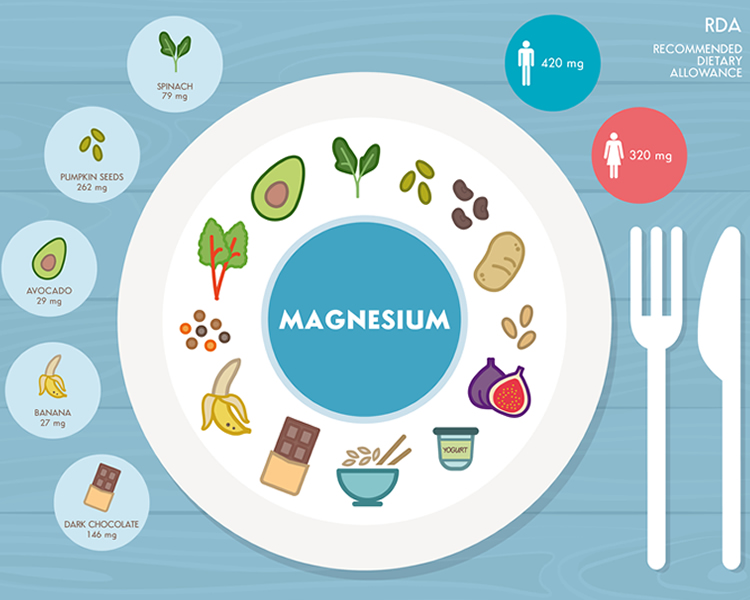
For magnesium, the Food and Nutrition Board suggests the following Recommended Dietary Allowances (RDA):
- 420 mg for men 50+ years old
- 320 mg for women 50+ years old [1]
In the past, consuming magnesium-rich foods like nuts, whole grains, beans and leafy green vegetables was enough to ensure you received the magnesium you needed.
But times have changed.
Today, the average American diet contains less than half of the RDA for magnesium. [2]
And as a result, the Journal of Nutrition estimates that as much as 80% of the American population is magnesium deficient. [3]
A healthy diet filled with fresh fruits and vegetables is one of the very best things you can do your your health.
However, even a healthy diet may not be enough to protect against magnesium deficiency.
The Bad News About Magnesium Food Sources
Magnesium deficiency is a modern health epidemic.
Your grandparents and great-grandparents likely never had to worry about this serious problem. Why?
Because the foods we eat today are far less healthy than the foods eaten by previous generations. Quite literally, a carrot or apple eaten today pales in nutrient-density to a carrot or apple eaten a generation ago.
A 2011 article from Scientific American warns:
“…fruits and vegetables grown decades ago were much richer in vitamins and minerals than the varieties most of us get today. The main culprit in this disturbing nutritional trend is soil depletion: Modern intensive agricultural methods have stripped increasing amounts of nutrients from the soil in which the foods we eat grow. Sadly, each successive generation of fast-growing, pest-resistant carrot is truly less good for you than the one before.”
Magnesium has been especially affected by soil depletion.

A wide-range of studies indicate that magnesium content in vegetables has seen declines by as much as 40% since pre-1940’s figures. [4]
As a result, even individuals who eat the recommended five to seven servings of fruits and vegetables per day are likely consuming a magnesium insufficient diet. And that’s after piling your plate with fruits and veggies!
The far more common American diet of processed foods like pasta, bread, pizza, snacks, burgers and fried foods is practically void of magnesium.
Grain refining processes for bread and pasta strip away the nutrient-rich germ and bran, and remove 80% — 95% of the magnesium.
In processing seeds and nuts into oil, the oils are subjected to tremendous heat and the magnesium is strained out or removed through chemical additives.
For example, dried safflower seeds contain 100 mg of magnesium per ounce. Safflower oil, on the other hand, contains no magnesium at all. [5]
Bottom line: The reason why the vast majority of us are magnesium deficient (even if we don’t realize it) is because our #1 source of magnesium — the foods we eat — have been compromised.
As Dr. Mark Sircus, author of “Transdermal Magnesium Therapy”, says:
“Magnesium deficiency is one of the most common nutritional problems in the industrialized world today. This deficiency is the result of agricultural practices, food preparation techniques, and dietary trends. The health implications are nothing short of catastrophic.”
Symptoms You May Be Magnesium Deficient
A healthy adult body contains approximately 25 g magnesium. [6]
But because magnesium deficiency is such a widespread problem most of us are living with at least some degree of symptoms.
One challenge doctors face when trying to diagnose magnesium deficiency is the fact that blood serum tests of magnesium levels are notoriously inaccurate.
This is because less than 1% of total magnesium is in blood serum, and these levels are strictly regulated. The rest of the magnesium is present in the body’s bones and soft tissues.
That makes checking for symptoms one of the most effective ways to determine if you’re magnesium deficient.
According to Dr. Carolyn Dean, a leading authority on magnesium and health, if you exhibit a combination of three or more symptoms of magnesium deficiency you may be at risk.
A few of the most common of these symptoms include:
- Muscle cramps and spasms
- Constipation
- Anxiety
- Depression
- Insomnia
- Low-energy
- Chronic back pain
- Headaches
- Migraines
- Brain fog
- Irritability
- Tingling in hands and feet
- Heart arrhythmia
- Bad short-term memory
- Difficulty focusing
Anything that feels tense and tight — from a mood to memory to muscles — could indicate a magnesium deficiency.
“Magnesium has solved more ‘incurable’ and ‘mysterious symptoms’ than any other mineral I have observed in 31 years.” — Dr. Sherry Rogers, author “Depression: Cured at Last”
Groups At Higher Risk Of Magnesium Deficiency
As you’ve seen, the foods we eat are no longer rich sources of magnesium the way Nature intended them to be. Because of this we’re ALL at risk of magnesium deficiency.
That said, there are groups at much higher risk of magnesium deficiency than the general public. These groups include:
People with GI diseases
Those with Crohn’s disease, gluten-sensitivity (celiac disease), and regional enteritis are at increased risk of magnesium depletion over time.
People with type 2 diabetes
Chronic magnesium deficiency has been associated with the development of insulin resistance. [7]
Magnesium deficits and increased urinary excretion of magnesium is common amongst people with insulin resistance and / or type 2 diabetes.

Older individuals
Typically, older individuals have lower dietary magnesium intake than younger individuals.
In addition, magnesium absorption from the gut decreases with age. [8]
Whether you identify with any of these groups or not, magnesium deficiency deserves your attention. Because correcting this common problem can do wonders for your health.
How Can You Protect Yourself
Against Magnesium Deficiency?
For most people, dietary magnesium alone is not enough.
As you’ve read in this article, food today is magnesium deficient due to soil depletion and modern food preparation methods.
That said, you should still aim to add magnesium-rich foods to your diet.
To help you get started here’s a chart of 15 magnesium-rich foods you’ll find at your local grocery store.


Embed this infographic on your website:
Click on the code area and press CTRL + C (for Windows) / CMD + C (for Macintosh) to copy the code. If you’re on a mobile device, tap on the code, drag the markers to highlight the entire text, and select “Copy.”
Embedding this infographic will generate a link to our page. You are free to remove the link or edit the link text, but not to replace it with another one.
Now It’s Your Turn
Magnesium And Food.. Have you experienced any of the symptoms of magnesium deficiency listed in this article? Does it worry you that modern food is increasingly nutrient deficient?