
Embed this infographic on your website:
Click on the code area and press CTRL + C (for Windows) / CMD + C (for Macintosh) to copy the code. If you’re on a mobile device, tap on the code, drag the markers to highlight the entire text, and select “Copy.”
Embedding this infographic will generate a link to our page. You are free to remove the link or edit the link text, but not to replace it with another one.
The year was 1831.
Professor Tourey stood before an auditorium packed with his esteemed colleagues at the French Academy of Medicine.
He held up a glass filled with a murky gray liquid and announced that this potion contained 15 grams of the deadly poison strychnine — ten times the lethal dose.
Then Professor Tourey did something that stunned and terrified his peers: he gulped down every drop of this lethal cocktail.
The auditorium at the French Academy of Medicine erupted in frantic shouts and screams. Men stormed the stage, prepared to drag Professor Tourey to the nearby hospital… or the morgue.
But remarkably, Professor Tourey wasn’t harmed by this apparently suicidal stunt. Why? Because he’d mixed the strychnine with activated charcoal.
What Is Activated Charcoal?
Activated charcoal is one of the world’s oldest and trusted detoxification methods.
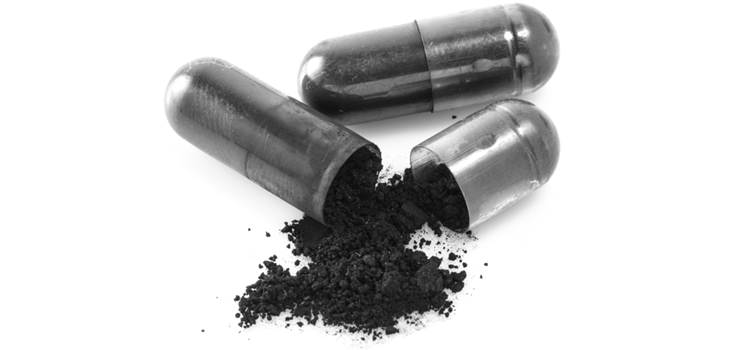
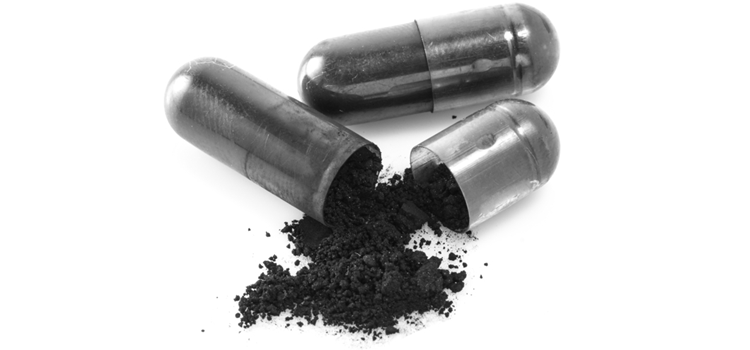
It’s been used since ancient times in Chinese and Ayurvedic traditions as a potent antidote for poisons. Today, you’ll find activated charcoal in hospital ER rooms around the world.
When a patient is rushed to an emergency room because of poisoning or a drug overdose, nurses and doctors give them activated charcoal. Millions of lives have been saved because of this amazing detoxifying agent.
But activated charcoal has health benefits that reach way beyond the ER room.
If you’re interested in better digestive health, less gas and strong protection against nasty foodborne illnesses, then activated charcoal could be a good fit for your lifestyle.
How Does Activated Charcoal Work?
To understand how activated charcoal works you must first understand how it is made.
You make activated charcoal by burning a carbon source such as wood, peat or coconut shells at extremely high temperatures (1,700 — 1,800 °F). This creates char. The char is then heated in a furnace at even higher temperatures in the presence of steam.
The charcoal is “activated” because this process causes it to have a very fine particle size. These ultra-fine particles are peppered with millions of tiny pores. And these pores are the secret to activated charcoal’s amazing detoxifying properties.
Activated charcoal works by adsorbing (trapping) poisons, heavy metals, and intestinal gasses in these pores. But it doesn’t absorb these toxins.
Absorption is when a fluid permeates a solid or is dissolved by a liquid. Adsorption is a chemical reaction where elements bind to a surface.
Once activated charcoal enters the body it acts like a “toxin magnet”.
Because activated charcoal has a negative electrical charge it attracts and binds positively charged toxins like heavy metals and industrial toxins before they have a chance to cause harm.
Importantly, the human body cannot metabolize activated charcoal. It passes through the digestive system like a million microscopic magnets, grabbing toxins as it goes.
Eventually, this activated charcoal and its toxic payload is harmlessly passed out of your body when you use the bathroom.
Dr. Al Sears, noted health and wellness experts, says an activated charcoal detox leaves you feeling like a “new person” because of how effectively it can flush out arsenic, copper, mercury, lead and other health-sapping toxins.
Do You Eat Out At Restaurants
At Least Once A Week?
You remember the news stories.

Late last year, Chipotle — the popular Mexican food chain — closed 43 of their locations in Oregon and Washington state. The problem? Nearly 50 customers got sick with E.coli after eating at their restaurants.
It was a high-profile example of the health risks we take every time we dine out. But food poisoning at restaurants is not just a Chipotle problem. Far from it.
According to the Center for Disease Control and Prevention, there are about 48 million cases of foodborne illness in the U.S. each year, sending 105,000 people to the hospital and resulting in 2,000 deaths.
All told, about one in seven Americans will get sick this year from the food they eat.
But activated charcoal can protect you from restaurant kitchens that aren’t as clean as they should be.
Not too long ago I ate some bad sushi. I woke up in the middle of the night and had to make an emergency trip to the bathroom. It was miserable.
But after taking activated charcoal my stomach quickly settled down. I was able to go back to bed and sleep comfortably until morning.
Now I take activated charcoal an hour or two before I go out to eat with my family. It’s a lot more fun to talk and laugh over a meal at our favorite restaurants without the fear of food poisoning or painful digestive problems looming like a dark cloud!

4 Additional Health Benefits of Activated Charcoal
If you eat out at restaurants at least once a week, then I believe activated charcoal should be part of your regular health routine.
But gentler digestion is just one the health benefits of activated charcoal.
1. Ease gas and bloating. If you’re like me, you’ve probably got a “cheat” meal you really love… but you worry about eating it because it gives you terrible gas and bloating. A study published in the American Journal of Gastroenterology found that activated charcoal can “significantly reduce” gas, bloating and stomach cramps in people after they’ve eaten a gas-producing meal. [1]
2. Reduce high cholesterol. In one study, patients with high cholesterol took 8 grams of activated charcoal three times a day for a month. At the end of the study, patients’ total cholesterol decreased by 25 percent, “bad” LDL-cholesterol decreased by up to 41 percent. [2]
3. Prevent premature aging. We live in a highly toxic environment. And all of these toxins in the foods we eat, the water we drink, the air we breathe, even our cosmetics and clothing can cause cellular damage that makes us look and feel years older than our true age. Activated charcoal can help flush these age-accelerating toxins from your system.
4. Purify drinking water. Activated charcoal traps pesticides, chemicals, and industrial wastes found in tap water. If you have a water purifier in your home, it uses an activated charcoal filter. Drinking adequate amounts of pure, clean water is essential to help you maintain a healthy weight, promote digestive health, fight off fatigue and keep joints from growing stiff and sore.
How To Use Activated Charcoal
Not all activated charcoal is created equal. Make sure you look for a food-grade charcoal made from organic coconut shells.
You’re using activated charcoal to help purge toxins from your body. The last thing you want to do is get a low-quality source of activated charcoal that doesn’t work or, worse, hurts your health.
It’s also important that you drink 10 — 12 glasses of purified water daily when you’re detoxing with activated charcoal. This will ensure you’re flushing toxins out as quickly as possible and will prevent constipation.

Finally, because activated charcoal is like a super-powered magnet it adsorbs toxins and heavy metals as well as nutrients like magnesium and calcium. Take activated charcoal at least 90 minutes to two hours before meals.
This will give your body plenty of time to absorb beneficial nutrients.
Now It’s Your Turn!
We live in a highly toxic world. Even eating out at your favorite restaurant puts you at risk for indigestion, food poisoning or worse.
Activated charcoal is one of the oldest known detoxification methods. It’s also one of the most effective.
Your Turn: Have you ever used activated charcoal? If so, what did you think? Share in the comments below! And if you enjoyed this article, please share it by clicking on one of the social icons (Facebook, Google+, etc.) below. Thanks!