
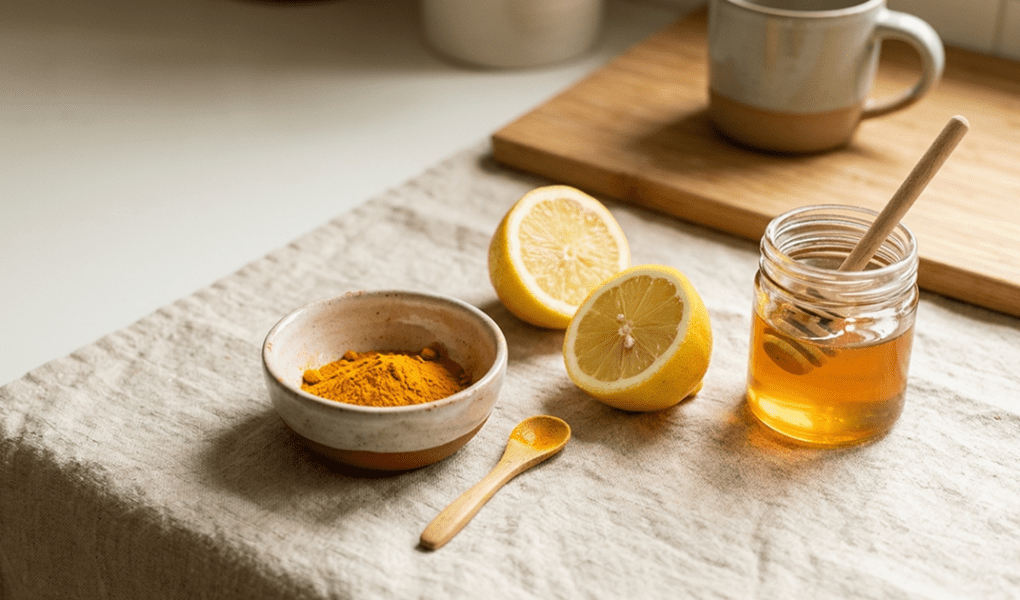
Turmeric has been used for thousands of years. Not as a wellness trend. Not as a marketing concept. As a genuine remedy passed down across generations in South and Southeast Asia, where it was used in cooking, medicine, and even ceremonial rituals long before anyone coined the phrase “clean beauty.”
Today, it shows up in face masks, serums, and supplement formulas. The question worth asking is: does the science actually hold up?
For the most part, yes. And the good news is, you don’t need a complicated or expensive routine to benefit from it. A few pantry staples and about fifteen minutes is often all it takes.
Here’s what turmeric genuinely offers your skin, and how to use it at home.
Why Turmeric Has Earned Its Place in Skincare
The active compound in turmeric is called curcumin. It’s what gives turmeric its deep golden color, and it’s the reason researchers have published more than 3,000 scientific studies on this single plant over the past few decades. (1)
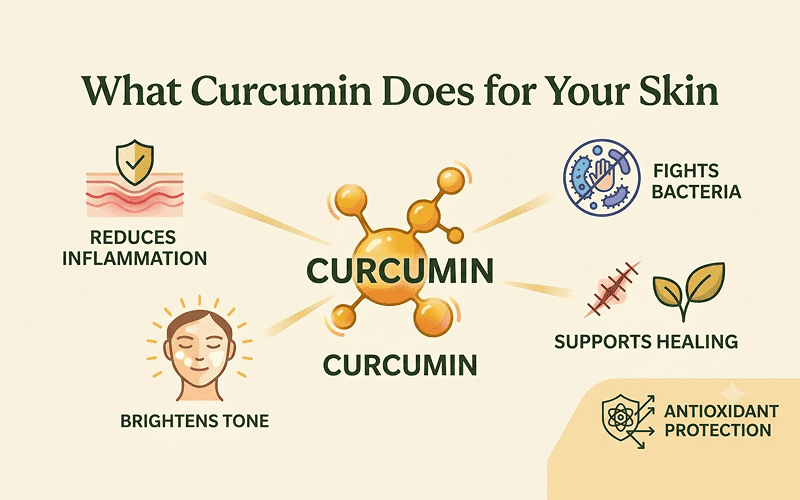
Curcumin has well-documented antioxidant and anti-inflammatory properties. For skin, that matters more than it might sound. Many common skin concerns, including acne, uneven tone, dullness, and slower wound healing, are often tied to low-level inflammation or oxidative stress happening beneath the surface. (2)
Turmeric has also shown antibacterial and antifungal activity, which makes it particularly useful for skin that tends to break out or become irritated. And its skin-brightening effects, something Indian brides have relied on for centuries, appear to be more than just tradition. Research suggests curcumin may help reduce the appearance of hyperpigmentation by interfering with certain pigment-producing pathways in the skin. (3)
A lot of people are surprised to learn that something this researched has been sitting in their kitchen spice cabinet all along.
What Turmeric May Help With
When applied topically, turmeric may offer a range of benefits for different skin types and concerns. These include:
- Brightening and evening skin tone by reducing excess melanin production
- Calming redness and irritation, thanks to curcumin’s anti-inflammatory effects
- Supporting acne-prone skin through its antibacterial and pore-clarifying properties
- Improving the appearance of scars and blemishes over consistent, long-term use
- Providing antioxidant protection against environmental stressors that accelerate aging
- Promoting wound healing and skin recovery (4)
It’s worth being realistic here. Turmeric applied topically is not a replacement for a dermatologist-guided treatment plan if you have a diagnosed skin condition. But for general skin wellness and maintenance, it’s one of the more well-studied natural options available.
Prefer to skip the mixing and start with something ready to use? See our top turmeric pick below.
3 Simple DIY Turmeric Recipes You Can Make at Home
These recipes use ingredients you likely already have. They are simple, affordable, and easy to adjust based on your skin type. Always do a patch test on a small area of skin before applying anything new to your face or body. If you have a diagnosed skin condition or are prone to reactions, check with your healthcare provider first.
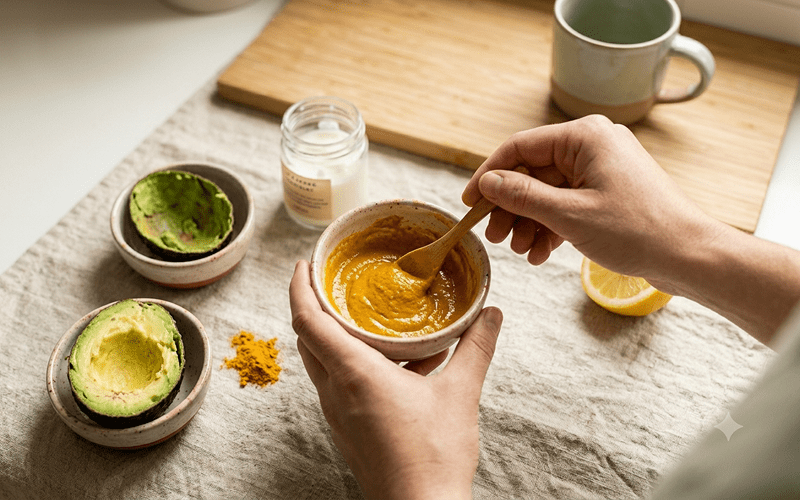
Recipe 1: Brightening and Moisturizing Face Mask
Best for: Dull skin, dry skin, or anyone looking for a gentle glow
What you’ll need:
- 2 tablespoons mashed avocado (or plain ground oats for sensitive skin)
- 1 teaspoon turmeric powder
- 1 teaspoon plain yogurt or whole milk
How to make it: Mix all ingredients in a small glass bowl until the texture is smooth and paste-like. You can adjust the ratio to get the consistency you prefer.
How to apply:
- Pull your hair back. You can use a gentle cleanser or light exfoliant first if you like.
- Using a soft brush, clean fingers, or a wooden popsicle stick, apply to your face and neck in gentle circular motions. Avoid the eye area and lips.
- Leave on for 15 minutes. Lie still if you can.
- Rinse with warm water and a soft cloth. Pat dry and follow with your regular moisturizer.
The avocado brings deep hydration. The yogurt gently exfoliates with lactic acid. The turmeric calms and brightens. Together, they make a mask that feels genuinely nourishing rather than harsh.
Recipe 2: Targeted Acne and Blemish Mask
Best for: Active breakouts, oily skin, or blemish-prone areas
What you’ll need:
- 1 teaspoon raw Manuka honey
- 1 teaspoon turmeric powder
- A small squeeze of fresh lemon juice
How to make it: Combine in a glass bowl and stir until smooth.
How to apply:
- Cleanse your face first.
- Using a clean cotton swab or small brush, apply directly to blemishes or affected areas rather than all over the face.
- Leave on for 15 minutes, then rinse with warm water.
- Pat dry gently.
Manuka honey has well-studied antibacterial properties. Lemon provides a small dose of vitamin C and mild exfoliation. This is a targeted treatment rather than a full-face mask, and that’s intentional. A little goes a long way here.
Recipe 3: Turmeric Body Scrub
Best for: Rough skin, dull body skin, or a weekly exfoliation ritual
What you’ll need:
- 1 cup fine organic sugar (use ground oats instead for sensitive skin)
- ¼ cup olive oil or another skin-safe oil of your choice
- 1½ teaspoons turmeric powder
- 2 to 3 drops of your preferred essential oil (optional)
How to make it: Combine all ingredients in a glass bowl and stir until evenly mixed. Adjust to your preferred texture.
How to apply:
- Wet or dampen your skin first for easier application.
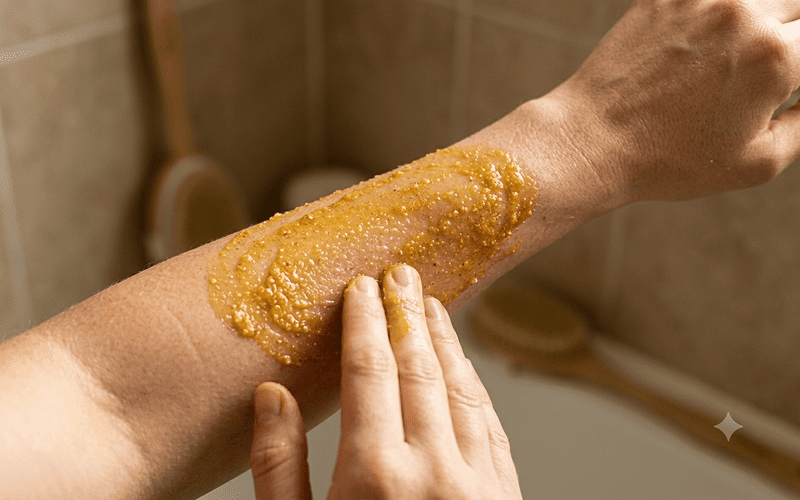
- Stand in the shower. Using your hands, apply the scrub in gentle circular motions starting at the legs and working upward toward the neck.
- Rinse thoroughly, then apply body lotion or moisturizer while skin is still slightly damp.
This scrub removes dead skin cells, unblocks pores, and leaves skin noticeably softer. Used once a week, it can make a real difference in how your skin looks and feels over time.
Some people find this recipe works well before a self-tan application or before using a body wrap treatment, as the exfoliation helps skin absorb things more evenly.
A Few Practical Things to Know Before You Start
Turmeric stains. It will stain clothing, towels, and countertops. Use older materials when applying, and rinse surfaces quickly. The good news is it typically won’t stain your skin with brief topical use. If you notice any yellow tint after rinsing, wipe the area with a small amount of skin-safe oil on a cotton pad.
Always patch test. Apply a small amount to your inner wrist or behind your ear and wait 24 hours before applying to your face. This is especially important if you have sensitive skin or are prone to reactions.
Consistency matters more than frequency. Using a turmeric mask once a week over several months will outperform using it every day for a week and stopping. Most people who notice results from topical turmeric report seeing them gradually over consistent use.
The FDA considers turmeric generally safe. Both turmeric and curcumin have been classified as Generally Recognized as Safe (GRAS) by the U.S. Food and Drug Administration. (5)
Turmeric Beyond the Skin
It’s worth mentioning that while topical turmeric offers real skin benefits, the research on turmeric as a whole is much broader. Studies have also explored its potential role in supporting liver health, digestive function, joint comfort, cardiovascular health, and even mood. (1)(2)
For people who want the benefits of curcumin beyond what a face mask can offer, exploring ingestible options is a natural next step. The challenge is that curcumin on its own has relatively low bioavailability, meaning the body doesn’t absorb it well from food or standard supplements alone. Formulations that pair curcumin with compounds like piperine (black pepper extract) tend to improve how much actually gets absorbed. (6)
If turmeric’s skin benefits have caught your attention, it may be worth learning more about what consistent support from the inside might also offer your overall wellness routine.

The Bigger Picture
There’s something refreshing about a remedy this old still holding up under modern scientific scrutiny. Turmeric isn’t a trend. It’s one of the most studied plants in natural health research, with a safety record measured in centuries rather than clinical trial cycles.
The DIY recipes above are a genuinely effective starting point, especially if you’re curious about natural skincare and want something simple, affordable, and low-risk to try. Your skin may not transform overnight. But consistent, gentle care adds up.
For those who want to go further, there are thoughtfully formulated options available that take the core benefits of turmeric and curcumin and deliver them in a more targeted, ready-to-use way. Whether you start in your kitchen or explore something more structured, the intention behind it matters.
Start simple. See how your skin responds. Go from there.

The information in this article is for educational purposes only and is not intended to diagnose, treat, cure, or prevent any disease or health condition. Always consult a qualified healthcare provider before beginning any new health or skincare routine.
Sources
- Prasad S, Aggarwal BB. Turmeric, the Golden Spice. In: Benzie IFF, Wachtel-Galor S, editors. Herbal Medicine: Biomolecular and Clinical Aspects. 2nd ed. CRC Press/Taylor & Francis; 2011. https://www.ncbi.nlm.nih.gov/books/NBK92752/
- Hewlings SJ, Kalman DS. Curcumin: A Review of Its Effects on Human Health. Foods. 2017;6(10):92. https://www.ncbi.nlm.nih.gov/pmc/articles/PMC5664031/
- Hollinger JC, Angra K, Halder RM. Are Natural Ingredients Effective in the Management of Hyperpigmentation? A Systematic Review. Journal of Clinical and Aesthetic Dermatology. 2018;11(2):28-37. https://www.ncbi.nlm.nih.gov/pmc/articles/PMC5843359/
- Akbik D, Ghadiri M, Chrzanowski W, Rohanizadeh R. Curcumin as a wound healing agent. Life Sciences. 2014;116(1):1-7. https://pubmed.ncbi.nlm.nih.gov/25200875/
- U.S. Food and Drug Administration. Generally Recognized as Safe (GRAS). https://www.fda.gov/food/food-ingredients-packaging/generally-recognized-safe-gras=
- Shoba G, Joy D, Joseph T, Majeed M, Rajendran R, Srinivas PS. Influence of piperine on the pharmacokinetics of curcumin in animals and human volunteers. Planta Medica. 1998;64(4):353-356. https://pubmed.ncbi.nlm.nih.gov/9619120/