

Most people who have fatty liver disease don’t know they have it. There’s usually no pain, no obvious warning sign, and no moment where something feels unmistakably wrong. It tends to show up quietly on a blood test or an ultrasound that was ordered for something else entirely.
And yet, it’s remarkably common. Roughly 1 in 4 adults in the United States is estimated to have some form of fatty liver disease, (1) making it one of the most widespread liver conditions in the country.
The good news is that fatty liver, especially when caught early or in its moderate stages, is largely reversible. This article explains what’s actually happening in your liver, what drives the condition, and the specific steps that research supports for improving it.
What Is Fatty Liver Disease, and Why Does It Matter?
Your liver does an enormous amount of work. It filters toxins from your blood, metabolizes fats and carbohydrates, stores energy, produces proteins needed for blood clotting, and supports nearly every system in your body. It can also repair itself to a remarkable degree, which is one of its most important qualities.
Fatty liver disease, known medically as hepatic steatosis, occurs when fat builds up in liver cells beyond normal levels. A small amount of liver fat is normal. The problem begins when fat accumulation becomes excessive and starts to interfere with how the liver functions.
There are two main types:
- Alcoholic fatty liver disease (AFLD): caused by heavy or prolonged alcohol use.
- Nonalcoholic fatty liver disease (NAFLD): occurs in people who drink little to no alcohol. This is now the most common form of liver disease in the United States.(1)
NAFLD itself exists on a spectrum. In its milder form, fat is simply present in the liver without significant inflammation. In its more advanced form, known as nonalcoholic steatohepatitis (NASH), inflammation and liver cell damage are also present. Left unaddressed, NASH can progress to fibrosis (scarring), cirrhosis, and in some cases liver failure.
A Note on the New Name
In 2023, the medical community updated the terminology for this condition. What was called NAFLD is now often referred to as metabolic dysfunction-associated steatotic liver disease, or MASLD. The name change reflects a better understanding of the metabolic factors involved. For clarity, this article uses the more familiar term NAFLD.
Why Most People Don’t Realize They Have It
In its early stages, fatty liver disease causes few if any noticeable symptoms. Fatigue is the most commonly reported issue, and some people notice mild discomfort in the upper right side of the abdomen. Most people, though, feel essentially normal.
Symptoms that do appear tend to signal more advanced disease: persistent fatigue, abdominal swelling, yellowing of the skin or eyes (jaundice), or easy bruising. By the time these symptoms become obvious, the liver may already have sustained significant damage.
This is why regular checkups and liver-related blood work matter, especially if you have any of the risk factors described below.
Who Is at Higher Risk?
Researchers aren’t entirely certain why some people develop fatty liver and others don’t, but several factors are consistently associated with a higher risk:
- Obesity, especially excess abdominal fat
- Type 2 diabetes or insulin resistance
- High triglycerides or high LDL cholesterol
- High blood pressure
- Metabolic syndrome
- Sleep apnea
- Certain medications, including steroids and some diabetes drugs
It’s worth noting that fatty liver disease can also develop in people who are not overweight. Genetics, gut health, and dietary patterns all play a role independent of body weight. Being lean does not make someone immune.
What Actually Drives Fat to Build Up in the Liver?
Understanding the root causes makes it easier to understand why the recommendations below actually work.
The liver processes everything that comes from the digestive tract. When the diet is consistently high in refined carbohydrates and added sugars, especially fructose, the liver converts the excess into fatty acids. Over time, this fat accumulates in liver cells.
Fructose is a particular concern. Unlike glucose, which is metabolized throughout the body, fructose is processed almost entirely in the liver. High intake of fructose, especially from added sugars and sweetened drinks, has been directly linked to increased liver fat accumulation in multiple studies.(2)
Insulin resistance also plays a central role. When cells don’t respond normally to insulin, the body releases more of it. Higher insulin levels encourage fat storage, including in the liver, and make it harder for the liver to clear existing fat. This creates a cycle that can be difficult to break without deliberate dietary and lifestyle changes.
How to Improve a Fatty Liver: What the Research Actually Supports
There are currently no FDA-approved medications specifically for NAFLD. The primary treatment approach, endorsed by major liver disease organizations, centers on lifestyle changes. Here is what the evidence shows works.
1. Lose Weight Gradually If You Need To
Weight loss is consistently one of the most effective interventions for reducing liver fat. Research published in Gastroenterology found that losing 7 to 10 percent of body weight was associated with meaningful reductions in liver fat, inflammation, and in some patients, early fibrosis.(3)
The emphasis here is on gradual and sustainable. Crash dieting and very rapid weight loss can actually worsen liver inflammation and should be avoided. Aiming for 0.5 to 1 pound per week through dietary changes and movement is the appropriate pace.
And if you’re at a healthy weight already, the remaining steps below still apply. Weight is one factor, not the whole picture.
2. Shift Your Diet Toward a Mediterranean Pattern
Of all the dietary approaches studied in the context of NAFLD, the Mediterranean diet has the strongest and most consistent body of evidence behind it.
A randomized cross-over trial found that a Mediterranean diet reduced liver steatosis by 39 percent over six weeks compared to 7 percent with a standard low-fat diet, and this happened even without significant weight loss.(4)
What does a Mediterranean pattern actually look like in practice?
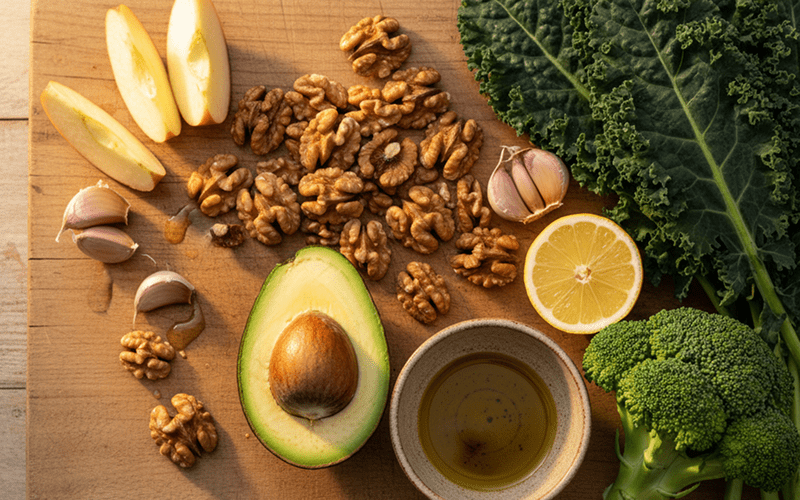
- Olive oil as the primary fat source
- Fatty fish like salmon and sardines two or more times a week
- Plenty of vegetables, legumes, and whole grains
- Nuts and seeds as regular snacks
- Moderate amounts of poultry and eggs
- Red meat used occasionally, not daily
- Very limited processed and packaged foods
The combination of anti-inflammatory fats, fiber, antioxidants, and limited refined carbohydrates appears to address several of the root drivers of NAFLD simultaneously.

3. Cut Back on Added Sugars and Refined Carbohydrates
This is likely the single most impactful dietary change for most people with fatty liver disease. The liver is the primary site of fructose metabolism, and high fructose intake from sweetened beverages, packaged snacks, and processed foods has been directly linked to increased liver fat.(2)
The main culprits to reduce significantly:
- Sweetened beverages including soda, juice, sports drinks, and sweetened coffee drinks
- High-fructose corn syrup and added sugars in packaged foods
- White bread, white rice, white pasta, and other refined grains
- Pastries, cookies, cereals with added sugar, and flavored yogurt
Replacing these with whole food alternatives, including vegetables, legumes, whole grains, and naturally sweet foods like berries, addresses the fructose overload that drives fat accumulation in the liver.
Diet is the foundation, but it’s worth knowing that certain supplements have been studied specifically for their role in supporting liver health. Ingredients like milk thistle, berberine, and specific antioxidants have shown promise in clinical research for people working to improve their liver function. If you’re making changes to your diet and lifestyle and want to give your liver some additional nutritional support alongside those efforts, it may be worth exploring what a quality liver supplement can offer.
4. Exercise Regularly, and Sit Less
Regular physical activity reduces liver fat through multiple pathways. It improves insulin sensitivity, lowers triglycerides, and helps the body use fat more efficiently as fuel. These benefits occur even when exercise doesn’t result in significant weight loss.
A review published in the Journal of Hepatology found that both aerobic exercise and resistance training reduced liver fat in people with NAFLD, with higher-intensity aerobic activity showing particularly strong results.(5)
Practical starting point: 150 minutes of moderate activity per week, spread across most days. Brisk walking counts. So does cycling, swimming, or any activity that raises your heart rate. If you currently do very little, starting with 20 to 30 minutes most days and building from there is entirely reasonable.
One often-overlooked factor: reducing overall sitting time. Research suggests that prolonged sitting independently contributes to metabolic dysfunction, including in the liver. Breaking up long periods of sitting with short walks throughout the day adds up.

5. Drink Coffee
This is one of the more welcome pieces of research in liver health. Regular coffee consumption has been consistently associated with lower rates of liver disease, liver fibrosis, and liver-related mortality in large population studies.
A major review found that drinking two or more cups of coffee per day was associated with a substantially lower risk of liver cirrhosis compared to non-drinkers.(6) The benefit appears to come from a combination of caffeine and other bioactive compounds in coffee that influence liver enzyme activity and inflammation.
Black coffee or coffee with minimal additives appears to carry the most benefit. Highly sweetened coffee drinks would work against your liver goals.
6. Support Your Gut Health
The connection between gut health and liver health is more significant than most people realize. The liver receives blood directly from the intestines, which means that imbalances in gut bacteria can contribute to liver inflammation.
Research has found that people with NAFLD tend to have altered gut microbiome profiles compared to those without the condition.(7) A diet rich in fiber and fermented foods supports a healthier gut environment, which in turn benefits the liver. Prebiotic-rich foods like garlic, onions, leeks, oats, and bananas feed beneficial bacteria. Fermented foods like plain yogurt, kefir, and sauerkraut contribute live cultures.
7. Prioritize Quality Protein
Adequate protein intake helps regulate blood sugar, supports satiety, and reduces cravings for refined carbohydrates. These effects all support liver health indirectly.
A small clinical trial found that supplementation with whey protein isolate for 12 weeks was associated with improvements in liver enzyme levels and reductions in liver fat in NASH patients..(8) Prioritize quality protein sources such as wild-caught fish, eggs, legumes, and lean meats over heavily processed protein products.
8. Be Careful With Alcohol
Even for people without alcoholic liver disease, regular alcohol consumption adds metabolic burden to the liver. If you’ve been diagnosed with NAFLD, many liver specialists recommend reducing alcohol significantly or eliminating it during the period when you’re actively working to improve liver health.
General public health guidance suggests no more than one drink per day for women and two for men. If your doctor has recommended abstaining entirely, follow that guidance.
9. Review Your Medications and Supplements
Both prescription and over-the-counter medications can affect liver health. Acetaminophen (Tylenol) at high doses or taken regularly with alcohol is a well-known liver stressor. Certain cholesterol medications, antifungals, and some herbal supplements have also been associated with liver stress.
This doesn’t mean stopping prescribed medications without medical guidance. It does mean being thoughtful about what you take routinely, discussing any concerns with your doctor, and avoiding high doses of supplements that your liver has to process.
10. Address the Conditions That Work Against Your Liver
Fatty liver doesn’t exist in isolation. High blood sugar, high blood pressure, and high cholesterol all have a bidirectional relationship with liver health: they contribute to fatty liver, and fatty liver worsens them in turn.
Nearly half of all people with type 2 diabetes have some form of fatty liver disease, a relationship tied closely to the role of blood sugar and insulin resistance in driving liver fat accumulation.(9) Managing these conditions, whether through lifestyle, medication, or both, is a meaningful part of improving liver health over time.
Regular monitoring also matters. Knowing your liver enzyme levels (ALT and AST), your fasting glucose, and your triglycerides gives you a way to track whether your efforts are making a difference.
What to Expect: Can Fatty Liver Actually Be Reversed?
Yes, in most cases it can, especially in the earlier stages.
Studies have shown measurable reductions in liver fat within 8 to 12 weeks of consistent dietary changes and regular exercise. The more advanced the condition, the longer the recovery timeline, but the liver’s capacity for self-repair is genuinely remarkable as long as the damage hasn’t progressed to advanced cirrhosis.
The process is gradual and doesn’t usually come with obvious milestones. Most people notice improvements in energy, digestion, and general wellbeing before they see changes on a blood test. Follow-up imaging or blood work ordered by your doctor is the most reliable way to track progress.
The key is consistency over a long enough period. Short-term bursts of clean eating don’t reverse months or years of liver stress. Sustained changes do.
Frequently Asked Questions
How do I know if I have fatty liver disease?
Fatty liver disease is usually diagnosed through blood tests (elevated liver enzymes) combined with imaging, most often an ultrasound. A liver biopsy can confirm the diagnosis and assess how advanced the condition is, though it isn’t always required. Many people are diagnosed incidentally when tests are ordered for something else. If you have risk factors, asking your doctor to check your liver enzyme levels at your next physical is a reasonable step.
Can you reverse fatty liver disease with diet alone?
Diet is the most powerful tool available for improving fatty liver, and for many people it produces significant improvements on its own. Combining dietary changes with regular exercise tends to produce better outcomes, particularly for reducing inflammation. The Mediterranean dietary pattern has the most clinical evidence behind it for this condition.
What foods are most damaging to a fatty liver?
The biggest contributors are added sugars, especially fructose and high-fructose corn syrup, sweetened beverages, and refined carbohydrates like white bread and white rice. Alcohol adds additional burden to the liver. Highly processed foods, which combine sugar, refined fat, and calories in forms the body wasn’t designed to handle regularly, are also worth minimizing significantly.
Is NAFLD the same as cirrhosis?
No. NAFLD is an earlier-stage condition. Cirrhosis refers to advanced scarring of the liver and is typically the result of years of untreated liver disease or damage. Catching and addressing NAFLD early significantly reduces the risk of progression to cirrhosis. The stages between NAFLD and cirrhosis include liver inflammation (NASH/MASH) and fibrosis (early scarring), both of which are still largely reversible with sustained lifestyle changes.
Do I need a supplement to treat fatty liver?
No supplement alone can reverse fatty liver disease, and lifestyle changes are the foundation of any treatment approach. That said, some supplements have been studied for their potential to support liver function alongside diet and exercise. Milk thistle (silymarin) and berberine have the most evidence in the context of NAFLD. Talk to your doctor before starting any supplement, especially if you take prescription medications.

One More Thing Worth Considering
The steps in this article can genuinely move the needle for your liver health. And if you want to go a step further, there are supplements formulated specifically to support liver detoxification, reduce inflammation, and help the liver repair itself, using ingredients that have been studied in clinical research.
If that sounds like something worth adding to your routine, take a look at what this liver support supplement offers. It was put together with exactly this kind of situation in mind.
Sources
- Younossi ZM, et al. “Global epidemiology of nonalcoholic fatty liver disease.” Hepatology. 2016;64(1):73-84. https://pubmed.ncbi.nlm.nih.gov/26707365/
- Jensen T, et al. “Fructose and sugar: A major mediator of nonalcoholic fatty liver disease.” Journal of Hepatology. 2018;68(5):1063-1075. https://pubmed.ncbi.nlm.nih.gov/29408694/
- Vilar-Gomez E, et al. “Weight Loss Through Lifestyle Modification Significantly Reduces Features of Nonalcoholic Steatohepatitis.” Gastroenterology. 2015;149(2):367-378. https://pubmed.ncbi.nlm.nih.gov/25865049/
- Ryan MC, et al. “The Mediterranean diet improves hepatic steatosis and insulin sensitivity in individuals with non-alcoholic fatty liver disease.” Journal of Hepatology. 2013;59(1):138-143. https://pubmed.ncbi.nlm.nih.gov/23485520/
- Keating SE, et al. “Effect of aerobic exercise training dose on liver fat and visceral adiposity.” Journal of Hepatology. 2015;63(1):174-182. https://pubmed.ncbi.nlm.nih.gov/25863524/
- Kennedy OJ, et al. “Coffee, including caffeinated and decaffeinated coffee, and the risk of liver cirrhosis.” Alimentary Pharmacology and Therapeutics. 2016;43(5):562-574. https://pubmed.ncbi.nlm.nih.gov/26806124/
- Leung C, et al. “The role of the gut microbiota in NAFLD.” Nature Reviews Gastroenterology and Hepatology. 2016;13(7):412-425. https://pubmed.ncbi.nlm.nih.gov/27273168/
- Chitapanarux T, et al. “Open-labeled pilot study of cysteine-rich whey protein isolate supplementation for nonalcoholic steatohepatitis patients.” Journal of Gastroenterology and Hepatology. 2009;24(6):1045-1050. https://pubmed.ncbi.nlm.nih.gov/19638084/
- Bhatt HB, Smith RJ. “Fatty liver disease in diabetes mellitus.” Hepatobiliary Surgery and Nutrition. 2015;4(2):101-108. https://pubmed.ncbi.nlm.nih.gov/26005676/