

Quick Summary
Your liver does far more than filter toxins. It plays a direct role in how your body burns fat, manages energy, and maintains a healthy weight. When liver function is compromised, metabolism slows, energy dips, and weight loss becomes harder. The good news: practical, evidence-backed lifestyle changes can help your liver work better, and your body may follow.
If you have been working on your health and fitness goals but feel like something is holding you back, your liver might deserve a closer look.
The liver is one of the most metabolically active organs in the body. It processes nutrients from food, regulates blood sugar, produces bile to break down dietary fat, and neutralizes substances your body needs to eliminate. When it is working well, these functions run smoothly. When it is under stress, nearly every system in your body can feel it.
Here is what the research says about how liver function connects to metabolism and weight, and what you can do to support both.
The Link Between Liver Health and Metabolism
The liver is the body’s primary site for fat metabolism. It produces bile acids, which are essential for absorbing dietary fats, and it regulates the storage and release of glucose for energy. Research published in the Journal of Hepatology confirms that non-alcoholic fatty liver disease (NAFLD) is closely associated with metabolic dysfunction, including insulin resistance, elevated triglycerides, and abdominal weight gain.(1)
According to the National Institute of Diabetes and Digestive and Kidney Diseases, NAFLD affects roughly 24% of adults in the United States, and many people have no obvious symptoms.(2) That means a large number of people may be experiencing sluggish metabolism, fatigue, or difficulty losing weight without knowing the liver is a contributing factor.
Signs That Liver Function May Be Affecting Your Metabolism
These are common signs that are worth discussing with a healthcare provider:
- Persistent fatigue that does not improve with rest
- Difficulty losing weight despite consistent effort
- Bloating or digestive discomfort after meals
- Brain fog or low energy throughout the day
- Elevated triglycerides or blood sugar on routine labs
Want to understand more about how liver health ties into the way you feel every day?
Keep reading below. The lifestyle changes in this article are straightforward, and several of them show measurable effects in clinical research. If you are also curious about targeted nutritional support, there is a liver support supplement worth looking into at the link below.
4 Evidence-Based Ways to Support Liver Health and Metabolism
1. Reduce Ultra-Processed Foods
Ultra-processed foods are high in refined sugars, sodium, and industrial fats that place a significant burden on the liver. A 2022 study in JHEP Reports found that higher consumption of ultra-processed foods was independently associated with a greater risk of NAFLD. Replacing processed snacks and packaged meals with whole foods, fresh produce, legumes, and minimally processed grains gives the liver less to manage and more opportunity to function efficiently.
A practical rule: look at ingredient lists. If a product contains ingredients you would not use at home, it is likely ultra-processed. Fresh fruits, vegetables, nuts, seeds, and whole grains are the most liver-friendly choices you can make.(3)

2. Be Selective About Meat and Dairy
Animal proteins and full-fat dairy products require significant liver processing. This does not mean you need to eliminate them, but quality and frequency matter. Choose leaner cuts, prioritize grass-fed and organic options where possible, and consider incorporating plant-based protein sources like beans, lentils, and chickpeas several times per week to reduce the overall metabolic load on the liver.
Saturated fat from low-quality meat and dairy is a known contributor to hepatic fat accumulation.(4) Reducing saturated fat intake while maintaining adequate total protein supports both liver health and sustained energy levels.
3. Prioritize Stress Management
Chronic stress raises cortisol, which encourages fat storage in the abdominal region and promotes systemic inflammation. This inflammation can affect liver function over time. Stress also tends to drive poor food choices and disrupted sleep, both of which compound the issue.
Consistent stress-reduction practices that research supports include:
- Diaphragmatic breathing exercises (slow, belly-focused breathing)
- Daily movement, including walking, yoga, or stretching
- Adequate sleep of 7 to 9 hours per night for most adults
- Mindfulness meditation or guided relaxation
A review in Frontiers in Endocrinology noted that psychological stress and metabolic dysfunction share overlapping biological pathways, including liver-specific inflammation and insulin signaling disruption.(5)
4. Exercise Regularly, Combining Cardio and Resistance Training
Physical activity is one of the most well-studied interventions for improving liver health. Both aerobic exercise and resistance training have been shown to reduce liver fat independently. A combination of both appears to produce the strongest results.
A meta-analysis published in Alimentary Pharmacology and Therapeutics found that exercise reduced liver fat content even in the absence of significant weight loss, suggesting the liver benefits directly from movement regardless of the number on the scale.(6)
Aim for at least 150 minutes of moderate-intensity activity per week, with two or more resistance training sessions. This level of activity is consistent with guidelines from the American Heart Association and has documented benefits for metabolic and liver health.

Looking for additional support beyond diet and exercise?
Some people find that a targeted liver support supplement helps bridge the gap while they build sustainable habits. The one we recommend is formulated with researched botanicals and antioxidants to support healthy liver function. It is designed to complement the lifestyle approach described in this article, not replace it. You can learn more at the link below.
What About Fatty Liver Disease? What You Should Know
NAFLD is now the most common chronic liver condition worldwide, and rates have risen alongside increases in obesity, sedentary behavior, and processed food consumption.(2) It exists on a spectrum, from simple fat accumulation with no inflammation, to non-alcoholic steatohepatitis (NASH), which involves active liver cell damage.
The four lifestyle strategies described above are also the first-line recommendations clinicians use to address early-stage fatty liver. Modest weight loss of 5 to 10 percent of body weight has been shown to meaningfully reduce liver fat content and improve liver enzyme levels. Sustainable lifestyle change is the foundation of any liver health plan.
If you have concerns about your liver or suspect you may have NAFLD, speak with your healthcare provider. Blood tests and imaging can give you a clearer picture of where things stand.
Frequently Asked Questions
Can poor liver health actually cause weight gain?
Yes, indirectly. When the liver is not functioning optimally, it processes fat and glucose less efficiently. This can contribute to fat accumulation, insulin resistance, and a slower metabolic rate, all of which make weight management harder. Supporting liver function through diet and exercise is one approach to addressing this root cause.
What are the early signs of poor liver health?
Early signs can be subtle and are easy to attribute to other causes. They may include persistent fatigue, bloating after meals, discomfort in the upper right abdomen, elevated liver enzymes on a blood test, or difficulty losing weight. Many people with early liver dysfunction have no symptoms at all, which is why routine checkups matter.
How long does it take to improve liver health through lifestyle changes?
Research suggests that meaningful improvements in liver fat content can occur within 8 to 12 weeks of consistent dietary changes and regular exercise. Individual results vary based on starting point, consistency, and other health factors.
Are liver detox cleanses effective?
The term ‘liver detox’ is used loosely in the wellness industry, and most commercial cleanse products lack clinical evidence. The liver detoxifies continuously on its own. What supports this process is reducing the burden on the liver through whole foods, hydration, limited alcohol, and regular movement, not short-term liquid diets.
What foods are best for liver health?
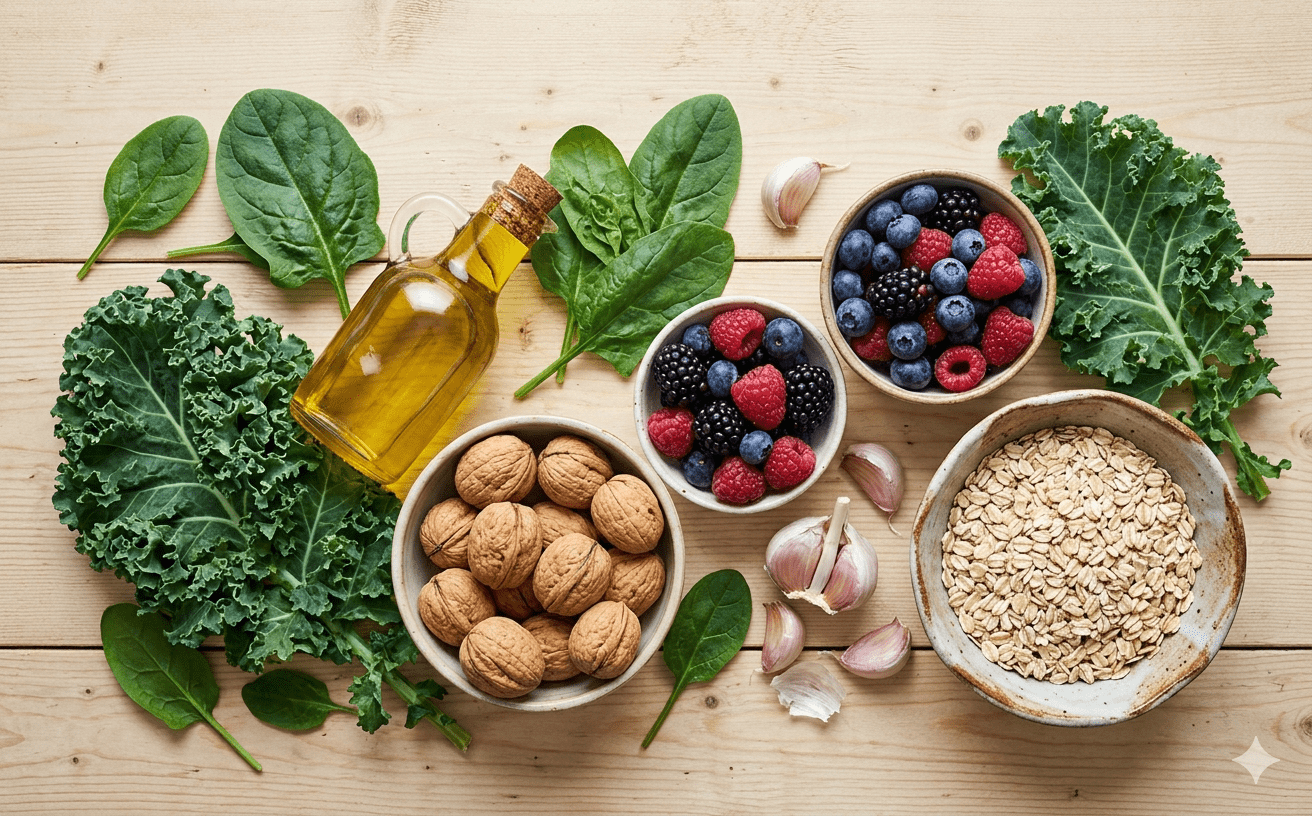
Foods consistently associated with liver health in research include leafy green vegetables, cruciferous vegetables like broccoli and Brussels sprouts, olive oil, fatty fish, coffee (in moderate amounts), and foods rich in fiber such as oats, legumes, and berries. Minimizing added sugar, refined carbohydrates, and saturated fat is equally important.
A Closing Thought
Your liver works quietly every day to keep your metabolism running, your energy stable, and your body clear of substances it does not need. Small, consistent changes to the way you eat, move, and manage stress are among the most impactful things you can do for it.
If you are someone who has already made progress with diet and exercise but still feels like something is missing, it may be worth looking into whether nutritional support for your liver could play a role in your overall approach.

Ready to take the next step?
If you are curious about what targeted liver support looks like, the supplement we recommend offers a researched approach to supporting healthy liver function as part of a broader wellness routine. Visit the link below to learn more about the ingredients and how they work.
Learn More About Liver Support
Sources
1. Younossi ZM, et al. The global epidemiology of nonalcoholic fatty liver disease (NAFLD) and nonalcoholic steatohepatitis (NASH): a systematic review. Hepatology. 2023;77:1335-1347. https://pmc.ncbi.nlm.nih.gov/articles/PMC10026948/
2. National Institute of Diabetes and Digestive and Kidney Diseases. Definition and Facts of NAFLD and NASH. https://www.niddk.nih.gov/health-information/liver-disease/nafld-nash/definition-facts
3. Grinshpan LS, et al. Ultra-processed food consumption and non-alcoholic fatty liver disease, metabolic syndrome and insulin resistance: a systematic review. JHEP Reports. 2024;6(1):100964. https://pubmed.ncbi.nlm.nih.gov/38234408/
4. Zelber-Sagi S, et al. Dietary fat content and non-alcoholic fatty liver disease. Journal of Hepatology. 2022. https://www.journal-of-hepatology.eu
5. Incollingo Rodriguez AC, et al. Hypothalamic-pituitary-adrenal axis dysregulation and visceral adiposity. Frontiers in Endocrinology. 2015. https://www.frontiersin.org/articles/10.3389/fendo.2015.00083/full
6. Golabi P, et al. Effectiveness of exercise in hepatic fat mobilization in non-alcoholic fatty liver disease. Alimentary Pharmacology and Therapeutics. 2016. https://pubmed.ncbi.nlm.nih.gov/27061196/