
Most people know sugar shows up in desserts, candy, and soda. The bigger challenge is finding the sugar that hides in foods most people never think twice about buying. Bread, pasta sauce, yogurt, frozen meals, protein bars, salad dressings, and even foods marketed as healthy often contain surprising amounts of added sugar. What makes this difficult is not simply how much sugar is in the food. It is how many different names manufacturers use to describe it.
Research examining packaged foods sold in the United States suggests that added sweeteners appear in a large percentage of products lining grocery store shelves today.(1) For consumers trying to eat healthier, lower calories, manage weight, or simply understand what they are putting into their bodies, recognizing hidden sugars has become almost as important as reading calories or serving sizes.
Why Hidden Sugar Is So Easy to Miss
Food manufacturers are required to list ingredients and disclose added sugars on modern Nutrition Facts labels. While that sounds straightforward, ingredient lists can still become confusing quickly because sugar rarely appears under a single name.
Instead of seeing one simple ingredient labeled sugar, shoppers may encounter dozens of names that sound natural, scientific, or even healthy. Some ingredients sound less processed than they really are. Others appear multiple times throughout an ingredient list under different names, making the total amount harder to recognize at first glance.
This matters because added sugars contribute calories without providing much nutritional value. Consistently consuming large amounts of added sugar has been associated with increased risk of weight gain, higher risk of cardiovascular disease, and poorer overall diet quality.(2)
The Many Names of Sugar
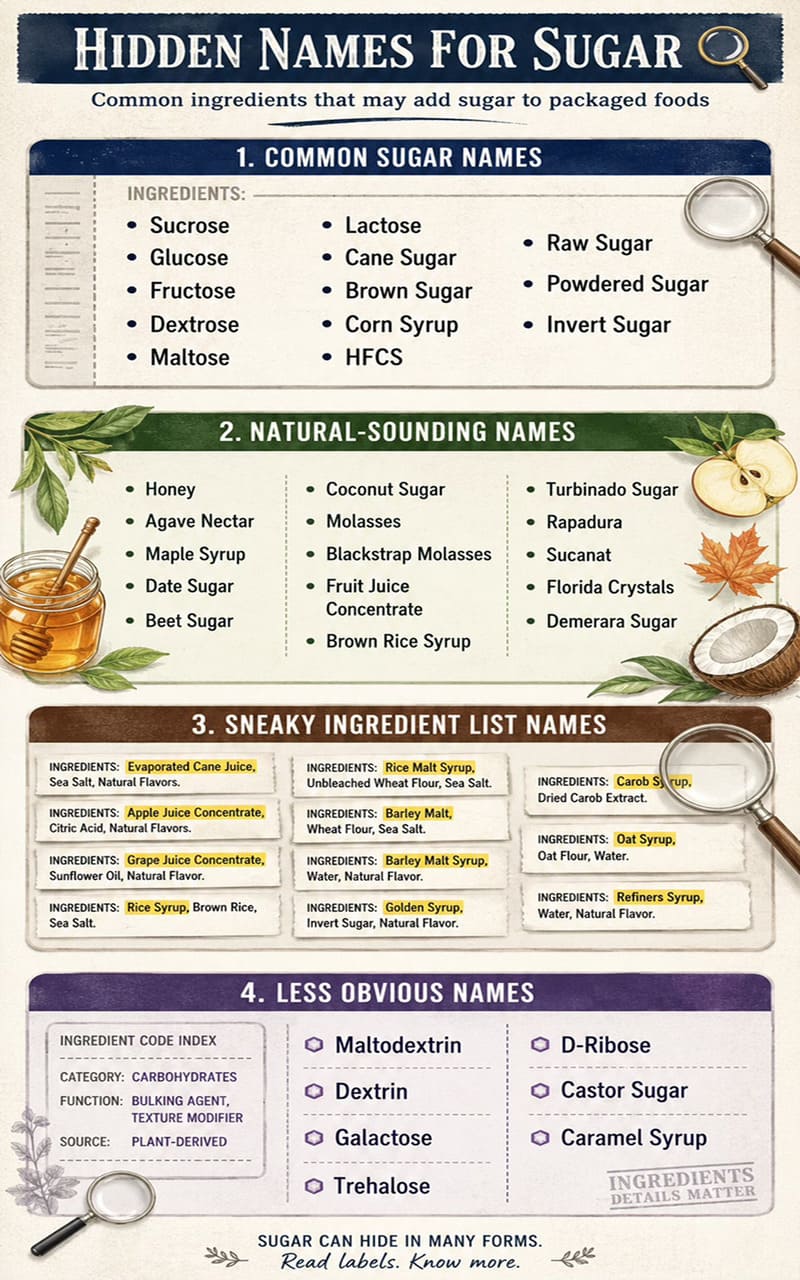
One reason sugar becomes difficult to track is that manufacturers often spread sweeteners across multiple ingredients rather than listing one obvious source. The infographic below groups many common names into easy categories so readers can quickly identify patterns while grocery shopping.
The goal is not memorization.
The goal is recognition.
Once shoppers start recognizing repeated patterns in ingredient lists, hidden sugar becomes much easier to spot.
How Much Added Sugar Is Too Much?
The American Heart Association recommends limiting added sugar intake to no more than 25 grams daily for women and 36 grams daily for men.(3)
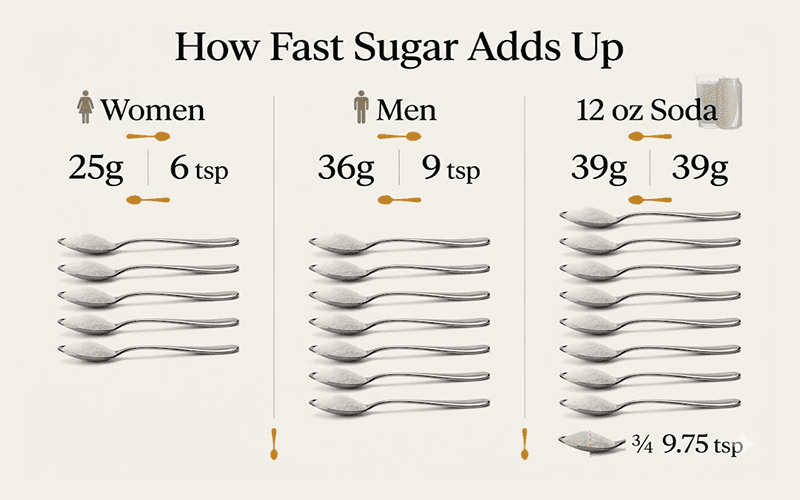
Those numbers can disappear quickly.
A standard 12-ounce soft drink contains roughly 39 grams of sugar, exceeding the recommended daily limit for many adults in a single serving.(4) The average American consumes far more added sugar than recommended, with estimates around 17 teaspoons daily.(5)
What surprises many people is where these sugars come from. Desserts contribute, but packaged foods and beverages often make up a much larger portion of daily intake than people realize.
Foods That Often Contain More Sugar Than Expected
Many products marketed as convenient or healthy contain enough added sugar to significantly increase daily intake without feeling like indulgences.
Flavored yogurts frequently contain between 15 and 20 grams of sugar per serving. Protein bars can rival candy bars depending on the brand. Instant oatmeal packets, bottled sauces, flavored coffee drinks, salad dressings, and breakfast cereals may all contribute substantial amounts before lunch even begins.
Low-fat and fat-free foods deserve extra attention because removing fat often changes taste and texture. Manufacturers frequently compensate by adding sweeteners to improve flavor, creating products that may feel healthier while still contributing meaningful amounts of added sugar.
Explore Additional Liver Support Options
Improving nutrition habits often becomes easier when people have support systems in place. Some readers choose to combine healthier eating habits with additional wellness support while working toward long-term goals.
How to Read Labels More Effectively
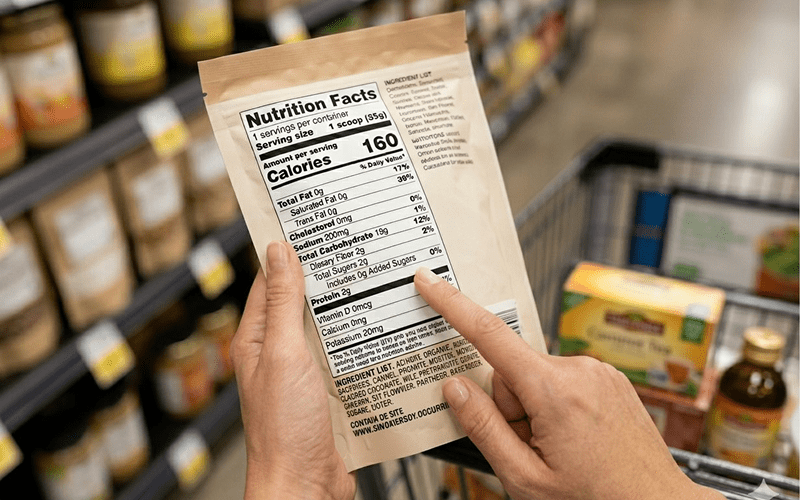
Modern Nutrition Facts labels now separate Added Sugars from naturally occurring sugars, making labels much easier to interpret.(6) Understanding a few simple habits can make shopping faster and less frustrating.
First, look at the Added Sugars line before anything else. This gives the clearest picture of how much sugar manufacturers included during production.
Second, review ingredient order carefully. Ingredients appear from highest amount to lowest amount by weight. If sugar sources appear near the beginning of the ingredient list, the product likely contains substantial amounts.
Third, watch for multiple sweeteners appearing together. Manufacturers sometimes spread sugar across several ingredients to make individual sweeteners appear lower on the list.
Finally, ignore front-package claims. Words like natural, organic, made with fruit, fat free, or no high fructose corn syrup may sound reassuring, but they do not automatically mean low sugar.
Small Changes That Add Up Over Time
Reducing sugar intake rarely succeeds through dramatic restriction alone. Most people benefit more from small changes repeated consistently.
Replacing sugary beverages with unsweetened options, choosing plain yogurt over flavored varieties, cooking more meals at home, and reading labels more frequently can create meaningful improvements without feeling overwhelming.
Whole foods naturally make this easier because they contain fewer ingredients and fewer surprises. Over time, recognizing hidden sugars becomes less about strict rules and more about building awareness.
Explore Additional Liver Support Options
Understanding where sugar hides is one of the simplest ways to make smarter long-term nutrition decisions. Some people find that combining healthier eating habits with additional wellness support helps reinforce those changes over time.
SOURCES
[1] https://pubmed.ncbi.nlm.nih.gov/22999012/
[2] https://www.cdc.gov/nutrition/php/data-research/added-sugars.html
[3] https://www.heart.org/en/healthy-living/healthy-eating/eat-smart/sugar/how-much-sugar-is-too-much
[5] https://www.cdc.gov/nutrition/php/data-research/added-sugars.html
[6] https://www.fda.gov/food/nutrition-facts-label/added-sugars-nutrition-facts-label