

You are eating better. You are moving more. But the scale still barely budges.
If that sounds familiar, the missing piece might have nothing to do with your diet or your workout routine. It may be happening while you are lying in bed at night.
Deep sleep plays a powerful and often overlooked role in weight management. And for many adults, a common mineral deficiency may be quietly getting in the way of both.
The Sleep and Weight Connection Most People Miss
When most people think about losing weight, they think about calories and cardio. Sleep rarely makes the list. But the research tells a different story.
Poor sleep, particularly getting less than seven hours a night, is associated with metabolic disruption and weight gain. (1)
And it tends to work in a frustrating loop: poor sleep can contribute to weight gain, and carrying extra weight can make it harder to sleep well.
Here is why it happens at the hormonal level.
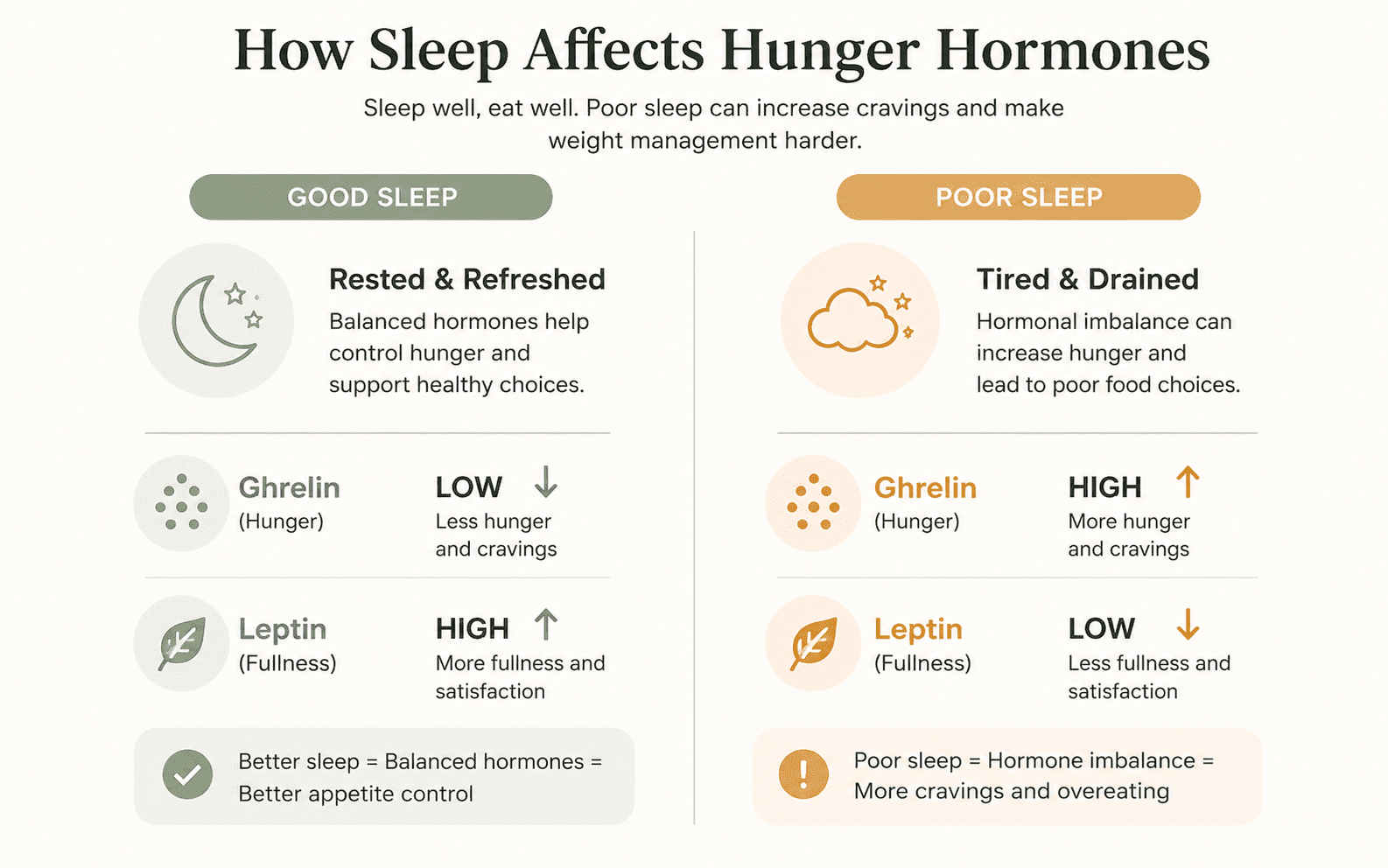
Your body relies on two hormones to manage hunger: ghrelin, which signals that it is time to eat, and leptin, which tells your brain you have had enough. These hormones are regulated during sleep. Research from the University of Chicago found that just two nights of sleep restriction led to an 18% drop in leptin and a 28% rise in ghrelin, along with a significant increase in hunger and appetite. (2)
When sleep is cut short or disrupted, you wake up hungrier, feel less satisfied after eating, and tend to reach for higher-calorie foods.
This is not a willpower problem. It is a biology problem.
Why Deep Sleep Specifically Matters
Not all sleep is equal. The most restorative stage is slow-wave sleep, also called deep sleep. This is non-REM sleep, the phase where your heart rate slows, your breathing steadies, and your body does its deepest recovery work.
It is also where two hormones critical to weight management are regulated: growth hormone and cortisol.
Growth Hormone
Growth hormone is released primarily during deep sleep. Research published in the American Journal of Physiology found that the largest and most consistent pulse of growth hormone in the 24-hour cycle occurs during the first phase of slow-wave sleep. (3) It plays a direct role in breaking down fatty acids for energy and supporting lean muscle. If you are exercising regularly but not reaching deep sleep, you may be missing a significant part of the metabolic benefit.
Cortisol
Cortisol, your body’s main stress hormone, is meant to drop during sleep. Research from the NIH confirms that deep sleep, specifically, has an inhibitory influence on the stress axis that governs cortisol release. (4) When sleep is fragmented or shallow, cortisol stays elevated overnight, which is associated with increased fat storage, stronger cravings for high-calorie foods, and reduced ability to use fat as fuel. A separate study published on PubMed found that slow-wave sleep episodes were significantly associated with declining cortisol levels, with increases in cortisol generally accompanying periods of wakefulness. (5)
So if your sleep is technically happening but never getting deep, your hormones may be working against your efforts without you realizing it.
The Magnesium Connection
If deep sleep is the goal, magnesium is one of the most practical places to start.
Magnesium is involved in hundreds of processes in the body, and several of them are directly tied to sleep quality. One of its most important roles is supporting GABA, a neurotransmitter that calms the nervous system and helps your brain shift from alert to asleep. A peer-reviewed review published in the NIH’s journal database found that magnesium acts as both an NMDA antagonist and a GABA agonist, helping calm neural activity and supporting the transition into sleep. (6) Without adequate magnesium, this calming process is less efficient. Your brain stays in a higher state of activity even when you want to wind down.
A double-blind, placebo-controlled clinical trial published in the Journal of Research in Medical Sciences found that magnesium supplementation significantly improved sleep time, sleep efficiency, and early morning awakening in elderly subjects with insomnia, while also reducing cortisol levels. (7)
Magnesium also helps regulate cortisol directly. When magnesium levels are low, the body’s stress response tends to stay elevated, which, as we just covered, directly interferes with the deep sleep your body needs.
The problem is that most adults are not getting enough. According to data from the National Health and Nutrition Examination Survey (NHANES), nearly 50% of adults in the United States consume less magnesium than the recommended daily amount. (8) Magnesium-rich foods like dark leafy greens, nuts, seeds, and legumes are not staples for most people, and chronic stress depletes magnesium further.

If you have been dealing with restless nights, unrefreshing sleep, and stubborn weight despite eating well and staying active, low magnesium is worth taking seriously.
A quality magnesium supplement taken before bed is one of the simplest things you can add to your routine. Many people notice a meaningful difference in how quickly they fall asleep and how rested they feel within a week or two. If that sounds worth trying, see the specific one we recommend here.
Other Habits That Support Deep Sleep
Magnesium works best alongside a few basic sleep habits.
- Keep a consistent sleep schedule. Going to bed and waking at the same time each day helps anchor your circadian rhythm, which directly influences how much deep sleep you get each night.
- Limit screens before bed. Blue light from phones and TVs suppresses melatonin, the hormone that signals your body it is time to sleep. Cutting screen time in the hour before bed makes it easier to reach deeper sleep stages.
- Keep your bedroom cool. Your body temperature naturally drops as you enter deep sleep. A cooler room supports that process.
- Go easy on alcohol in the evenings. Alcohol may help you fall asleep faster but it fragments sleep and reduces time in deep sleep stages, particularly in the second half of the night.
Putting It Together
If you have been putting in real effort on your diet and exercise without seeing the results you expected, sleep quality is worth a serious look. Specifically, whether you are actually reaching deep sleep consistently.
Deep sleep regulates the hormones that control hunger, fat storage, and metabolism. Disrupting it disrupts all of those things at once. Improving it does not replace good nutrition and movement, but it can make both work considerably better.
For many people, addressing a magnesium deficiency is what finally makes the difference. It is not a dramatic intervention. It is filling in a gap that most people do not know they have.

OUR RECOMMENDATION
Organixx Magnesium 7
The supplement we recommend for this is Organixx Magnesium 7. What sets it apart is that it contains seven different forms of magnesium, which supports better absorption and tolerability compared to single-form supplements. It is also free of the fillers and additives that can cause the digestive discomfort people sometimes associate with magnesium. One to two capsules before bed is all most people need. If your sleep has been off and your weight loss has felt stuck, it is a low-risk place to start.
Learn more about Organixx Magnesium 7 →
Frequently Asked Questions
Frequently Asked QuestionsDoes magnesium actually help you sleep better?
Research suggests it can, particularly for people who are not getting enough of it. Magnesium supports GABA activity in the brain, the neurotransmitter most responsible for calming the nervous system before sleep. A double-blind clinical trial found that magnesium supplementation improved sleep quality, sleep time, and reduced nighttime cortisol in people with insomnia. (7)
Can poor sleep cause weight gain?
It can contribute to it. Sleep deprivation disrupts ghrelin and leptin, the hormones that regulate hunger and fullness, and elevates cortisol, which promotes fat storage. Consistently poor sleep makes weight management harder even when diet and exercise are solid. (1)(2)
How does deep sleep affect cortisol and belly fat?
Cortisol levels are meant to drop during deep sleep. NIH research confirms that deep sleep specifically inhibits the stress axis responsible for cortisol secretion. (4) When sleep is fragmented or shallow, cortisol stays elevated, which is linked to fat storage around the midsection and stronger cravings for calorie-dense foods.
What type of magnesium is best for sleep?
Forms like magnesium glycinate and magnesium L-threonate are well-absorbed and gentler on digestion, making them well suited for sleep support compared to magnesium oxide, which is poorly absorbed and more likely to cause stomach discomfort.
How long does it take for magnesium to improve sleep?
In the double-blind clinical trial cited above, participants saw measurable improvements over an eight-week period, though many people report noticing a difference within one to two weeks. (7) Taking magnesium roughly an hour before bed tends to produce the best results.
Sources
1. Beccuti G, Pannain S. Sleep and obesity. Current Opinion in Clinical Nutrition and Metabolic Care. 2011;14(4):402-412. https://pubmed.ncbi.nlm.nih.gov/21659802/
2. Spiegel K, Tasali E, Penev P, Van Cauter E. Sleep curtailment in healthy young men is associated with decreased leptin levels, elevated ghrelin levels, and increased hunger and appetite. Annals of Internal Medicine. 2004;141(11):846-850. https://www.acpjournals.org/doi/10.7326/0003-4819-141-11-200412070-00008
3. Van Cauter E, Plat L, Copinschi G. Adaptation of the 24-h growth hormone profile to a state of sleep debt. American Journal of Physiology. 2000;279(3):R874-R883. https://journals.physiology.org/doi/full/10.1152/ajpregu.2000.279.3.R874
4. Tsigos C, Chrousos GP. HPA Axis and Sleep. Endotext [Internet]. MDText.com, Inc.; 2020. https://www.ncbi.nlm.nih.gov/books/NBK279071/
5. Gronfier C, Luthringer R, Follenius M, et al. Nocturnal cortisol release in relation to sleep structure. Sleep. 1992. https://pubmed.ncbi.nlm.nih.gov/1557591/
6. Cao Y, et al. The Mechanisms of Magnesium in Sleep Disorders. Nature and Science of Sleep. PMC. https://pmc.ncbi.nlm.nih.gov/articles/PMC12535714/
7. Abbasi B, Kimiagar M, Sadeghniiat K, et al. The effect of magnesium supplementation on primary insomnia in elderly: A double-blind placebo-controlled clinical trial. Journal of Research in Medical Sciences. 2012;17(12):1161-1169. https://pubmed.ncbi.nlm.nih.gov/23853635/
8. Kostov K. Global Dietary Magnesium Deficiency: Prevalence, Underlying Causes, Health Consequences, and Strategic Solutions. International Journal of Vitamins and Nutrition Research. 2025. https://www.imrpress.com/journal/IJVNR/95/6/10.31083/IJVNR46828