
Bloating has a way of changing your whole day.
Sometimes it shows up after a heavy meal. Other times it seems to come from nowhere, leaving your stomach feeling tight, swollen, or just plain uncomfortable. For a lot of adults, it is not an occasional annoyance. Research suggests abdominal bloating affects a significant portion of the adult population on a regular basis, and the frequency tends to increase as digestion changes with age (1).
The frustrating part is that bloating rarely has one single cause. It might be something you ate. It might be how quickly you ate it. Sometimes digestion simply slows down and pressure builds up from there.
Understanding what is actually driving your symptoms is usually the most practical place to start.
What Actually Causes Bloating?
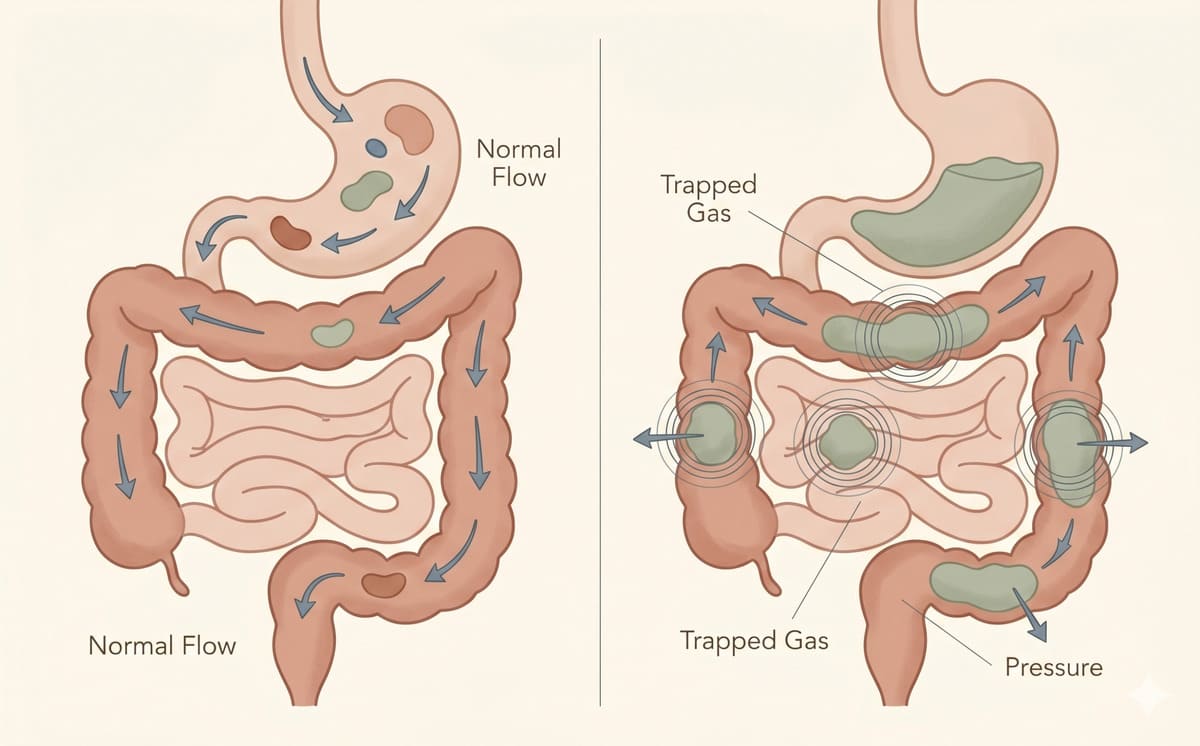
At its core, bloating happens when excess gas, fluid, or digestive contents build up inside the gastrointestinal tract.
Your digestive system works hard to break food into nutrients your body can absorb. As part of that process, bacteria in the large intestine naturally ferment carbohydrates and fibers that were not fully broken down earlier in digestion (2). That fermentation produces gas. A small amount is entirely normal and even beneficial to gut health. The problem starts when too much gets trapped, creating internal pressure that leads to tightness, cramping, visible swelling, and that stubborn heavy feeling that lingers after meals.
A lot of people assume one food is to blame. More often, it is several smaller things stacking together. Common contributors include eating too quickly, constipation, food intolerances, microbiome imbalances, and swallowing excess air without realizing it.
Common Foods That May Trigger Bloating
Everyone reacts differently, but a few categories tend to come up again and again when people start paying closer attention.
Dairy Products
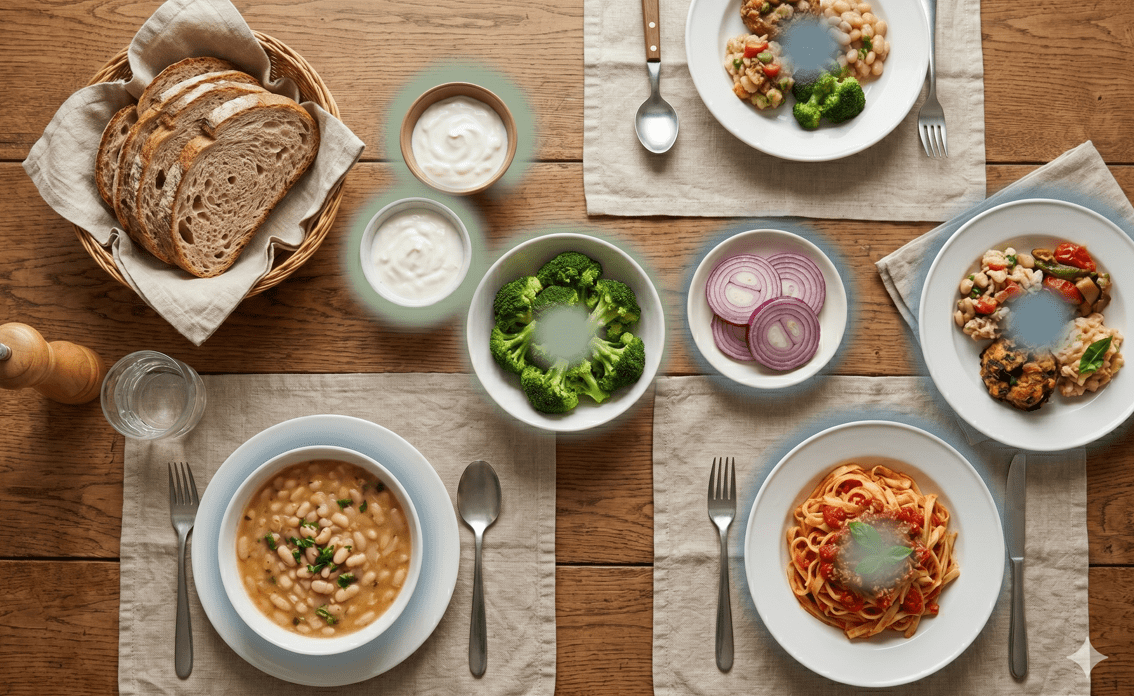
Many adults naturally produce less lactase as they get older. Lactase is the enzyme needed to break down lactose, the sugar found in milk and most dairy products (3). When lactose moves through without being fully processed, gut bacteria ferment it further down the tract. That often shows up as bloating, gas, cramping, or general digestive discomfort within an hour of eating.
Common triggers include milk, ice cream, soft cheeses, and cream-based sauces. Some people tolerate fermented dairy or smaller portions better, but it varies considerably from person to person.
Refined Wheat and Dense Grain Products
Highly processed breads, pastries, and refined carbohydrates can be genuinely difficult for some people to fully digest. When digestion slows trying to handle these foods, there is more opportunity for fermentation to occur lower in the tract. The result is often a heavy, lingering bloat that persists well after a meal ends.
If bread and pasta consistently leave you uncomfortable, a short trial of reducing refined wheat intake can help clarify whether they are contributing to the pattern.
Cruciferous Vegetables and High-FODMAP Foods
This one surprises a lot of people. Healthy foods can absolutely cause bloating.
Vegetables like broccoli, Brussels sprouts, cabbage, and kale, along with onions, garlic, beans, and certain fruits, contain fermentable short-chain carbohydrates known as FODMAPs (4). These pull water into the intestines and ferment quickly, producing gas and pressure. The good news is that you do not have to give them up. Cooking cruciferous vegetables thoroughly instead of eating them raw takes a meaningful amount of work off your digestive system.
Natural Ways to Reduce Bloating
Once you understand your triggers, there are a few well-supported approaches that can help your system recover faster and stay more comfortable over time.
Support Gut Balance with Probiotics
Your digestive tract is home to trillions of microorganisms that influence digestion, gas production, and regularity. When that balance shifts toward less favorable bacterial strains, fermentation tends to increase and bloating often follows.
Research suggests certain probiotic strains may help support digestive comfort and reduce bloating in some adults (5). Consistent daily use over several weeks tends to produce more reliable results than taking them occasionally. Good dietary sources include plain yogurt with live cultures, kefir, kimchi, and sauerkraut. If dietary sources are inconsistent, a daily probiotic supplement can help fill the gap.
Many people find that gradually building a healthier gut environment leads to fewer uncomfortable surprises after meals. If recurring bloating has become a regular part of daily life, exploring additional digestive support options may be a reasonable and worthwhile next step.
Try Digestive Enzyme Support Before Difficult Meals
Digestive enzymes help break down proteins, fats, and carbohydrates before they reach the lower digestive tract and begin fermenting. Some adults find them particularly useful before restaurant meals, dairy-heavy dishes, large portions, or any meal that reliably causes discomfort.
For some people, dietary changes alone are enough. Others find that adding supportive digestive tools alongside food adjustments helps create more predictable digestion over time. If you are looking for a bit of extra reinforcement, exploring an option designed specifically to support gut comfort can be a practical place to start.
Use Activated Charcoal for Occasional Relief
For moments when a meal misfires and you need relief quickly, activated charcoal is worth knowing about. This naturally derived powder binds to certain gases inside the digestive tract and carries them out of the system without being absorbed by the body (6).
A few important reminders: avoid daily use, do not take it alongside medications since it can interfere with absorption, and check with your healthcare provider if you take any regular prescriptions. Think of it as an occasional tool, not a long-term strategy.
Simple Habits That Often Make the Biggest Difference

Beyond what you eat, a few consistent daily habits can do a surprising amount of work over time.
Slow down while eating. Eating quickly means swallowing more air, which collects in the upper digestive tract and contributes directly to bloating. Smaller bites and more chewing make a real difference, especially at rushed meals.
Move after eating. A 10 to 15-minute walk after a meal stimulates the natural contractions of the intestines, helping food and gas move along rather than pooling in one place. It does not need to be vigorous to be effective.
Hydrate consistently. Constipation is one of the most overlooked drivers of chronic bloating. Drinking enough water throughout the day helps keep things moving. Sipping steadily between meals tends to work better than drinking large amounts during meals, which can dilute stomach acid and slow digestion.
Track your patterns. A brief food journal kept for a week or two often reveals surprisingly clear connections between specific foods and how you feel afterward. It takes much of the guesswork out of knowing where to start.
The Bottom Line
Bloating is uncomfortable, and for many people it is genuinely disruptive. But in most cases, it is also manageable.
Small adjustments to how and what you eat, building a more stable gut environment through consistent probiotic use, and having targeted support on hand for difficult meals can all work together to make digestion feel more predictable day to day.
Some people find that adding a digestive support option designed specifically for everyday gut comfort provides the extra reinforcement their system needs to stay light and comfortable consistently.
After researching several options, we found one probiotic approach that stood out because it focuses on helping the good bacteria survive the digestive process. [See the Probiotic We Researched]
Sources
- National Institutes of Health. Prevalence and etiology of abdominal bloating. PubMed Central. https://www.ncbi.nlm.nih.gov/pmc/articles/PMC3264926/
- National Institute of Diabetes and Digestive and Kidney Diseases. Symptoms and Causes of Gas in the Digestive Tract. https://www.niddk.nih.gov/health-information/digestive-diseases/gas-digestive-tract/symptoms-causes
- Mayo Clinic. Lactose intolerance: Symptoms and causes. https://www.mayoclinic.org/diseases-conditions/lactose-intolerance/symptoms-causes/syc-20374232
- Monash University. A bit of bloating is beneficial. https://www.monashfodmap.com/blog/a-bit-of-bloating-is-beneficial/
- World Journal of Gastroenterology. Probiotics for the treatment of abdominal bloating and distension. https://www.ncbi.nlm.nih.gov/pmc/articles/PMC4356980/
- American Journal of Gastroenterology. Efficacy of activated charcoal in reducing intestinal gas. https://pubmed.ncbi.nlm.nih.gov/3522213/