
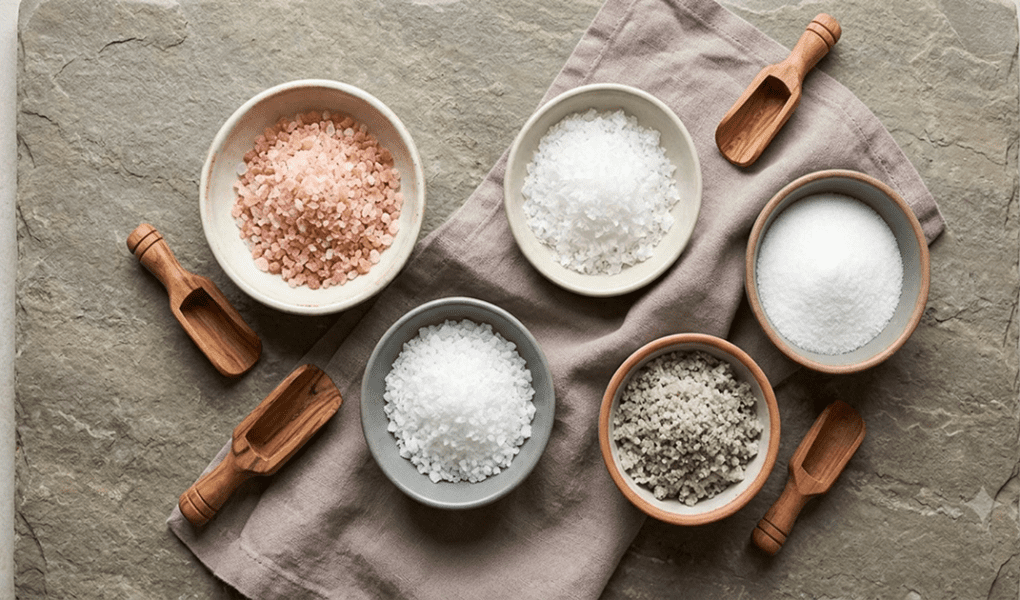
Walk down the condiment aisle of almost any grocery store and you will find a growing lineup of specialty salts: pink Himalayan, flaky sea salt, grey Celtic salt, smoked varieties, and the familiar blue cylinder of iodized table salt. The marketing around these products can be convincing. Words like “natural,” “mineral-rich,” and “unrefined” tend to stick.
But here is the question most people are actually asking: does the type of salt you choose truly matter for your health?
The short answer is mostly no. The longer answer is worth understanding.
Salt type can affect flavor, texture, cooking performance, and even appearance. What it usually does not do is dramatically change how healthy your diet is overall. For most people, the amount of sodium consumed matters far more than the specific variety being sprinkled on dinner.
What All Salt Has in Common
Regardless of where it comes from or what color it is, salt is primarily sodium chloride. That is true whether it was mined from ancient underground deposits or harvested through seawater evaporation.
Sodium itself is not the villain it is sometimes made out to be. Your body genuinely needs sodium to function. It helps regulate fluid balance, supports nerve signaling, contributes to muscle contraction, and helps maintain normal cellular function.
The challenge is quantity.
The Dietary Guidelines for Americans recommend limiting sodium intake to less than 2,300 milligrams per day for most adults. That amount is roughly equivalent to about one teaspoon of table salt. Most Americans exceed this recommendation regularly, and the biggest contributors are usually not the salt shaker on the table. Processed foods, restaurant meals, packaged snacks, canned products, and convenience foods account for much of the sodium people consume daily. (1)
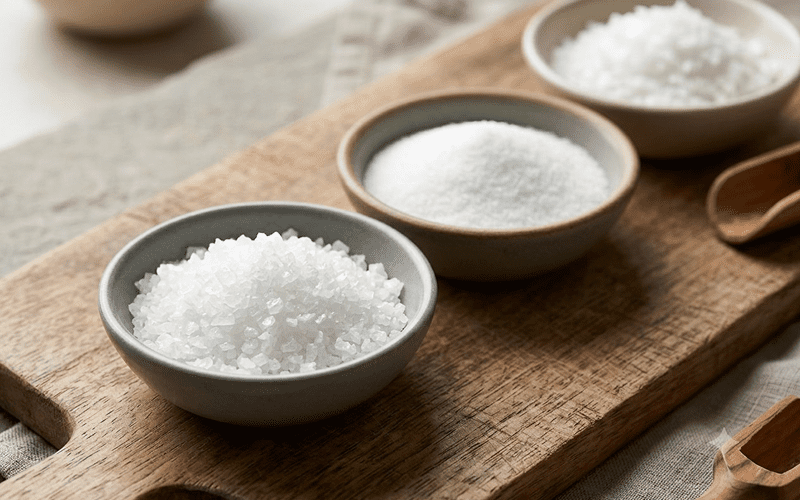
How the Most Common Salts Actually Compare
Table Salt
Table salt is typically mined from underground deposits and heavily refined to remove impurities and most naturally occurring minerals. Most table salt sold in the United States also contains added iodine, which was introduced to reduce iodine deficiency, a once-common public health concern. (2)
Iodized table salt remains one of the easiest and most affordable ways to maintain iodine intake.
Sea Salt
Sea salt is generally produced by evaporating seawater or water from saltwater lakes. Because it undergoes less processing, some trace minerals may remain depending on the source and manufacturing methods.
Sea salt often has a different texture and flavor profile compared to table salt, especially flaky varieties used for finishing dishes.
Despite marketing claims, sea salt and table salt contain very similar amounts of sodium. The trace mineral differences are generally small in the amounts people normally consume. (3)
Himalayan Pink Salt
Himalayan salt comes primarily from the Khewra Salt Mine in Pakistan. Its pink coloring comes largely from iron compounds and naturally occurring minerals.
It does contain small amounts of calcium, potassium, magnesium, and other trace minerals in addition to sodium. Depending on crystal size and how it is measured, Himalayan salt may contain slightly less sodium by weight or volume than table salt, though the difference is generally small in real-world use.
The mineral differences are real but modest. You would need to consume unhealthy amounts of salt to obtain meaningful nutrition from these minerals alone.
Kosher Salt
Kosher salt is known more for texture than nutrition. Its larger, flaky crystals make it easier to pinch, distribute evenly, and control while cooking.
Most varieties are not iodized and typically contain fewer additives.
Nutritionally, kosher salt is not dramatically different from other salts.
Celtic Salt
Celtic salt is a grey, slightly moist sea salt traditionally harvested from coastal regions of France.
Some analyses show Celtic salt containing more magnesium than certain other specialty salts, though mineral content can vary considerably depending on harvesting methods, moisture content, and processing.
Its mineral profile may differ somewhat from table salt, but the practical nutritional differences remain small.
Putting Mineral Differences Into Perspective
Mineral differences exist, but they are often overstated.
Mineral content varies by brand, harvesting method, and processing practices. The values below are approximate examples rather than universal values across all salt products.
| Salt Type | Sodium (%) | Calcium (%) | Potassium (%) | Magnesium (%) |
|---|---|---|---|---|
| Table Salt | 39.1 | 0.03 | 0.09 | <0.01 |
| Sea Salt | 38.3 | 0.16 | 0.08 | 0.05 |
| Himalayan Salt | 36.8 | 0.16 | 0.28 | 0.10 |
| Celtic Salt | 33.8 | 0.17 | 0.16 | 0.30 |
The differences are measurable. They are just not large enough to significantly influence nutrition for most people.
Whole foods remain a far more reliable source of minerals than specialty salts.
Leafy greens, beans, nuts, seeds, dairy products, seafood, fruits, and vegetables provide substantially more meaningful amounts of magnesium, potassium, calcium, and trace nutrients.

Why Sodium Intake Still Matters
High sodium intake is associated with elevated blood pressure in many people, particularly individuals who are salt-sensitive or already have hypertension. High blood pressure remains one of the strongest risk factors for heart disease and stroke. (4)
Heart disease remains the leading cause of death in the United States, and stroke continues to be one of the leading causes of death and disability. (4)
Many people assume the solution is switching salt varieties.
Usually, the more impactful change is understanding where sodium is actually coming from.
For most adults, excess sodium tends to come from highly processed and packaged foods rather than home cooking.
Common high-sodium foods include:
- Canned soups and broths
- Deli meats and processed meats
- Frozen meals
- Fast food and pizza
- Chips and snack foods
- Condiments like soy sauce and bottled dressings
- Packaged convenience meals
Whole and minimally processed foods naturally make sodium management easier.
Fresh vegetables, fruits, legumes, whole grains, and minimally processed proteins generally provide more nutrition while contributing less sodium.
If you are working on supporting healthy blood pressure, some people find it helpful to combine healthier food habits with extra support designed specifically for cardiovascular wellness.

So Which Salt Should You Use?
The honest answer is whichever salt you enjoy and use thoughtfully.
Texture, flavor, cooking application, and personal preference matter more than marketing language.
A few practical takeaways:
- If iodine intake is a concern, iodized table salt remains one of the most reliable dietary sources.
- If you prefer sea salt or kosher salt for texture and cooking performance, that is completely reasonable.
- Himalayan and Celtic salts may appeal to people who prefer less processed products, though their nutritional advantages are modest.
- No specialty salt replaces the importance of overall sodium moderation.
Most of the minerals highlighted in salt marketing are much easier to obtain through food.
A varied diet rich in vegetables, legumes, nuts, seeds, dairy, seafood, and whole grains will consistently outperform any salt variety as a nutrient source.
If supporting cardiovascular health is your goal, habits like cooking more meals at home, reading nutrition labels, and reducing reliance on heavily processed foods tend to matter far more than choosing one salt type over another.
The Bottom Line on Salt
Salt is necessary for human health. Your body requires sodium to function.
But when it comes to long-term wellness, moderation matters more than mineral marketing.
Specialty salts are not inherently bad, and they are not miracle foods either.
The variety you choose should come down to taste preferences, cooking style, and personal habits rather than expectations of major health benefits.
Most evidence points toward the same conclusion: focus more on your overall dietary pattern, keep sodium intake reasonable, and let whole foods do most of the heavy lifting.
Healthy habits matter most, but some people also like having additional support while working toward better blood pressure and heart health goals.
Sources
- U.S. Department of Health and Human Services & USDA. Dietary Guidelines for Americans 2020-2025
https://www.dietaryguidelines.gov/ - National Institutes of Health Office of Dietary Supplements. Iodine Fact Sheet for Consumers
https://ods.od.nih.gov/factsheets/Iodine-Consumer/ - Mayo Clinic. Sea Salt vs Table Salt: What’s the Difference?
https://www.mayoclinic.org/healthy-lifestyle/nutrition-and-healthy-eating/expert-answers/sea-salt/faq-20058512 - Centers for Disease Control and Prevention. Sodium and Food Sources
https://www.cdc.gov/salt/ - U.S. Food and Drug Administration. Sodium in Your Diet https://www.fda.gov/food/nutrition-education-resources-materials/sodium-your-diet