You used to consider yourself a healthy person, but unwelcome symptoms have been sneaking up on you recently.
How often do you find yourself taking Advil to escape a headache or skipping dinner with friends because you can’t stray far from the bathroom?
If ongoing health issues threaten to harm your quality of life, they shouldn’t be ignored. Symptoms like diarrhea, constipation, migraines, brain fogginess, and chronic fatigue could mean that a leaky gut is to blame for your suffering.
Wondering how to heal a leaky gut? This guide is designed to help you understand exactly what leaky gut looks like, why it develops, and how you can adjust your diet choices and natural supplements to heal leaky gut for good.
What Is Leaky Gut?
Leaky gut, also known as increased intestinal permeability, is a recent health phenomenon related to the digestive tract.
In its simplest terms, leaky gut is a condition that creates small holes in the intestinal walls. Bacteria, toxins, and other harmful debris use those holes to infiltrate the bloodstream and other healthy tissues. A growing body of research now associates leaky gut with numerous symptoms and several chronic diseases.
A Closer Look at the GI Tract
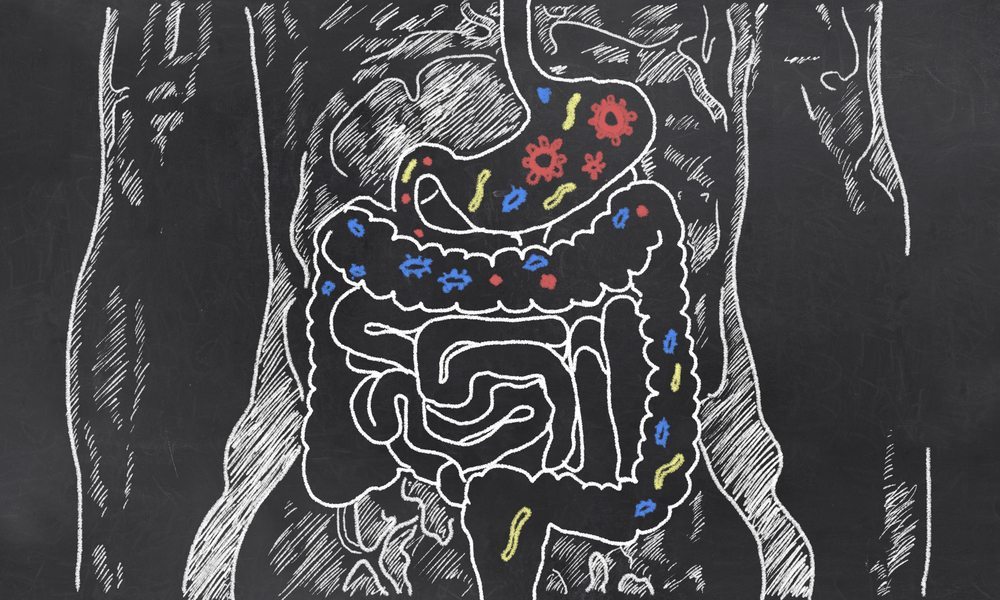
Your digestive system, also known as the gastrointestinal tract, is a long tube that acts like a highway for food. Every time you eat, food moves through your GI tract to be digested into smaller nutrients and used throughout the body. Your digestive system automatically handles this responsibility using digestive juices and chemicals.
Since your digestive system must process everything that enters your body, it has safeguards to protect you from harmful substances. These safeguards are the walls of the intestines, also known as the intestinal barrier.
Your intestinal barrier is a huge surface where billions of bacteria come head-to-head with the most powerful part of your body’s immune system. This barrier must simultaneously absorb essential nutrients and block harmful microorganisms from entering. Tight junctions in the intestinal walls make these opposing goals possible. The tight junctions are designed to let water and nutrients pass but block anything dangerous or toxic.
What Causes Leaky Gut?
Leaky gut develops when the tight junctions become loose or develop small holes. Your gut becomes more permeable and allows bacteria, food particles, and toxins to pass into the bloodstream. These invaders trigger inflammation that leads to the creation of antibodies.
Leaky gut is a condition that creates small holes in the intestinal walls. Bacteria, toxins, and other harmful debris use those holes to infiltrate the bloodstream and other healthy tissues.
A surplus of antibodies stimulates the body’s immune response. This is why leaky gut causes symptoms like chronic diarrhea, constipation, migraines, brain fogginess, chronic fatigue, and nutritional deficiencies.
There are multiple factors that might cause small holes to develop in your intestinal wall.
Gluten, Sugar, and Dairy Cause Leaky Gut
Gluten is a protein found in wheat and other grain products. The enzyme tTG is responsible for breaking down gluten into protein building blocks as soon as it reaches the intestines. However, it’s possible for gluten to trigger your GI tract to release a protein that degrades your intestine and creates the tiny holes of leaky gut.
Sugar and dairy are also common culprits of leaky gut. Casein, the main protein in dairy, functions like gluten by tearing holes in the intestine. About half of people who are gluten intolerant are also casein intolerant. A diet high in sugar aggravates this inflammation by breeding bacteria and compromising the ability of the intestinal wall to act as a barrier to toxins.
Medications Cause Leaky Gut
Antibiotics also cause leaky gut because they destroy healthy bacteria in the gut. Without healthy bacteria, yeast like Candida albicans thrives and causes damage. Candida is known to shrink cells in the small intestine, which results in tiny holes and crevices through which intestinal toxins can pass into the blood.
Antibiotics and anti-inflammatory drugs like Advil also attack the intestinal lining and cause the spaces between cells to expand and hemorrhage. This also allows bacteria, toxins, and food particles to move into the bloodstream and trigger autoimmune responses.
The Leaky Gut Spectrum
Leaky gut occurs on a spectrum of intensity that can be imagined on a scale from 1 to 5.
A leaky gut intensity of 1 out of 5 may be defined by mild discomfort and constipation. Since leaky gut has the potential to trigger such a variety of symptoms, it’s possible you’ll experience an annoying or ongoing issue like migraines or acne without understanding its cause.
“Middle of the road” leaky gut, at a 3 out of 5 on the scale, causes multiple symptoms that increase in intensity. You might feel bloated, have regular constipation or diarrhea, and suffer from joint pain. You don’t feel sick enough to stay in bed, but you know you don’t feel your best.
At a 5 out of 5, leaky gut becomes serious and inescapable. The condition may connect back to an autoimmune disease like lupus and create other chronic health complications.
Do You Have Leaky Gut?
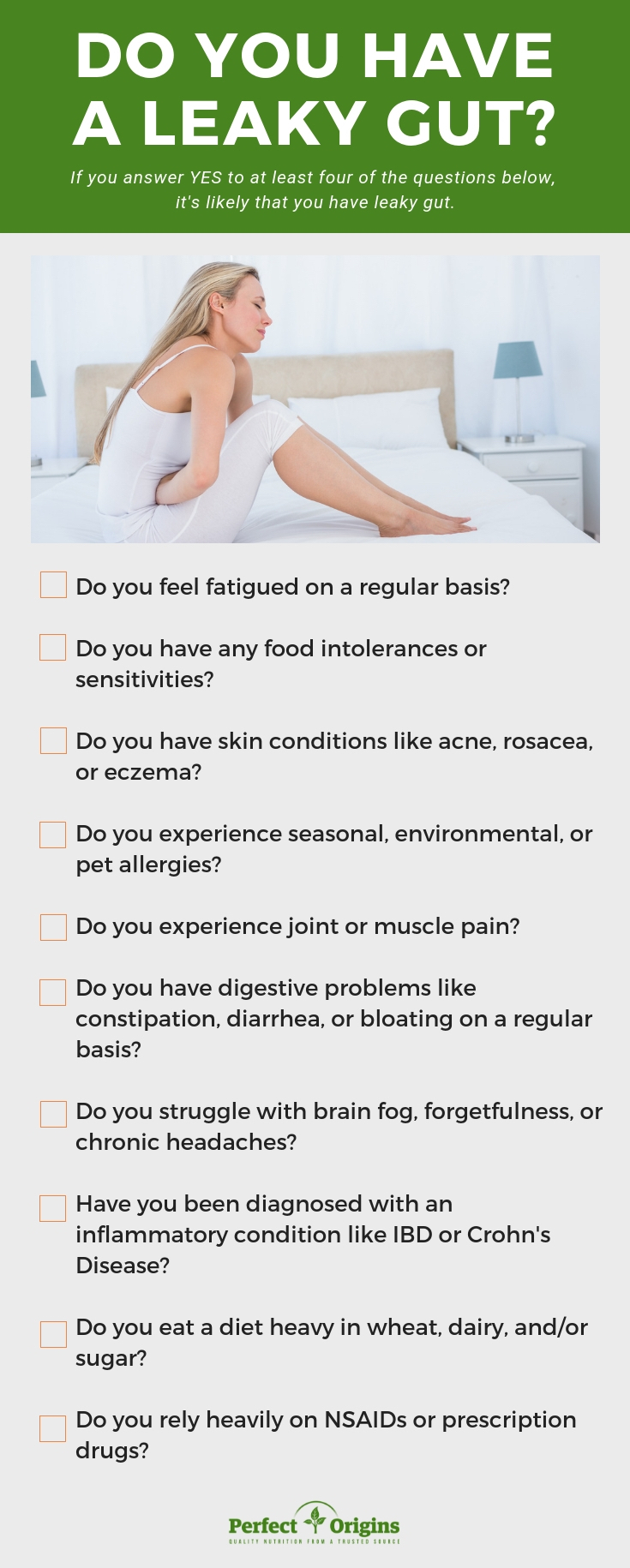
Since the symptoms of leaky gut are associated with other common conditions, it can be difficult to determine the root cause of your discomfort. This quiz will help you determine if leaky gut is potentially the health issue triggering your symptoms.
The Leaky Gut Quiz
Answer YES or NO to the following questions to determine whether leaky gut is causing your symptoms:
- Do you feel fatigued on a regular basis?
- Do you have any food intolerances or sensitivities?
- Do you have skin conditions like acne, rosacea, or eczema?
- Do you experience seasonal, environmental, or pet allergies?
- Do you experience joint or muscle pain?
- Do you have digestive problems like constipation, diarrhea, or bloating on a regular basis?
- Do you struggle with brain fog, forgetfulness, or chronic headaches?
- Have you been diagnosed with an inflammatory condition like IBD or Crohn’s DIsease?
- Do you eat a diet heavy in wheat, dairy, and/or sugar?
- Do you rely heavily on NSAIDs or prescription drugs?
If you answered YES to at least four of the questions above, it is likely that you have leaky gut.
I Might Have Leaky Gut! What Now?
If your answers indicated that your symptoms are consistent with leaky gut, you can undergo a lab test to confirm the results. An Intestinal Permeability Assessment is a non-invasive gastrointestinal test that assesses the absorption and barrier functions of your gut.
Here’s what to expect from an Intestinal Permeability Assessment:
- Drink a fluid that contains two sugars, mannitol and lactulose
- Submit a urine sample after drinking the fluid
- Lactulose should only be slightly absorbed in a healthy gut, while mannitol should be easily absorbed
- If your urine shows high levels of lactulose, leaky gut is highly probable
Your Intestinal Permeability Assessment may be supplemented by a comprehensive stool analysis, parasitology test, or liver panel. Due to the serious complications associated with chronic leaky gut, it is important to learn how to heal leaky gut. Treating your condition is the key to preventing future health problems.
The Dangers of Untreated Leaky Gut
Untreated leaky gut makes your body extremely vulnerable to ongoing health problems. The holes in your gut will become even worse, allowing more bacteria, food particles, and toxins to trigger inflammation. Your body will continue to create antibodies to attack the molecules slipping through the holes in the gut.
These antibodies attack anything they view as foreign invaders, even harmless molecules from foods you’ve eaten and enjoyed for years. If your leaky gut is left untreated, chronic inflammation and an overload of antibodies will trigger serious health conditions.
Autoimmune Disease
An autoimmune disease develops when the body attacks its own healthy tissues and causes lasting damage. Genetic and environmental causes have always been blamed for the development of autoimmune diseases, but new research suggests that dysfunction of the intestinal barrier can also trigger autoimmune conditions like type 1 diabetes, food allergies, celiac disease, and lupus.
Leaky gut enables the development of autoimmune diseases because it allows foreign substances to leak through the intestinal barrier. Antibodies reflexively attack the foreign substances, even if it’s unnecessary, which leads to an autoimmune response.
Digestive Disorders
Increased intestinal permeability is also linked to severe digestive disorders like Crohn’s disease. This chronic digestive condition is defined by ongoing inflammation in the intestinal tract. Since leaky gut causes inflammation as toxins, bacteria, and food particles escape into the bloodstream, Crohn’s disease, irritable bowel, and other digestive conditions are possible complications of untreated leaky gut.
Weakened Immune System
Leaky gut also compromises your body’s ability to absorb essential nutrients. Damaged cells in the intestines cannot efficiently produce the enzymes needed to properly break food down into nutrient molecules. This robs the body’s organs and tissues of the nutrients needed to function optimally.
Furthermore, leaky gut places extra strain on the liver by forcing it to work harder to filter substances out of the bloodstream. The liver eventually becomes overworked and fails to fully detoxify the blood. This increases the chances of toxins reaching and damaging muscles and connective tissues.
Together, the consequences of nutrient deficiencies and an overburdened liver weaken the immune system and make you more vulnerable to illness.
How to Heal Leaky Gut With Your Diet
There is no denying that leaky gut is a damaging condition, but you do have control over its impacts on your body! Your diet choices are the most powerful tool you have against leaky gut and its unwanted symptoms and complications.
Cut Out Gluten, Dairy, and Sugar
Gluten, dairy, and sugar are the main triggers for leaky gut since they cause excessive inflammation and poke holes in the intestinal barrier. The good news is that your body is designed to heal itself. By removing sources of gluten, casein, and refined sugar from your diet, your body can begin the process of healing the holes in your gut and rebalancing healthy bacteria.
Limit and remove the following foods from your diet in order to cut out gluten, dairy, and refined sugar:
- Refined carbohydrates like flour, bread, and pasta
- Cow’s milk and cheese
- Packaged and processed snacks like chips, crackers, and pretzels
- Sugary treats and desserts like cakes, cookies, and brownies
Eat More Fermented Foods
After you remove harmful foods from your diet, it is important to restore healthy gut bacteria with natural probiotic foods. Fermented vegetables and drinks like kefir and kombucha nourish the gut with probiotics. Those probiotics restore the strength and durability of the intestinal barrier by enhancing the production of tight junction proteins.
Your diet choices are the most powerful tool you have against leaky gut and its unwanted symptoms and complications.
Increase Nutrient Absorption With Healthy Fats
It’s also important to support better nutrient absorption to combat the effects of leaky gut during your recovery. Even if you eat a diet rich in nutrients, digestive dysfunction can prevent those nutrients from being absorbed into your body.
Boost your intake of healthy fats to ensure your body can properly absorb nutrients. Vitamins cannot be absorbed into the body without dietary fat. Enjoy more of these healthy fats to help your body utilize vitamins A, D, E, and K:
- Avocado
- Nuts and seeds
- Extra virgin olive oil
- Whole eggs
- Salmon and other fatty fish
How to Heal Leaky Gut With Supplements
In addition to a healthier diet, you can also use these supplements to encourage comprehensive gut healing.
L-Glutamine
L-glutamine is an amino acid, one of the 20 that occur naturally in dietary protein. As the most abundant amino acid in the bloodstream, glutamine is known to heal soft tissue, including the tissue in your intestines. This ability to repair tissue is exactly why glutamine is a popular supplement for weightlifting athletes who need to accelerate muscle healing after intense workouts.
Collagen
Collagen is the most abundant protein in your body and a building block necessary for life itself. In addition to sustaining youthful skin and protecting vital organs, collagen also works like a “sealer” for a damaged gut lining. It helps to restore a strong intestinal barrier and protect it from further damage.
Research has shown that people suffering from inflammatory bowel conditions such as Crohn’s or IBD tend to have lower amounts of collagen in their bodies. Supplementing with a high-quality multi-collagen product can restore the nutrients and amino acids the body needs to generate new tissue in the gut lining.
Bone broth is rich in collagen, but if you find it challenging to drink 8-16 ounces of bone broth daily, a multi-collagen protein supplement offers the same benefits.
Glycine
Glycine is a powerful amino acid that the body relies upon for metabolic, cognitive, and muscle functions. Since glycine helps to break down and transport nutrients throughout the body, it supports a strong immune and digestive system.
For most people suffering from leaky gut, removing wheat is a powerful way to reverse symptoms
Just like collagen and L-glutamine, glycine rebuilds the tissue that lines the digestive tract. Supplementing with glycine will keep food particles, toxins, and bacteria inside the gut. They won’t be able to move into the bloodstream because the intestinal barrier will regain its tight structure.
Probiotics
Your entire digestive system is always teeming with bacteria. As long as good bacteria outnumber bad bacteria, your gut stays healthy. Probiotics nurture and cultivate the healthy bacteria within your gut flora, which in turn prevents leaky gut.
Is Leaky Gut Diminishing Your Health?
Though many mainstream doctors consider leaky gut to be a secondary medical issue, the truth is that leaky gut has the ability to dramatically diminish your health and quality of life. If you want to test whether leaky gut is the true root cause of your health problems, wean yourself off of wheat for one month and evaluate the results.
For most people suffering from leaky gut, removing wheat is a powerful way to reverse symptoms. Just remember that you will feel worse, not better, during the first week of detoxification. Your body needs time to adjust to the sudden lack of gluten.
Once you move past the withdrawal symptoms, you’ll experience a transformation to your physical, mental, and emotional health. Leaky gut will no longer be poisoning your system, and you’ll have the opportunity to maintain lasting wellness.